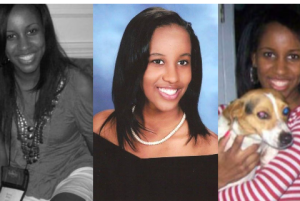
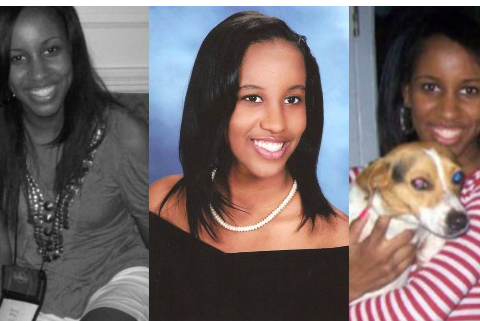
Baltimore City Justice On Trial Again: Michael Johnson’s Rape Conviction Reopens the Wound Phylicia Barnes’ Killing Left Behind
Posted by David Adams on April 25th, 2026
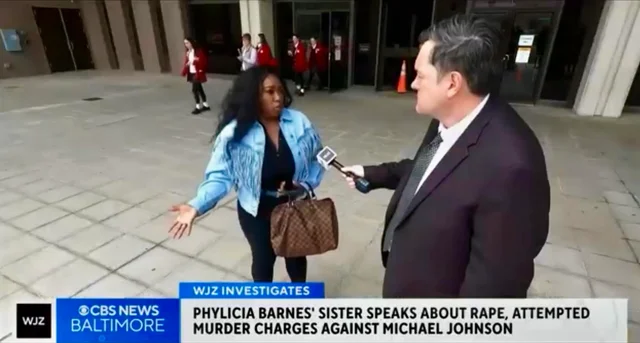
It was a very emotional time last night when I message Shauntel Sallis (Phylicia Barnes’ older maternal sister) to determine if she had heard the verdict. She expressed sadness despite the conviction though, as I’m sure many who supported Phylicioa Barnes and her family did, when the relizatkiion that the man who was charged and ultimately acquitted for her murder, was convicted for the crime of rape in a new criminal case involving yet another teenage girl. They say justice is blind, but in Baltimore City it often feels like justice wears a different face depending on the courtroom, the jurisdiction, the evidence culture, the prosecutor, the defense attorney, and whose child is lying dead in the water.
Shauntel Sallis (Phylicia Barnes’ oldest maternal sister) taking questions from reporter after testimony of rape victim in Michael Johnson’s criminal trial in Towson, Maryland. Image by CBS News
Now that Michael Maurice Johnson has been convicted of first-degree rape and first-degree assault in Baltimore County, the eyebrows are being raised across Maryland, and not simply about this new conviction. They’re about the painful shadow that still hangs over the name Phylicia Simone Barnes. The records will now show that Johnson, who had been cleared after three trials in Phylicia’s 2010 killing, is now also convicted in this new rape and assault case on April 24, 2026.
For those of us who followed, wrote about, and fought to keep Phylicia’s name alive when her story drifted in and out of the headlines, this latest conviction lands like a huge boulder on our hearts. It does not legally convict Johnson of anything related to Phylicia’s death. Unfortinately double jeopardy laws doen’t allow us to rewrite a verdict because of what happened years later. Morally, emotionally, and publicly though, this conviction forces Baltimore City to look backward and ask a painful question. “What did the justice system miss?”
Phylicia Barnes was a 16-year-old honors student from North Carolina who came to Baltimore to visit family and never made it home alive. Her body was later found in the Susquehanna River. Johnson (the last to see the teen alive) was arrested, tried, convicted once, granted a new trial, tried again, and eventually and suspiciously acquitted in 2018 after being tried a third time during a bench trial. The case became a painful example of how a family can endure a prosecution, a conviction, a reversal, a mistrial and an acquittal, only to be left with the same haunting delimma they had from the beginning, and the same unanswered question of “who killed Phylicia?”
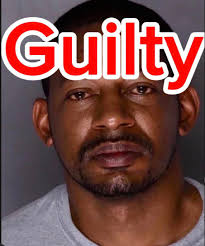
Michael Maurice Johnson (42).
Now comes the uncomfortable political and legal twist. Ivan J. Bates, Baltimore City’s current State’s Attorney, was one of Michael Johnson’s defense attorneys during the Phylicia Barnes litigation. CBS Baltimore quoted Bates in 2013 criticizing prosecutors after Johnson’s conviction was thrown out, saying the state had “got caught with their hand in the cookie jar.”
To be fair, Bates was doing what defense lawyers are constitutionally required to do, which is to fight for his client. A defense attorney’s job is not to make the public comfortable. A defense attorney’s job is to challenge the state, test the evidence, expose weakness, and make sure the government proves its case beyond a reasonable doubt. That is the entire American legal system in a nutshell, but the public is also allowed to feel the sting of such irony.
The man who once helped defend Michael Johnson in one of Baltimore’s most painful child murder cases now sits as the city’s top prosecutor. That doesn’t mean Bates did anything wrong. It doesn’t mean he violated ethics. It doesn’t mean he is responsible for Johnson’s later conduct. But it does show how tightly connected Baltimore City’s legal culture can be. How today’s defense lawyer can become tomorrow’s prosecutor, how courtroom victories can later feel hollow, and how families of victims are often left to carry the emotional burden long after the lawyers have moved on to higher office, bigger titles, and polished political careers.
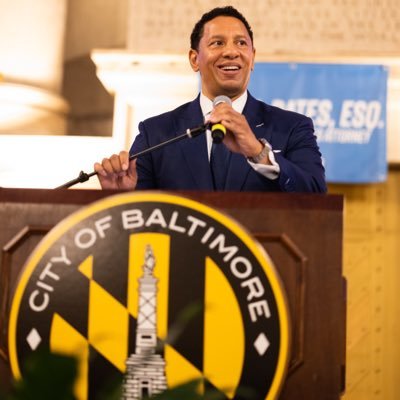
Ivan J. bates, Baltimore’s current State’s attorney, and michael Johnson’s former defense lawyer during Johnso’s criminal prosection in the murder of Phylicia Simone Barnes that Bates helped him win an acquittal.
This is where Baltimore’s justice system must be examined beyond legal technicalities, because justice is not only about whether a conviction can survive appeal. Justice is also about whether the system is competent enough to protect the vulnerable, disciplined enough to build clean cases, honest enough to admit its failures, and humble enough to understand that a botched prosecution can become a second wound to anhother grieving family.
In the Barnes case, Johnson’s first conviction was undone after the court found serious problems tied to the prosecution’s handling of evidence and witnesses. Reports at the time described disputes over key witness credibility, allegations surrounding a detective, and defense attacks on the state’s case. That matters in criminal cases, and certainly mattered on the case of Phylicia Barnes murder, because when prosecutors mishandle cases, when detectives become distractions, when witnesses are vulnerable to impeachment, and when the courtroom becomes less about the victim and more about institutional mistakes, the person who suffers most is not the lawyer. It’s not the judge. It’s not the politician. It’s the dead child.
It’s the mother, the father, the family and friends who still wants answers, and left with the burden to still wonder why and how a daughter came to Baltimore and ended up in a river.It’s every Black girl whose disappearance is treated as less urgent, less marketable, less worthy of national outrage, and it’s every citizen who has to watch the same legal system fail, shrug, rebrand itself, and ask the public to just trust the process again.
Michael Johnson’s rape conviction in Baltimore County does not close the Phylicia Barnes case. It reopens the public wound. It reminds us that technical justice and moral justice are not always the same thing. A courtroom can say “not guilty” while a community still feels robbed of truth. A defense attorney can be praised for skill while a victim’s family still feels crushed by the result. A prosecutor can rise to power while old cases continue to whisper from the grave.
Baltimore must be honest enough to hold all of those truths at once. Ivan Bates may have been a strong defense attorney. He may now be a forceful prosecutor and both things can be true, but the larger issue is not merely Ivan Bates. The larger issue is a legal culture where the public often feels that justice depends less on truth and more on which side of the gavel has the sharper lawyer, cleaner file, better strategy, and fewer mistakes.
That is a dangerous perception and in communities already wounded by violence, poverty, corruption, and distrust, perception can become its own kind of evidence. The Phylicia Barnes case should have been handled with the precision owed to a child whose life had been stolen. Instead, it became a maze of legal reversals, courtroom drama, witness problems, and unresolved grief. Now Johnson’s conviction in a separate violent sexual assault case forces Baltimore City to ask whether the system failed only in court, but whether it failed long before that.
Phylicia was more than a case file. She was a daughter. She was an honor student. She was a child with dreams. She was the flower in the river, and today, after this new conviction, Baltimore City cannot pretend the old questions have disappeared simply because the court record says the murder case is over. The record may be closed, but the wound isn’t. Neither is the demand for justice in the Phylicia Barnes murder case.
David B. Adams grew up in the Highlandtown section of Baltimore's southeast district and is his parent's youngest child. He experienced pervasive poverty, which taught him humility and compassion for the plight of others. His exposure to violence and gritty urban life were some of his early lessons of life's many hardships. Adams credits the upheavals he endured during his conformity with helping to shape the foundation of his outlook and perspectives on society.
With a steadfast commitment to giving voice to the voiceless, Adams is a journalist, crime writer, and blogger renowned for tireless investigative journalism and advocacy on behalf of vulnerable populations. As founder and administrator of The People's Champion, Adams sheds light on critical social issues, championing the rights of:
- Homeless individuals
- Victims of violent crime and their families
- Wrongfully convicted individuals
- Missing and exploited children; Additionally, he is
a seasoned investigative reporter, Adams has earned recognition for relentless pursuit of truth and justice. With a strong national and global focus, on inspiring meaningful change and crucial conversations impacting all of humanity.
It was a very emotional time last night when I message Shauntel Sallis (Phylicia Barnes’ older maternal sister) to determine if she had heard the verdict. She expressed sadness despite the conviction though, as I’m sure many who supported Phylicioa Barnes and her family did, when the relizatkiion that the man who was charged and ultimately acquitted for her murder, was convicted for the crime of rape in a new criminal case involving yet another teenage girl. They say justice is blind, but in Baltimore City it often feels like justice wears a different face depending on the courtroom, the jurisdiction, the evidence culture, the prosecutor, the defense attorney, and whose child is lying dead in the water.
Shauntel Sallis (Phylicia Barnes’ oldest maternal sister) taking questions from reporter after testimony of rape victim in Michael Johnson’s criminal trial in Towson, Maryland. Image by CBS News
Now that Michael Maurice Johnson has been convicted of first-degree rape and first-degree assault in Baltimore County, the eyebrows are being raised across Maryland, and not simply about this new conviction. They’re about the painful shadow that still hangs over the name Phylicia Simone Barnes. The records will now show that Johnson, who had been cleared after three trials in Phylicia’s 2010 killing, is now also convicted in this new rape and assault case on April 24, 2026.
For those of us who followed, wrote about, and fought to keep Phylicia’s name alive when her story drifted in and out of the headlines, this latest conviction lands like a huge boulder on our hearts. It does not legally convict Johnson of anything related to Phylicia’s death. Unfortinately double jeopardy laws doen’t allow us to rewrite a verdict because of what happened years later. Morally, emotionally, and publicly though, this conviction forces Baltimore City to look backward and ask a painful question. “What did the justice system miss?”
Phylicia Barnes was a 16-year-old honors student from North Carolina who came to Baltimore to visit family and never made it home alive. Her body was later found in the Susquehanna River. Johnson (the last to see the teen alive) was arrested, tried, convicted once, granted a new trial, tried again, and eventually and suspiciously acquitted in 2018 after being tried a third time during a bench trial. The case became a painful example of how a family can endure a prosecution, a conviction, a reversal, a mistrial and an acquittal, only to be left with the same haunting delimma they had from the beginning, and the same unanswered question of “who killed Phylicia?”
Michael Maurice Johnson (42).
Now comes the uncomfortable political and legal twist. Ivan J. Bates, Baltimore City’s current State’s Attorney, was one of Michael Johnson’s defense attorneys during the Phylicia Barnes litigation. CBS Baltimore quoted Bates in 2013 criticizing prosecutors after Johnson’s conviction was thrown out, saying the state had “got caught with their hand in the cookie jar.”
To be fair, Bates was doing what defense lawyers are constitutionally required to do, which is to fight for his client. A defense attorney’s job is not to make the public comfortable. A defense attorney’s job is to challenge the state, test the evidence, expose weakness, and make sure the government proves its case beyond a reasonable doubt. That is the entire American legal system in a nutshell, but the public is also allowed to feel the sting of such irony.
The man who once helped defend Michael Johnson in one of Baltimore’s most painful child murder cases now sits as the city’s top prosecutor. That doesn’t mean Bates did anything wrong. It doesn’t mean he violated ethics. It doesn’t mean he is responsible for Johnson’s later conduct. But it does show how tightly connected Baltimore City’s legal culture can be. How today’s defense lawyer can become tomorrow’s prosecutor, how courtroom victories can later feel hollow, and how families of victims are often left to carry the emotional burden long after the lawyers have moved on to higher office, bigger titles, and polished political careers.
Ivan J. bates, Baltimore’s current State’s attorney, and michael Johnson’s former defense lawyer during Johnso’s criminal prosection in the murder of Phylicia Simone Barnes that Bates helped him win an acquittal.
This is where Baltimore’s justice system must be examined beyond legal technicalities, because justice is not only about whether a conviction can survive appeal. Justice is also about whether the system is competent enough to protect the vulnerable, disciplined enough to build clean cases, honest enough to admit its failures, and humble enough to understand that a botched prosecution can become a second wound to anhother grieving family.
In the Barnes case, Johnson’s first conviction was undone after the court found serious problems tied to the prosecution’s handling of evidence and witnesses. Reports at the time described disputes over key witness credibility, allegations surrounding a detective, and defense attacks on the state’s case. That matters in criminal cases, and certainly mattered on the case of Phylicia Barnes murder, because when prosecutors mishandle cases, when detectives become distractions, when witnesses are vulnerable to impeachment, and when the courtroom becomes less about the victim and more about institutional mistakes, the person who suffers most is not the lawyer. It’s not the judge. It’s not the politician. It’s the dead child.
It’s the mother, the father, the family and friends who still wants answers, and left with the burden to still wonder why and how a daughter came to Baltimore and ended up in a river.It’s every Black girl whose disappearance is treated as less urgent, less marketable, less worthy of national outrage, and it’s every citizen who has to watch the same legal system fail, shrug, rebrand itself, and ask the public to just trust the process again.
Michael Johnson’s rape conviction in Baltimore County does not close the Phylicia Barnes case. It reopens the public wound. It reminds us that technical justice and moral justice are not always the same thing. A courtroom can say “not guilty” while a community still feels robbed of truth. A defense attorney can be praised for skill while a victim’s family still feels crushed by the result. A prosecutor can rise to power while old cases continue to whisper from the grave.
Baltimore must be honest enough to hold all of those truths at once. Ivan Bates may have been a strong defense attorney. He may now be a forceful prosecutor and both things can be true, but the larger issue is not merely Ivan Bates. The larger issue is a legal culture where the public often feels that justice depends less on truth and more on which side of the gavel has the sharper lawyer, cleaner file, better strategy, and fewer mistakes.
That is a dangerous perception and in communities already wounded by violence, poverty, corruption, and distrust, perception can become its own kind of evidence. The Phylicia Barnes case should have been handled with the precision owed to a child whose life had been stolen. Instead, it became a maze of legal reversals, courtroom drama, witness problems, and unresolved grief. Now Johnson’s conviction in a separate violent sexual assault case forces Baltimore City to ask whether the system failed only in court, but whether it failed long before that.
Phylicia was more than a case file. She was a daughter. She was an honor student. She was a child with dreams. She was the flower in the river, and today, after this new conviction, Baltimore City cannot pretend the old questions have disappeared simply because the court record says the murder case is over. The record may be closed, but the wound isn’t. Neither is the demand for justice in the Phylicia Barnes murder case.
David B. Adams grew up in the Highlandtown section of Baltimore's southeast district and is his parent's youngest child. He experienced pervasive poverty, which taught him humility and compassion for the plight of others. His exposure to violence and gritty urban life were some of his early lessons of life's many hardships. Adams credits the upheavals he endured during his conformity with helping to shape the foundation of his outlook and perspectives on society.
With a steadfast commitment to giving voice to the voiceless, Adams is a journalist, crime writer, and blogger renowned for tireless investigative journalism and advocacy on behalf of vulnerable populations. As founder and administrator of The People's Champion, Adams sheds light on critical social issues, championing the rights of:
- Homeless individuals
- Victims of violent crime and their families
- Wrongfully convicted individuals
- Missing and exploited children; Additionally, he is
a seasoned investigative reporter, Adams has earned recognition for relentless pursuit of truth and justice. With a strong national and global focus, on inspiring meaningful change and crucial conversations impacting all of humanity.
Missing Since Oct 19, 2013 Missing From Newark, NJ Age Now 14 Anyone with information regarding the whereabouts of Victoria Williams may contact Newark Police at (973) 733-6000
(CBS/AP) WATERVILLE, Maine - For the first time in the ongoing investigation of missing toddler Ayla Reynolds, police have said they believe she has been kidnapped. Investigators said Monday the 20-month-old was taken away and did not walk out on on her own.Police Chief Joseph Massey said at a news conference, "At this point in […]
DETROIT (WJBK) -- Detroit Police has announced it has joined forces with Michigan State Police and the FBI to find two missing children after their mother was found dead Monday. The Michigan State Police earlier denied a Detroit police request for an Amber Alert to be issued. "What I'm told is [The Amber Alert] didn't […]
 RSS Feed
 Twitter



 Posted in