I Remember Woodstock: A Look From the Other Side of the Blue Wall of Silence
Posted by David Adams on July 18th, 2026
Like so many before me, I made the trek down the long, winding roads leading to the Maryland State Police Training Commission in Woodstock, Maryland. I arrived for state training believing I was beginning a career in public service. I did not yet understand that I was also entering a culture governed by its own rules, protected by silence and deeply suspicious of anyone unwilling to conform.
My career would end abruptly. Some members of Training Class 95-22 would continue into other law-enforcement agencies throughout Maryland and eventually retire with pensions, plaques and respectable titles. A few had also been my classmates at Delaware State University. I can’t resist wondering how much of their individual moral fibers remained after retirement.
Many within my class represented something of a departure from the traditional blue-collar recruits who had historically pursued correctional work. Many of us were college educated. Some entered the profession with stronger academic backgrounds than the commanders and senior officers controlling our assignments and evaluating our performance. That created conflict almost immediately.
Education doesn’t automatically make a person wiser, more ethical or better suited for authority. But educated recruits often ask questions. We notice contradictions. We read and inderstand policies. We remember what we were taught. In an institution built around rank, obedience and tradition, independent thinking can quickly be mistaken for insubordination.God forbid if you have a conscience.
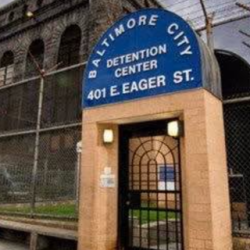
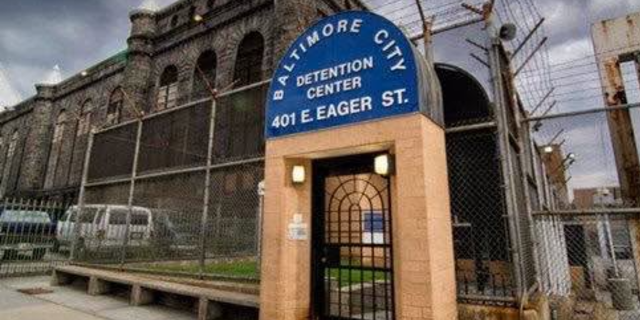
After graduating from the academy, we were assigned to our respective institutions. My destination was what’s called “steel side” (the old Baltimore City Detention Center). One of the grittiest correctional facilities in the country.
Looking back now, Woodstock sometimes feels less like preparation for the job and more like protection for the state. At the academy, we signed document after document certifying that we had been trained in firearms, riot control, defensive tactics, the management of aggressive behavior, contraband procedures, chain of custody and countless other responsibilities while maintaining custody and control of detainees. On paper, we were prepared. On paper, the state had done everything correctly. Then we arrived at the jail.
Almost immediately, veteran officers and supervisors told us to forget what we had learned. “That academy stuff is bullshit,” we were told. “We’re going to show you how things are really done here.” That sentence marked the beginning of my real education as a young professional. Much of the on-the-job instruction directly contradicted the standards under which we had supposedly been commissioned. One of the clearest examples involved contraband. Drugs, money, weapons and anything else inmates were prohibited from possessing.
According to policy, confiscated items were supposed to be documented, secured and carefully transferred through an established chain of custody. What I witnessed was often very different. Drugs sometimes disappeared. In certain circumstances, contraband appeared to find its way back into the inmate population, depending upon who had handled it. Cash discovered during searches could vanish into an officer’s pocket instead of being properly recorded. Everyone did not participate, but enough people understood the system for corruption to survive and permeate the facility.
Inmates with authorized movement throughout the institution were especially valuable to the jail’s underground economy. These were men assigned to maintenance, housekeeping, laundry, dietary services and other work details. Because their jobs allowed them to travel through multiple sections of the facility, they could move information and contraband between otherwise restricted areas. They were supposed to be escorted by correctional officers. That was where officers like me became a problem.
Correctional facilities are deliberately difficult to navigate. Movement is controlled through a series of security checkpoints we called key posts. Each key post functioned like a secured vestibule surrounded by barred gates. Only one gate could be opened at a time, preventing inmates from gaining access to unrestricted areas or penetrating an escape. When inmate workers arrived at a key post, standard procedure required that they be searched. We called it shaking them down. Those searches were how officers discovered homemade weapons, drugs, money and other prohibited items.
But every serious discovery raised an uncomfortable question. How had an inmate being escorted through the institution reached the key post carrying drugs or a weapon? Had the escorting officer failed to search him? Had the officer deliberately looked away? Or was the officer part of the movement of contraband? Those were questions that certain people did not want asked.
Inmates carrying weapons through correctional facilities pose a direct threat to the security and integrity of the building, other inmates, and correctional staff. Those weapons have been known to be used against correctional officers. To think that co-workers are aiding and abetting criminals in this regard is a frightening reality. In fact, it’s often said that the average correctional official has one foot on the tier and one foot inside of a cell. Therefore, honest jail police are paramount to the safety of everyone.
Officers who followed procedure began intercepting significant amounts of contraband at key posts. Rather than being praised for protecting the institution, some of us were treated as if we were disrupting its natural order. We were eventually reassigned to other areas of the facility, limiting our ability to interfere with what appeared to be an established contraband network. Doing the job correctly made us liabilities.
Those who questioned improper practices were labeled troublemakers. We were harassed, isolated, blackballed or subjected to increased scrutiny. Others learned the lesson quickly. They stopped asking questions, accepted the unwritten rules and went along with the culture. Many of them survived. Some were promoted. Some completed long careers and retired from the department. For years, I wondered how they slept at night. I understand the answer differently now.
The blue wall of silence is not maintained only by corrupt officers. It is sustained by ordinary people who convince themselves that survival requires silence. It is protected by supervisors who punish honesty more aggressively than misconduct. It is reinforced by institutions that train employees to follow the rules and then abandon them inside workplaces where the rules are treated as an inconvenience. Let me be clear. This is a state run institution funded by state tax payers I’m talking about.
Woodstock taught us what the state wanted written on paper. Baltimore’s law enforcement culture taught us what the institution demanded in practice. The distance between those two places was much greater than the miles separating them.
Over the years, I came to believe that what I witnessed in corrections was not unique to law enforcement. Similar clusters appear throughout government agencies, corporations and other workplac settings and groups operating under unwritten codes of loyalty that can be stronger than official policy, or even the actual law.
These alliances are not always visible. They may grow out of personal friendships, family connections, fraternities, sororities, Freemasonry, Eastern Star chapters or other social and fraternal organizations. I should qualify my posture here by stating that membership alone does not make a person corrupt, and every member should not be condemned. But when private loyalty begins influencing public decisions, workplace integrity is placed in danger.
In many cases like clockwork, the person receiving the promotion is not always the most qualified, the most experienced or the hardest working. Sometimes, that person simply belongs to the right circle, knows the proper handshake or is affiliated with someone who has influence. Qualifications become secondary. Loyalty becomes currency.
These networks can create an invisible government within the workplace, One that decides who advances, who is protected, who is disciplined and who becomes a target. The official organizational chart may identify supervisors and commanders, but the real power may exist in private relationships that never appear on paper.
What has always troubled me most is how easily people compromise themselves to belong. They surrender their judgment to remain part of the crew. They overlook wrongdoing to protect a friendship. They repeat lies because everyone else has agreed upon the same version of events. Some sacrifice their integrity for a promotion, a pension, a favorable assignment or simply the security of keeping their damn jobs. They call it loyalty. I call it surrender.
There is nothing honorable about belonging to an organization if membership requires you to abandon your conscience. There is no brotherhood in protecting misconduct. There is no sisterhood in helping the unqualified rise while better workers with integrity are denied opportunities. When allegiance to a private group becomes more important than fairness, truth or public service, that allegiance becomes dangerous. So are those who choose to adapt to it.
I have never been a follower. I have never needed a secret affiliation, a private handshake or an influential circle to define my worth. I remain unaffiliated, self-made and prepared to stand alone when standing alone is the price of telling the truth. That posture has cost me opportunities. It has brought isolation, retaliation and professional consequences. But there are things more valuable to me than a title, a pension or acceptance by people whose approval requires silence.
A person who compromises everything to keep a job may eventually retire with benefits, and I applaude their durability. But somewhere along the way, that person may lose possession of themselves.
I would rather lose a position than lose my integrity. I would rather be blackballed than become part of a system that rewards obedience and punishes conscience. I would rather die honoring a cause devoted to the greater good of humanity than live comfortably as a servant to corruption. Teach your children to know the difference.
Yes, I remember Woodstock. I remember what we were taught. I remember what we were told to forget. I remember the difference between the law written in policy manuals and the law enforced by institutional culture. Most importantly, I remember which side of that distinction I chose “On the Other Side of the Blue Wall of Silence.”
David B. Adams grew up in the Highlandtown section of Baltimore's southeast district and is his parent's youngest child. He experienced pervasive poverty, which taught him humility and compassion for the plight of others. His exposure to violence and gritty urban life were some of his early lessons of life's many hardships. Adams credits the upheavals he endured during his conformity with helping to shape the foundation of his outlook and perspectives on society.
With a steadfast commitment to giving voice to the voiceless, Adams is a journalist, crime writer, and blogger renowned for tireless investigative journalism and advocacy on behalf of vulnerable populations. As founder and administrator of The People's Champion, Adams sheds light on critical social issues, championing the rights of:
- Homeless individuals
- Victims of violent crime and their families
- Wrongfully convicted individuals
- Missing and exploited children; Additionally, he is
a seasoned investigative reporter, Adams has earned recognition for relentless pursuit of truth and justice. With a strong national and global focus, on inspiring meaningful change and crucial conversations impacting all of humanity.
Like so many before me, I made the trek down the long, winding roads leading to the Maryland State Police Training Commission in Woodstock, Maryland. I arrived for state training believing I was beginning a career in public service. I did not yet understand that I was also entering a culture governed by its own rules, protected by silence and deeply suspicious of anyone unwilling to conform.
My career would end abruptly. Some members of Training Class 95-22 would continue into other law-enforcement agencies throughout Maryland and eventually retire with pensions, plaques and respectable titles. A few had also been my classmates at Delaware State University. I can’t resist wondering how much of their individual moral fibers remained after retirement.
Many within my class represented something of a departure from the traditional blue-collar recruits who had historically pursued correctional work. Many of us were college educated. Some entered the profession with stronger academic backgrounds than the commanders and senior officers controlling our assignments and evaluating our performance. That created conflict almost immediately.
Education doesn’t automatically make a person wiser, more ethical or better suited for authority. But educated recruits often ask questions. We notice contradictions. We read and inderstand policies. We remember what we were taught. In an institution built around rank, obedience and tradition, independent thinking can quickly be mistaken for insubordination.God forbid if you have a conscience.
After graduating from the academy, we were assigned to our respective institutions. My destination was what’s called “steel side” (the old Baltimore City Detention Center). One of the grittiest correctional facilities in the country.
Looking back now, Woodstock sometimes feels less like preparation for the job and more like protection for the state. At the academy, we signed document after document certifying that we had been trained in firearms, riot control, defensive tactics, the management of aggressive behavior, contraband procedures, chain of custody and countless other responsibilities while maintaining custody and control of detainees. On paper, we were prepared. On paper, the state had done everything correctly. Then we arrived at the jail.
Almost immediately, veteran officers and supervisors told us to forget what we had learned. “That academy stuff is bullshit,” we were told. “We’re going to show you how things are really done here.” That sentence marked the beginning of my real education as a young professional. Much of the on-the-job instruction directly contradicted the standards under which we had supposedly been commissioned. One of the clearest examples involved contraband. Drugs, money, weapons and anything else inmates were prohibited from possessing.
According to policy, confiscated items were supposed to be documented, secured and carefully transferred through an established chain of custody. What I witnessed was often very different. Drugs sometimes disappeared. In certain circumstances, contraband appeared to find its way back into the inmate population, depending upon who had handled it. Cash discovered during searches could vanish into an officer’s pocket instead of being properly recorded. Everyone did not participate, but enough people understood the system for corruption to survive and permeate the facility.
Inmates with authorized movement throughout the institution were especially valuable to the jail’s underground economy. These were men assigned to maintenance, housekeeping, laundry, dietary services and other work details. Because their jobs allowed them to travel through multiple sections of the facility, they could move information and contraband between otherwise restricted areas. They were supposed to be escorted by correctional officers. That was where officers like me became a problem.
Correctional facilities are deliberately difficult to navigate. Movement is controlled through a series of security checkpoints we called key posts. Each key post functioned like a secured vestibule surrounded by barred gates. Only one gate could be opened at a time, preventing inmates from gaining access to unrestricted areas or penetrating an escape. When inmate workers arrived at a key post, standard procedure required that they be searched. We called it shaking them down. Those searches were how officers discovered homemade weapons, drugs, money and other prohibited items.
But every serious discovery raised an uncomfortable question. How had an inmate being escorted through the institution reached the key post carrying drugs or a weapon? Had the escorting officer failed to search him? Had the officer deliberately looked away? Or was the officer part of the movement of contraband? Those were questions that certain people did not want asked.
Inmates carrying weapons through correctional facilities pose a direct threat to the security and integrity of the building, other inmates, and correctional staff. Those weapons have been known to be used against correctional officers. To think that co-workers are aiding and abetting criminals in this regard is a frightening reality. In fact, it’s often said that the average correctional official has one foot on the tier and one foot inside of a cell. Therefore, honest jail police are paramount to the safety of everyone.
Officers who followed procedure began intercepting significant amounts of contraband at key posts. Rather than being praised for protecting the institution, some of us were treated as if we were disrupting its natural order. We were eventually reassigned to other areas of the facility, limiting our ability to interfere with what appeared to be an established contraband network. Doing the job correctly made us liabilities.
Those who questioned improper practices were labeled troublemakers. We were harassed, isolated, blackballed or subjected to increased scrutiny. Others learned the lesson quickly. They stopped asking questions, accepted the unwritten rules and went along with the culture. Many of them survived. Some were promoted. Some completed long careers and retired from the department. For years, I wondered how they slept at night. I understand the answer differently now.
The blue wall of silence is not maintained only by corrupt officers. It is sustained by ordinary people who convince themselves that survival requires silence. It is protected by supervisors who punish honesty more aggressively than misconduct. It is reinforced by institutions that train employees to follow the rules and then abandon them inside workplaces where the rules are treated as an inconvenience. Let me be clear. This is a state run institution funded by state tax payers I’m talking about.
Woodstock taught us what the state wanted written on paper. Baltimore’s law enforcement culture taught us what the institution demanded in practice. The distance between those two places was much greater than the miles separating them.
Over the years, I came to believe that what I witnessed in corrections was not unique to law enforcement. Similar clusters appear throughout government agencies, corporations and other workplac settings and groups operating under unwritten codes of loyalty that can be stronger than official policy, or even the actual law.
These alliances are not always visible. They may grow out of personal friendships, family connections, fraternities, sororities, Freemasonry, Eastern Star chapters or other social and fraternal organizations. I should qualify my posture here by stating that membership alone does not make a person corrupt, and every member should not be condemned. But when private loyalty begins influencing public decisions, workplace integrity is placed in danger.
In many cases like clockwork, the person receiving the promotion is not always the most qualified, the most experienced or the hardest working. Sometimes, that person simply belongs to the right circle, knows the proper handshake or is affiliated with someone who has influence. Qualifications become secondary. Loyalty becomes currency.
These networks can create an invisible government within the workplace, One that decides who advances, who is protected, who is disciplined and who becomes a target. The official organizational chart may identify supervisors and commanders, but the real power may exist in private relationships that never appear on paper.
What has always troubled me most is how easily people compromise themselves to belong. They surrender their judgment to remain part of the crew. They overlook wrongdoing to protect a friendship. They repeat lies because everyone else has agreed upon the same version of events. Some sacrifice their integrity for a promotion, a pension, a favorable assignment or simply the security of keeping their damn jobs. They call it loyalty. I call it surrender.
There is nothing honorable about belonging to an organization if membership requires you to abandon your conscience. There is no brotherhood in protecting misconduct. There is no sisterhood in helping the unqualified rise while better workers with integrity are denied opportunities. When allegiance to a private group becomes more important than fairness, truth or public service, that allegiance becomes dangerous. So are those who choose to adapt to it.
I have never been a follower. I have never needed a secret affiliation, a private handshake or an influential circle to define my worth. I remain unaffiliated, self-made and prepared to stand alone when standing alone is the price of telling the truth. That posture has cost me opportunities. It has brought isolation, retaliation and professional consequences. But there are things more valuable to me than a title, a pension or acceptance by people whose approval requires silence.
A person who compromises everything to keep a job may eventually retire with benefits, and I applaude their durability. But somewhere along the way, that person may lose possession of themselves.
I would rather lose a position than lose my integrity. I would rather be blackballed than become part of a system that rewards obedience and punishes conscience. I would rather die honoring a cause devoted to the greater good of humanity than live comfortably as a servant to corruption. Teach your children to know the difference.
Yes, I remember Woodstock. I remember what we were taught. I remember what we were told to forget. I remember the difference between the law written in policy manuals and the law enforced by institutional culture. Most importantly, I remember which side of that distinction I chose “On the Other Side of the Blue Wall of Silence.”
David B. Adams grew up in the Highlandtown section of Baltimore's southeast district and is his parent's youngest child. He experienced pervasive poverty, which taught him humility and compassion for the plight of others. His exposure to violence and gritty urban life were some of his early lessons of life's many hardships. Adams credits the upheavals he endured during his conformity with helping to shape the foundation of his outlook and perspectives on society.
With a steadfast commitment to giving voice to the voiceless, Adams is a journalist, crime writer, and blogger renowned for tireless investigative journalism and advocacy on behalf of vulnerable populations. As founder and administrator of The People's Champion, Adams sheds light on critical social issues, championing the rights of:
- Homeless individuals
- Victims of violent crime and their families
- Wrongfully convicted individuals
- Missing and exploited children; Additionally, he is
a seasoned investigative reporter, Adams has earned recognition for relentless pursuit of truth and justice. With a strong national and global focus, on inspiring meaningful change and crucial conversations impacting all of humanity.
Missing Since Oct 19, 2013 Missing From Newark, NJ Age Now 14 Anyone with information regarding the whereabouts of Victoria Williams may contact Newark Police at (973) 733-6000
(CBS/AP) WATERVILLE, Maine - For the first time in the ongoing investigation of missing toddler Ayla Reynolds, police have said they believe she has been kidnapped. Investigators said Monday the 20-month-old was taken away and did not walk out on on her own.Police Chief Joseph Massey said at a news conference, "At this point in […]
DETROIT (WJBK) -- Detroit Police has announced it has joined forces with Michigan State Police and the FBI to find two missing children after their mother was found dead Monday. The Michigan State Police earlier denied a Detroit police request for an Amber Alert to be issued. "What I'm told is [The Amber Alert] didn't […]
 RSS Feed
 Twitter





 Posted in