From the Editor: Jay-Z, Target, and the Debt Still Owed to the Communities Drugs Destroyed
Posted by David Adams on June 30th, 2026
As a journalist, blogger and advocate, there are some positions I have taken publicly that have cost me applause, comfort, friendships, and sometimes even support from people who otherwise agree with my broader work of being a voice for the voiceless. One of those positions is my unapologetic stance on drugs, drug dealers, and the lasting damage the illegal drug economy has done to Black, Brown, poor, and marginalized communities across America. My posture has never been hidden and has always been an open book.
I have been criticized, ridiculed, chastised, and accused of lacking empathy because I refuse to join the public celebration of celebrities who built part of their mythology on once poisoning the very communities they now claim to represent. I have heard all the arguments. They overcame adversity, changed, became legitimate, successful, billionaires, and even became cultural icons. But becoming rich does not erase the ruins. A man can reinvent himself, but often times enough communities can’t always resurrect what was buried.
At the top of my personal list is Shawn Carter, known to the world as Jay-Z. I understand his talent, his business genius (if you believe that), and I understand his cultural importance to many of the people who support his art. None of that requires me to ignore the truth that has been marketed, packaged up, and polished for decades. The drug game was not some harmless hustle, clever survival, simply “doing what had to be done” to survive. It was a destructive economy that helped ravage the very neighborhoods people now romanticize in rap lyrics, documentaries, interviews, and anniversary editions.
I lived in Bedford-Stuyvesant for a short time after coming from Baltimore. I know what the drug epidemic did to inner-city America. I know what it looked like when corners became open-air drug markets, when mothers buried sons, when children stepped over glass vials playong in the community play grounds, when whole blocks were swallowed by addiction, incarceration, violence, and grief. Baltimore, Brooklyn, D.C., Philly, Camden, and Newark all knew it. So many Black and Brown communities knew it all so well.
That is why I have never been moved by the sanitized success story that asks us to clap louder for the man who escaped than we mourn for the people who did not. The people and foot soldiers who helped feed that machine of destruction still owe. They owe a lot.
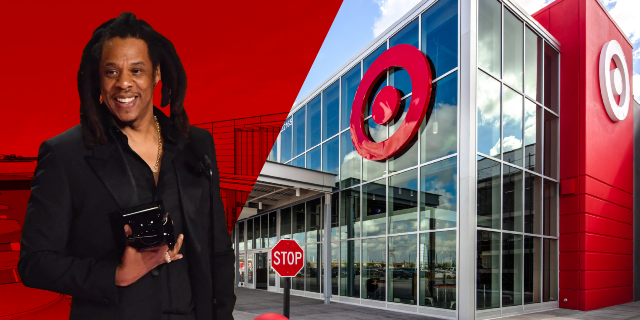
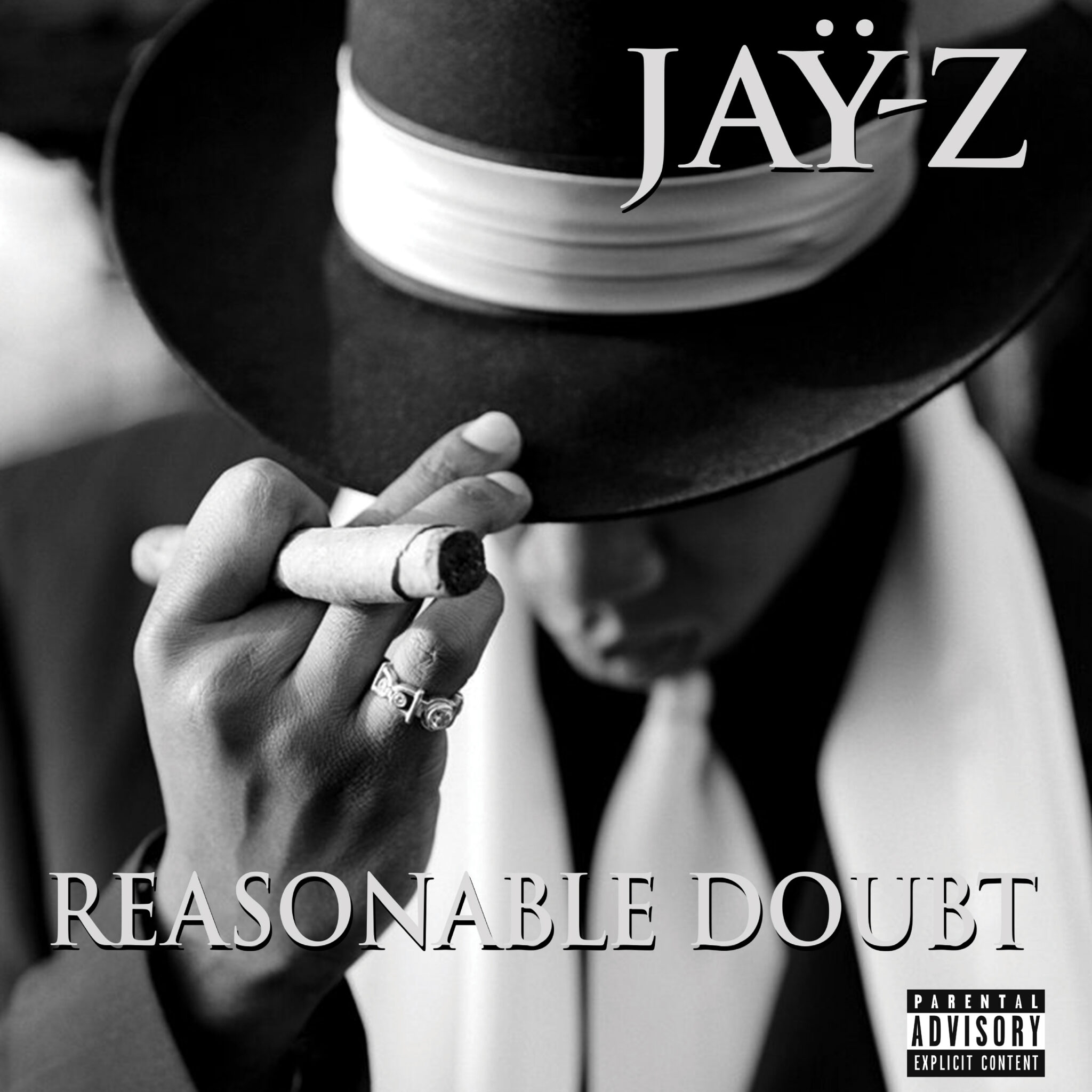
Now comes the news that Jay-Z’s “Reasonable Doubt” is receiving a 30th-anniversary Target-exclusive vinyl release. Reports say Target is offering the exclusive edition beginning June 26, with special packaging and collector-focused features tied to the album’s milestone.
That business decision would be controversial at any time. But it lands in a moment when Target has already been under fire from Black consumers, faith leaders, civil rights advocates, and boycott organizers over the company’s retreat from diversity, equity, and inclusion commitments. News outlets reported in January 2025 that Target was ending its DEI program and winding down its Racial Equity Action and Change initiatives, including commitments connected to Black-owned businesses, after the Trump administration moved against DEI programs and urged private companies to end what it called “illegal DEI discrimination and preferences.”
So let us be clear. This is not simply about a vinyl record. This is about symbolism. timing, power, and about who gets used to bring Black dollars back into corporate spaces after those corporations have shown Black communities exactly how disposable their commitments can be.
Target did not accidentally become the subject of a boycott. The backlash came after the company publicly scaled back DEI efforts, and by 2026, reporting noted that leaders of a high-profile boycott said they were ending the yearlong protest after Target pledged to fulfill a prior commitment to invest $2 billion in Black-owned businesses. they literal caved under pressure and did a turn-about when Black consumers spoke with their wallets. That’s historical and it matters. The boycott was not born from nothing. It came from a feeling many Black consumers know too well. Black consumers know corporations love our spending power, our culture, our music, our pain, and our cool. Until standing with us costs them something.
This is where Jay-Z’s partnership becomes more than another celebrity business move. For some, this will be defended as capitalism. Jay-Z owns his work, he can sell his music wherever he wants, and doesn’t owe anyone an explanation. That’s the usual defense whenever wealth is questioned. But that argument is exactly the problem. Thge “Money over everything” mentality is not liberation, not Black excellence, not community upliftment6, and is the same cold logic that has always allowed harmful systems to survive. As long as someone profits, the damage becomes negotiable. That mentality is familiar. Too familiar.
It’s the mentality of the drug economy dressed up in corporate language. In many respects, the old corner has become the boardroom. The hand-to-hand drug transactions have become the exclusive retail deal. Only difference is the product has changed, the suit is cleaner, the vocabulary is more sophisticated, but the moral question remains the same. What are you willing to ignore to get paid? I do not say this because I hate success. I say it because I refuse to confuse success with moral justice.
There is a difference between overcoming your past and being accountable for it. There is a difference between telling the story of survival and turning the wreckage into a brand. There is a difference between escaping the burning building and coming back with water. In my mind, Jay-Z and others like him has never repaid this debt to urban America.
Jay-Z has had every opportunity to be more than a billionaire symbol. He has had the power to model restitution, repair, and direct investment into the same communities that carried his story. Yes, there have been philanthropic gestures, business initiatives, and public advocacy moments along his climb to success. But the deeper moral debt remains bigger than charity. It requires a certain posture, a public reckoning, and his legacy should be set clearly by saying plainly and publicly with his deeds and actions that the drug game was not glorious. It was not noble and not harmless. It destroyed people, families, neighborhoods, and destroyed futures.
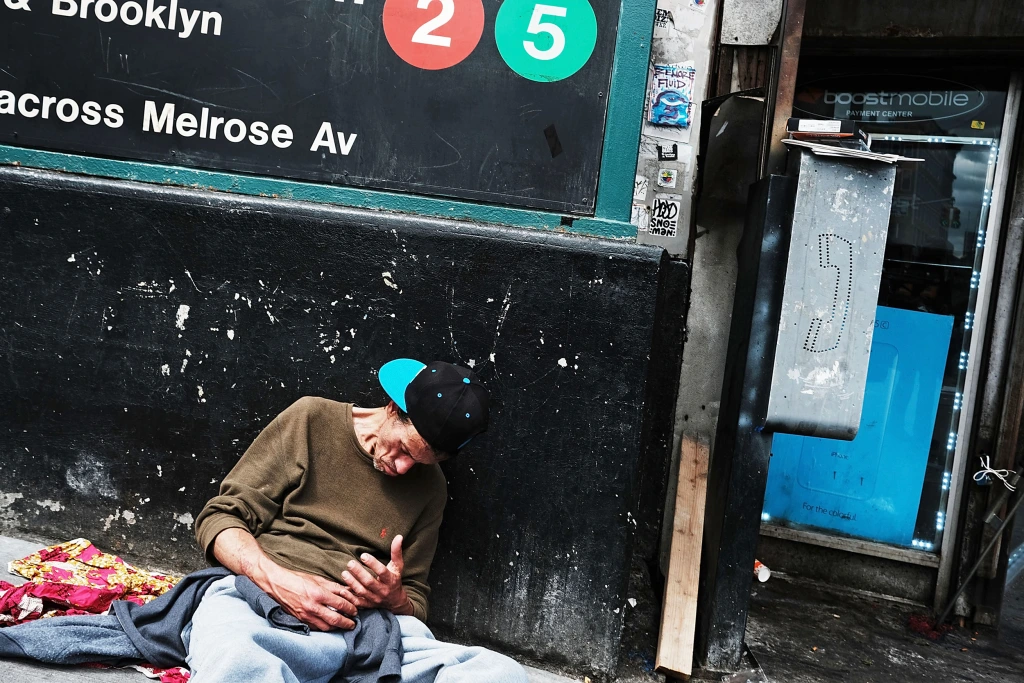
A man rests against a wall appearing to be under the influence of drugs on a street on June 7 in New York City. Spencer Platt / Getty Images file
People who once profited from the illegal drug economy should never be allowed to simply graduate into respectability without being asked what they gave back to the people that were left behind. That’s why this Target deal stings.
Black communities are being asked, once again, to separate the art from the accountability, the billionaire from the block, the business deal from the boycott, the collector’s item from the collective injury. We are asked to celebrate the anniversary of an album rooted in drug-era storytelling while ignoring the fact that many of the communities that produced that story are still bleeding from the conditions that made such stories possible. I am not interested in canceling Jay-Z. I am interested in telling the truth about what some of us are willing to reward.
We have created a culture where a former drug dealer can become a billionaire and be praised as a genius, while the families damaged by the drug trade are told to move on. We have created a culture where corporations can retreat from commitments to Black communities, then use Black cultural icons to soften the blow. We have created a culture where the same people who preach ownership, power, and legacy will still stand as the front man for a corporate campaign if the check is large enough. That’s not freedom, revolution, or Black empowerment. It’s more like capitalism wearing a kufi.
The truth is uncomfortable for some, but it is necessary. Some people do not want accountability. They want admiration without interruption, applause without memory, and want communities to forget who paid the price before they became respectable. But I remember.. and will never forget those left behind in the wake of the devasting horror of drugs and addiction.
I remember the families, the corners, the lost children, the mothers, and the brothers who never came home. I remember the neighborhoods blamed for their own destruction while the hustlers, suppliers, politicians, police systems, banks, and corporations all found a way to profit from all of the chaos in marginalized communities. So no, I am not surprised by Jay-Z and Target. Disappointed? Yes. Surprised? No. Because when money remains the highest principle, the people will always come second. Jay-Z proved this to the world during his drug soliciting days.
From the editor’s chair, my position remains the same. Greatness does not absolve harm. Wealth does not cancel debt. Reinvention does not erase responsibility, and any celebrity who once benefited from the destruction of marginalized communities has an obligation that cannot be satisfied by interviews, luxury partnerships, or an anniversary vinyl release. They owe, public truth, repair, investmentand they owe humility.
And above all, they owe the communities they once used as stepping stones more than another business deal with a corporation trying to win back the very people it was willing to abandon.
David B. Adams grew up in the Highlandtown section of Baltimore's southeast district and is his parent's youngest child. He experienced pervasive poverty, which taught him humility and compassion for the plight of others. His exposure to violence and gritty urban life were some of his early lessons of life's many hardships. Adams credits the upheavals he endured during his conformity with helping to shape the foundation of his outlook and perspectives on society.
With a steadfast commitment to giving voice to the voiceless, Adams is a journalist, crime writer, and blogger renowned for tireless investigative journalism and advocacy on behalf of vulnerable populations. As founder and administrator of The People's Champion, Adams sheds light on critical social issues, championing the rights of:
- Homeless individuals
- Victims of violent crime and their families
- Wrongfully convicted individuals
- Missing and exploited children; Additionally, he is
a seasoned investigative reporter, Adams has earned recognition for relentless pursuit of truth and justice. With a strong national and global focus, on inspiring meaningful change and crucial conversations impacting all of humanity.
As a journalist, blogger and advocate, there are some positions I have taken publicly that have cost me applause, comfort, friendships, and sometimes even support from people who otherwise agree with my broader work of being a voice for the voiceless. One of those positions is my unapologetic stance on drugs, drug dealers, and the lasting damage the illegal drug economy has done to Black, Brown, poor, and marginalized communities across America. My posture has never been hidden and has always been an open book.
I have been criticized, ridiculed, chastised, and accused of lacking empathy because I refuse to join the public celebration of celebrities who built part of their mythology on once poisoning the very communities they now claim to represent. I have heard all the arguments. They overcame adversity, changed, became legitimate, successful, billionaires, and even became cultural icons. But becoming rich does not erase the ruins. A man can reinvent himself, but often times enough communities can’t always resurrect what was buried.
At the top of my personal list is Shawn Carter, known to the world as Jay-Z. I understand his talent, his business genius (if you believe that), and I understand his cultural importance to many of the people who support his art. None of that requires me to ignore the truth that has been marketed, packaged up, and polished for decades. The drug game was not some harmless hustle, clever survival, simply “doing what had to be done” to survive. It was a destructive economy that helped ravage the very neighborhoods people now romanticize in rap lyrics, documentaries, interviews, and anniversary editions.
I lived in Bedford-Stuyvesant for a short time after coming from Baltimore. I know what the drug epidemic did to inner-city America. I know what it looked like when corners became open-air drug markets, when mothers buried sons, when children stepped over glass vials playong in the community play grounds, when whole blocks were swallowed by addiction, incarceration, violence, and grief. Baltimore, Brooklyn, D.C., Philly, Camden, and Newark all knew it. So many Black and Brown communities knew it all so well.
That is why I have never been moved by the sanitized success story that asks us to clap louder for the man who escaped than we mourn for the people who did not. The people and foot soldiers who helped feed that machine of destruction still owe. They owe a lot.
Now comes the news that Jay-Z’s “Reasonable Doubt” is receiving a 30th-anniversary Target-exclusive vinyl release. Reports say Target is offering the exclusive edition beginning June 26, with special packaging and collector-focused features tied to the album’s milestone.
That business decision would be controversial at any time. But it lands in a moment when Target has already been under fire from Black consumers, faith leaders, civil rights advocates, and boycott organizers over the company’s retreat from diversity, equity, and inclusion commitments. News outlets reported in January 2025 that Target was ending its DEI program and winding down its Racial Equity Action and Change initiatives, including commitments connected to Black-owned businesses, after the Trump administration moved against DEI programs and urged private companies to end what it called “illegal DEI discrimination and preferences.”
So let us be clear. This is not simply about a vinyl record. This is about symbolism. timing, power, and about who gets used to bring Black dollars back into corporate spaces after those corporations have shown Black communities exactly how disposable their commitments can be.
Target did not accidentally become the subject of a boycott. The backlash came after the company publicly scaled back DEI efforts, and by 2026, reporting noted that leaders of a high-profile boycott said they were ending the yearlong protest after Target pledged to fulfill a prior commitment to invest $2 billion in Black-owned businesses. they literal caved under pressure and did a turn-about when Black consumers spoke with their wallets. That’s historical and it matters. The boycott was not born from nothing. It came from a feeling many Black consumers know too well. Black consumers know corporations love our spending power, our culture, our music, our pain, and our cool. Until standing with us costs them something.
This is where Jay-Z’s partnership becomes more than another celebrity business move. For some, this will be defended as capitalism. Jay-Z owns his work, he can sell his music wherever he wants, and doesn’t owe anyone an explanation. That’s the usual defense whenever wealth is questioned. But that argument is exactly the problem. Thge “Money over everything” mentality is not liberation, not Black excellence, not community upliftment6, and is the same cold logic that has always allowed harmful systems to survive. As long as someone profits, the damage becomes negotiable. That mentality is familiar. Too familiar.
It’s the mentality of the drug economy dressed up in corporate language. In many respects, the old corner has become the boardroom. The hand-to-hand drug transactions have become the exclusive retail deal. Only difference is the product has changed, the suit is cleaner, the vocabulary is more sophisticated, but the moral question remains the same. What are you willing to ignore to get paid? I do not say this because I hate success. I say it because I refuse to confuse success with moral justice.
There is a difference between overcoming your past and being accountable for it. There is a difference between telling the story of survival and turning the wreckage into a brand. There is a difference between escaping the burning building and coming back with water. In my mind, Jay-Z and others like him has never repaid this debt to urban America.
Jay-Z has had every opportunity to be more than a billionaire symbol. He has had the power to model restitution, repair, and direct investment into the same communities that carried his story. Yes, there have been philanthropic gestures, business initiatives, and public advocacy moments along his climb to success. But the deeper moral debt remains bigger than charity. It requires a certain posture, a public reckoning, and his legacy should be set clearly by saying plainly and publicly with his deeds and actions that the drug game was not glorious. It was not noble and not harmless. It destroyed people, families, neighborhoods, and destroyed futures.
A man rests against a wall appearing to be under the influence of drugs on a street on June 7 in New York City. Spencer Platt / Getty Images file
People who once profited from the illegal drug economy should never be allowed to simply graduate into respectability without being asked what they gave back to the people that were left behind. That’s why this Target deal stings.
Black communities are being asked, once again, to separate the art from the accountability, the billionaire from the block, the business deal from the boycott, the collector’s item from the collective injury. We are asked to celebrate the anniversary of an album rooted in drug-era storytelling while ignoring the fact that many of the communities that produced that story are still bleeding from the conditions that made such stories possible. I am not interested in canceling Jay-Z. I am interested in telling the truth about what some of us are willing to reward.
We have created a culture where a former drug dealer can become a billionaire and be praised as a genius, while the families damaged by the drug trade are told to move on. We have created a culture where corporations can retreat from commitments to Black communities, then use Black cultural icons to soften the blow. We have created a culture where the same people who preach ownership, power, and legacy will still stand as the front man for a corporate campaign if the check is large enough. That’s not freedom, revolution, or Black empowerment. It’s more like capitalism wearing a kufi.
The truth is uncomfortable for some, but it is necessary. Some people do not want accountability. They want admiration without interruption, applause without memory, and want communities to forget who paid the price before they became respectable. But I remember.. and will never forget those left behind in the wake of the devasting horror of drugs and addiction.
I remember the families, the corners, the lost children, the mothers, and the brothers who never came home. I remember the neighborhoods blamed for their own destruction while the hustlers, suppliers, politicians, police systems, banks, and corporations all found a way to profit from all of the chaos in marginalized communities. So no, I am not surprised by Jay-Z and Target. Disappointed? Yes. Surprised? No. Because when money remains the highest principle, the people will always come second. Jay-Z proved this to the world during his drug soliciting days.
From the editor’s chair, my position remains the same. Greatness does not absolve harm. Wealth does not cancel debt. Reinvention does not erase responsibility, and any celebrity who once benefited from the destruction of marginalized communities has an obligation that cannot be satisfied by interviews, luxury partnerships, or an anniversary vinyl release. They owe, public truth, repair, investmentand they owe humility.
And above all, they owe the communities they once used as stepping stones more than another business deal with a corporation trying to win back the very people it was willing to abandon.
David B. Adams grew up in the Highlandtown section of Baltimore's southeast district and is his parent's youngest child. He experienced pervasive poverty, which taught him humility and compassion for the plight of others. His exposure to violence and gritty urban life were some of his early lessons of life's many hardships. Adams credits the upheavals he endured during his conformity with helping to shape the foundation of his outlook and perspectives on society.
With a steadfast commitment to giving voice to the voiceless, Adams is a journalist, crime writer, and blogger renowned for tireless investigative journalism and advocacy on behalf of vulnerable populations. As founder and administrator of The People's Champion, Adams sheds light on critical social issues, championing the rights of:
- Homeless individuals
- Victims of violent crime and their families
- Wrongfully convicted individuals
- Missing and exploited children; Additionally, he is
a seasoned investigative reporter, Adams has earned recognition for relentless pursuit of truth and justice. With a strong national and global focus, on inspiring meaningful change and crucial conversations impacting all of humanity.
Missing Since Oct 19, 2013 Missing From Newark, NJ Age Now 14 Anyone with information regarding the whereabouts of Victoria Williams may contact Newark Police at (973) 733-6000
(CBS/AP) WATERVILLE, Maine - For the first time in the ongoing investigation of missing toddler Ayla Reynolds, police have said they believe she has been kidnapped. Investigators said Monday the 20-month-old was taken away and did not walk out on on her own.Police Chief Joseph Massey said at a news conference, "At this point in […]
DETROIT (WJBK) -- Detroit Police has announced it has joined forces with Michigan State Police and the FBI to find two missing children after their mother was found dead Monday. The Michigan State Police earlier denied a Detroit police request for an Amber Alert to be issued. "What I'm told is [The Amber Alert] didn't […]