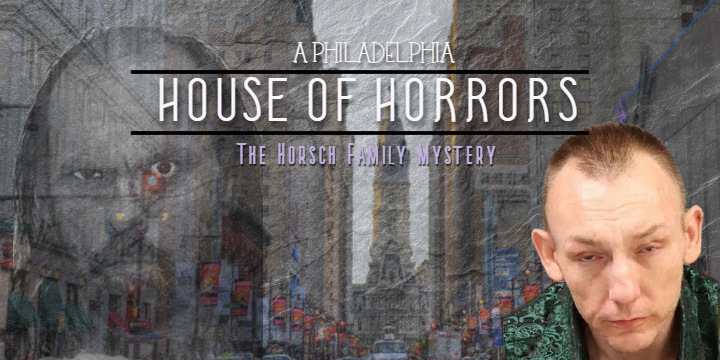
A Phildephia House of Horrors: The Horsch Family Mystery
Posted by David Adams on August 16th, 2026
There are houses where people live, where people die, and then there are houses that seem to collect the missing. On West Chew Avenue in Philadelphia’s Olney section sits an ordinary-looking rowhouse that has become the center of something almost impossible to describe without sounding like fiction. For years, people walked past it, cars rolled by it, and neighbors slept beside it. Women disappeared, as time passed, families waited, and whatever secrets existed behind those walls stayed there.
Until one morning in June of this year, when the entire thing began to unravel because a park ranger heard a frightened woman inside a parked car. That’s the almost unbelievable beginning of the investigation surrounding 44-year-old Eugene Albert Horsch and the house at 417 West Chew Avenue. It began not with detectives following a serial-killer profile or investigators digging into decades-old disappearances, but with an encounter near Sixth and Market Streets on June 19, 2026.
Authorities say a U.S. Park Service ranger approached Horsch’s BMW after noticing it in a restricted area. During the encounter, the ranger reportedly heard a woman inside say words to the effect that Horsch was going to hurt her. Police subsequently said investigators found fake law-enforcement credentials, weapons, and drugs. Stranger still, the woman accompanying Horsch allegedly possessed identification bearing her photograph but the name of Blair Tonzelli, a Philadelphia woman who had been reported missing.
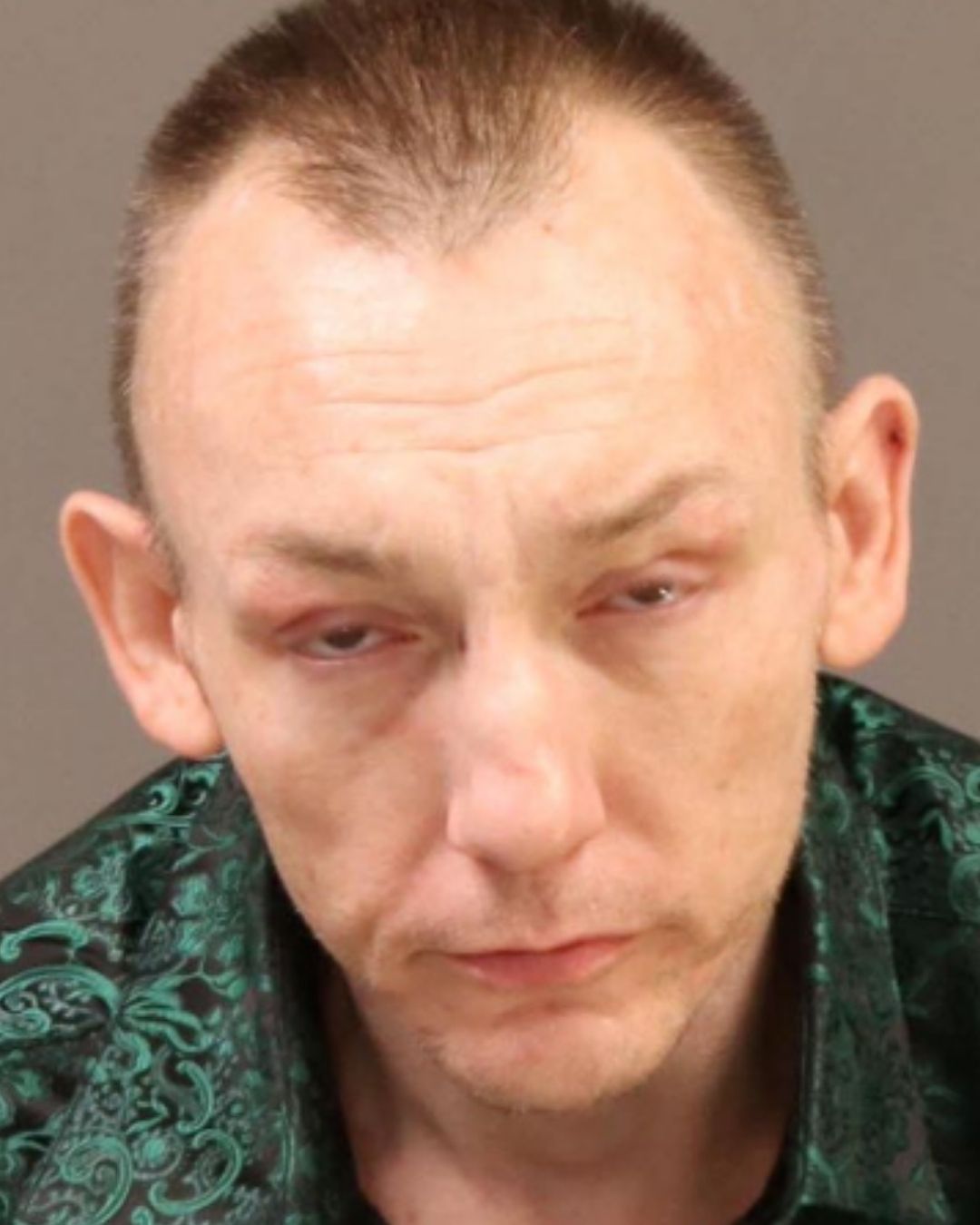
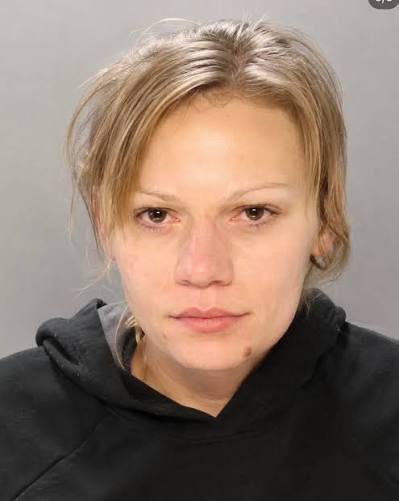
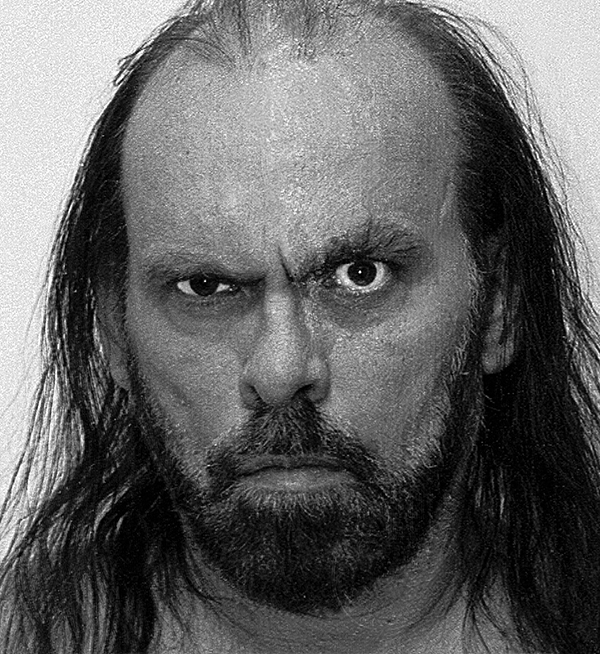
Eugene HorschBlair Tonzelli who went missing in 2023.
It was the kind of discovery that makes an investigator ask a volume of questions, and eventually ask what was inside the house. What authorities say they encountered there has transformed a weapons-and-drugs investigation into one of Philadelphia’s most unsettling mysteries.
Investigators described chemicals, unusual containers, ballistic evidence, fraudulent federal credentials and a basement setup involving a 55-gallon drum. Five urns believed to contain cremated remains were eventually recovered. Authorities have analyzed containers of unidentified substances, examined plumbing and sewer infrastructure associated with the property, and obtained approximately 95 search warrants connected to the house and its contents. But even that was not the darkest discovery.
The darkness was digital. Investigators recovered a staggering archive of approximately 600,000 images, 70,000 videos and more than 10,000 pages of writings, drawings and manuscripts. Police say they have examined only a small portion of it and somewhere inside that mountain of stored memory, two women who had seemingly vanished from Philadelphia appeared again. Police connected Gabrielle Amarando and Maribel Fresses to that residence. Gabrielle disappeared in 2012 and Maribel disappeared in 2018.
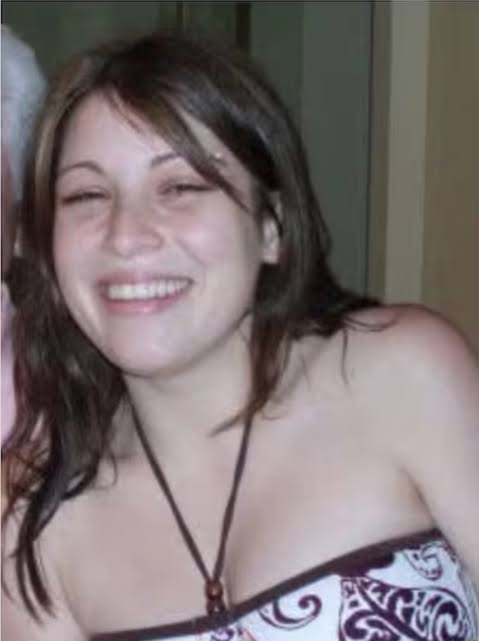
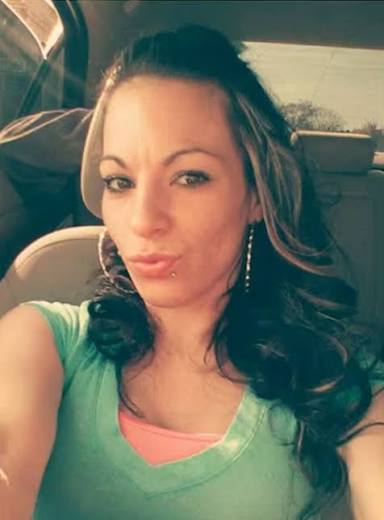
Gabrielle AmarandoMaribel Fresses
For years, they existed in that terrible purgatory reserved for families of the missing—the space between hope and grief, where nobody can tell you to keep believing, but nobody can give you permission to mourn. Then detectives opened a hard drive.
A Philadelphia Police Inspector said investigators reviewing the material discovered images and video apparently depicting Amarando and Fresses alive and, after a passage of time, apparently deceased. Authorities consulted the medical examiner, who indicated that if the images are authentic and unaltered, the women depicted would be considered dead based on what is visible. Their bodies, however, have not been recovered.
Police literally uncovered tnformation about a woman who disappeared in Philadelphia back in 2012. Now fourteen years later, police say her image emerges from a hard drive associated with a house in Olney. That’s simply not an old photograph, a social-media picture, nor a forgotten snapshot from happier days.
Investigators say the material appears to document her alive and then dead. That woman was 22-year-old Gabrielle Amarando when she vanished. A childhood friend remembers something entirely different from the grim evidence now attached to Gabrielle’s name. She remembered a girl with a huge personality, an artistic streak, a love of fashion, someone capable of making people laugh. Friends have pleaded, in essence, for the public to remember that before Gabrielle became evidence in somebody’s investigation, she was a human being.
Maribel Fresses disappeared in 2018 at 27 years old. Her brother told reporters that after eight years, he had begun resigning himself to the possibility that he would never know what happened to her. Then came the call no family wants and, paradoxically, the call families of the missing sometimes spend years begging authorities to make. There was an answer. Just not the answer anyone wanted. Amarando and Fresses may not represent the end of the questions surrounding 417 West Chew Avenue.
There is Blair Tonzelli, the missing woman whose name appeared on the identification allegedly possessed by Horsch’s companion during the June encounter. Police have said they have not, at this stage, found the same kind of digital evidence connecting Tonzelli to the house that they found concerning Amarando and Fresses. Then there is Amy McHale.
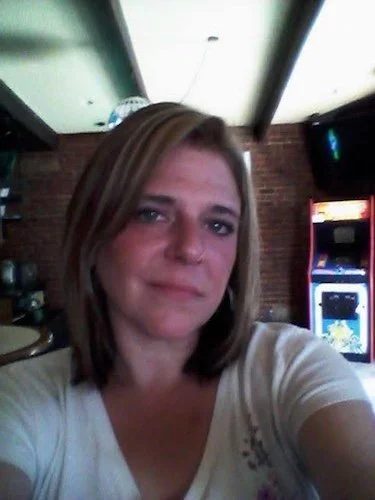
Amy Mchale, The ex-wife of R.C. Horsch
McHale disappeared in 2016. Her daughter has said that her mother’s last known communications placed her at the West Chew Avenue property. McHale had been married to Eugene Horsch’s father, Raymond “R.C.” Horsch, who lived at the property before his death in 2025. Police have acknowledged McHale as one of the missing-person cases of interest surrounding the investigation, while also saying that, so far, the recovered digital evidence has not established that she suffered the same fate apparently depicted in the Amarando and Fresses material.
Eugene Horsch is in custody on federal allegations involving firearms and fraudulent law-enforcement credentials that were uncovered during the Park-Police arrest, but authorities had not charged him with the deaths of Amarando or Fresses in the latest public updates about the case. Investigators have not publicly established who killed the women, where they died, precisely when they died, or what ultimately happened to their bodies.
Those unknowns may be more frightening than anything police have already found. Because the central question hanging over Chew Avenue is no longer “What was inside that house?” Rather now It’s “How many lives passed through it?”
Police say some people appearing in the recovered material have been located alive and interviewed. Others remain missing. and investigators have barely begun examining what they seized.
This should haunt the entire city of Philadelphia. Not because anyone should rush ahead of investigators and label Eugene Horsch a serial killer before the evidence supports such a conclusion. It should haunt Philadelphia because missing women have a way of becoming invisible long before anyone knows they are dead. They’re usually the addicted, struggling, estranged. and poor. Women whose disappearances may not command weeks of cable television coverage or armies of internet detectives. They can slip through the cracks of a city until their absence itself becomes ordinary.
A friend of Gabrielle Amarando’s spoke openly about addiction and mental-health struggles in their younger years. But she also insisted that those struggles did not define Gabrielle. She remembered the child she knew, the personality, the laughter, the life that existed before a missing-person photograph became the public’s primary memory of her.
Perhaps that’s where the deepest horror of 417 West Chew Avenue really lives. Not in the a drum of chemicals, or inside of urns. It’s in the possibility that vulnerable people may have moved through a place in plain sight while the rest of a bustling city like Philadelphia continued moving around them. It’s haunting in itself to simply imagine a subway running, corner stores opening, neighbors taking out garbage, people catching the bus, ordering dinner, or simply walking a dog and somewhere, behind another Philadelphia door, a human being could be disappearing.
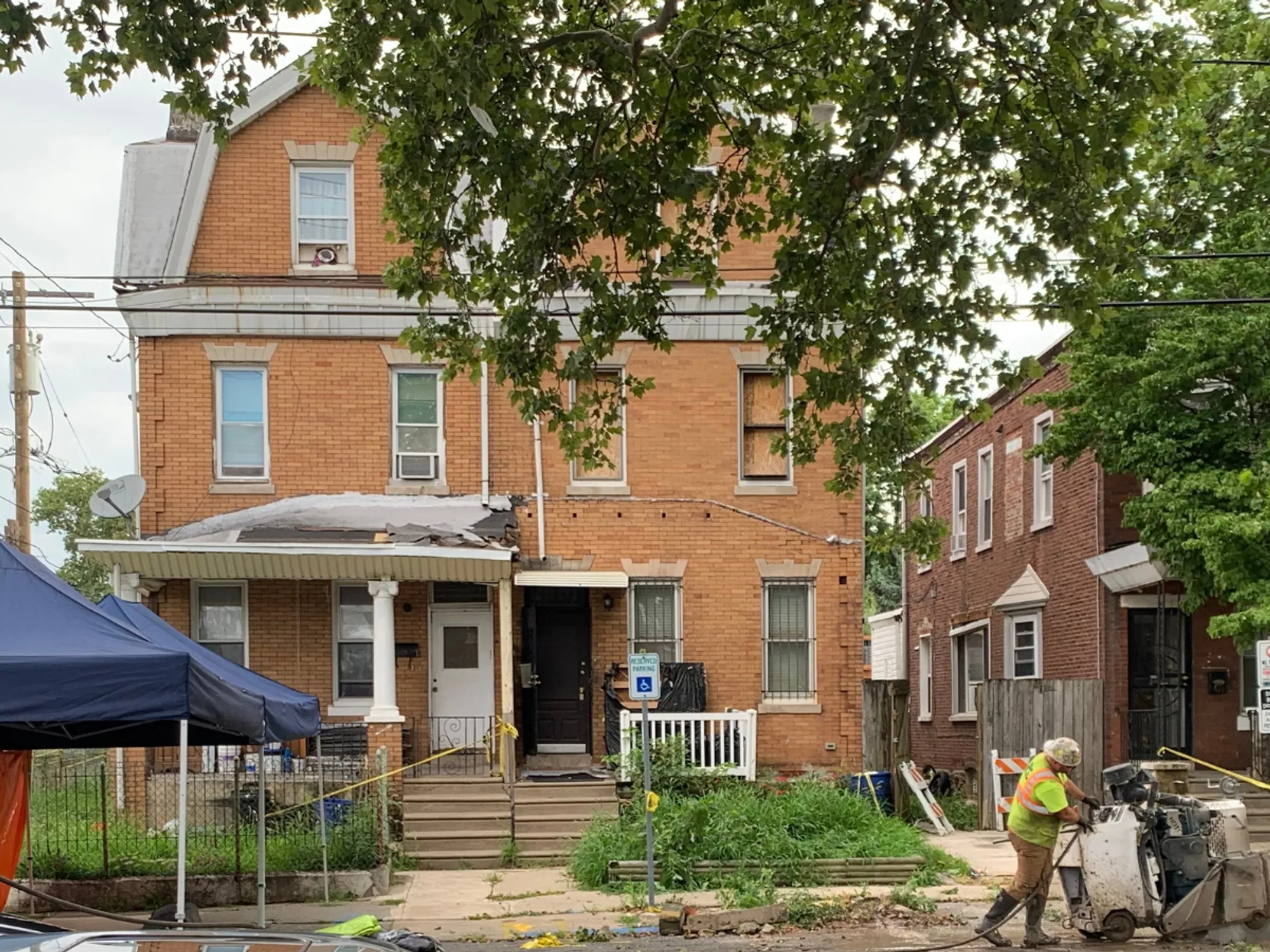
417 West Chew Avenue in the Onley section of Philadelphia, where police have linked the disappearance of sevral missing woman.
The investigation now confronts an extraordinary problem. Police say they have apparent visual evidence of two women dead but no recovered bodies. Inspectors describe it as unfamiliar territory for Philadelphia homicide investigators. Traditionally there is a body, remains, or some physical point from which a homicide investigation begins. Here, the images may have arrived before the dead themselves.
So somewhere tonight there are still two unanswered questions written in the names of Gabrielle Amarando and Maribel Fresses. Where are they? And who put them there?
Behind those questions stand Blair Tonzelli, Amy McHale and potentially other missing women whose names investigators are comparing against the material recovered from the property. Police have said there may be additional people in the archive who have not yet been accounted for. Six hundred thousand images, seventy thousand videos, and ten thousand pages are numbers so enormous that they stop sounding like evidence and begin sounding like an excavation.
Except investigators are not merely excavating a house anymore. They’re excavating years, and every hard drive opened may contain another afternoon somebody forgott or another face somebody recognizes, another woman whose family was told there were no answers. That’s why Philadelphia should remember the address. 417 West Chew Avenue. It should be remembered because two women who had been missing for years apparently emerged from its digital shadows.
The walls rarely begin talking on their own. Someone has to listen. This time, Philadelphia finally is, and somewhere inside those hundreds of thousands of frozen moments may be the answer to the question now hanging over Olney like a shadow. How many people entered that house whose families are still waiting for them to come home?
The especially important development is that police say some people depicted in the recovered material have been identified alive, while some remain missing, which makes the unreviewed portion of the archive potentially crucial. Authorities have also said they are comparing information with other missing-person cases, but there is not yet evidence publicly establishing that every missing woman being discussed online was a victim at the property.
Investigators were led to the convicted felon’s house, where they found the vast array of strange, concerning items, including 120 pieces of ballistics evidence, narcotics, and the disturbing unsigned letter, which also mentioned serial killer Ted Bundy. Police are still determining who wrote the letter or whether it was an act of fiction. Horsch was cuffed on firearms and drug charges while the investigation remains ongoing. His lawyer said the chemicals, note and other disturbing findings belonged to his late father.
The case sparked concern among the family of Philadelphia mom Amy McHale, who said their last contact with her was a June 13, 2016, voicemail she left for her mother, attempting to reassure her that she was safe and at the Olney home — which then belonged to her ex-husband and Eugene’s father, Raymond Charles “R.C.” Horsch. The elder Horsch, who died in 2025 with a rap sheet including drug manufacturing and forgery, was a smut peddler whose medium of choice was filming and photographing “scantily clad women in sadomasochistic settings.” He reportedly preyed on women struggling with addiction, like McHale, who was decades younger.
R.C. Hoesch, the late father of Eugene Horsch and original owner of the 410 West Chew Avenue residence in Onley.
The dad was a photographer, indie filmmaker, porn actor, and “fugitive, sociopath, ex-convict and all-out villain,” according to the bio page on his own web site.R.C. bragged about his own criminal history that included forging art, going AWOL from the army and growing illegal pot.
The dad and McHale met in the 1990s when she was in her 20s and he was in his 50s, and later got married and divorced. But they stayed close even after their relationship ended. and possibly because R.C .kept giving her drugs according to a source close to the missing Mchale. woman. Though Eugene has denied having anything to do with the missing women, he did follow in his dad’s felonious footsteps with a 10-arrest rap sheet that included drug possession and dealing, assault and drunken driving, according to media reports.
The raid of his home turned up several other fake IDs, plus fake law enforcement badges. Eugene Horsch does not face any charges in connection with the missing women.
Sources: New York post, NBC news, and Philadelphia Inquirer
David B. Adams grew up in the Highlandtown section of Baltimore's southeast district and is his parent's youngest child. He experienced pervasive poverty, which taught him humility and compassion for the plight of others. His exposure to violence and gritty urban life were some of his early lessons of life's many hardships. Adams credits the upheavals he endured during his conformity with helping to shape the foundation of his outlook and perspectives on society.
With a steadfast commitment to giving voice to the voiceless, Adams is a journalist, crime writer, and blogger renowned for tireless investigative journalism and advocacy on behalf of vulnerable populations. As founder and administrator of The People's Champion, Adams sheds light on critical social issues, championing the rights of:
- Homeless individuals
- Victims of violent crime and their families
- Wrongfully convicted individuals
- Missing and exploited children; Additionally, he is
a seasoned investigative reporter, Adams has earned recognition for relentless pursuit of truth and justice. With a strong national and global focus, on inspiring meaningful change and crucial conversations impacting all of humanity.
There are houses where people live, where people die, and then there are houses that seem to collect the missing. On West Chew Avenue in Philadelphia’s Olney section sits an ordinary-looking rowhouse that has become the center of something almost impossible to describe without sounding like fiction. For years, people walked past it, cars rolled by it, and neighbors slept beside it. Women disappeared, as time passed, families waited, and whatever secrets existed behind those walls stayed there.
Until one morning in June of this year, when the entire thing began to unravel because a park ranger heard a frightened woman inside a parked car. That’s the almost unbelievable beginning of the investigation surrounding 44-year-old Eugene Albert Horsch and the house at 417 West Chew Avenue. It began not with detectives following a serial-killer profile or investigators digging into decades-old disappearances, but with an encounter near Sixth and Market Streets on June 19, 2026.
Authorities say a U.S. Park Service ranger approached Horsch’s BMW after noticing it in a restricted area. During the encounter, the ranger reportedly heard a woman inside say words to the effect that Horsch was going to hurt her. Police subsequently said investigators found fake law-enforcement credentials, weapons, and drugs. Stranger still, the woman accompanying Horsch allegedly possessed identification bearing her photograph but the name of Blair Tonzelli, a Philadelphia woman who had been reported missing.
Eugene HorschBlair Tonzelli who went missing in 2023.
It was the kind of discovery that makes an investigator ask a volume of questions, and eventually ask what was inside the house. What authorities say they encountered there has transformed a weapons-and-drugs investigation into one of Philadelphia’s most unsettling mysteries.
Investigators described chemicals, unusual containers, ballistic evidence, fraudulent federal credentials and a basement setup involving a 55-gallon drum. Five urns believed to contain cremated remains were eventually recovered. Authorities have analyzed containers of unidentified substances, examined plumbing and sewer infrastructure associated with the property, and obtained approximately 95 search warrants connected to the house and its contents. But even that was not the darkest discovery.
The darkness was digital. Investigators recovered a staggering archive of approximately 600,000 images, 70,000 videos and more than 10,000 pages of writings, drawings and manuscripts. Police say they have examined only a small portion of it and somewhere inside that mountain of stored memory, two women who had seemingly vanished from Philadelphia appeared again. Police connected Gabrielle Amarando and Maribel Fresses to that residence. Gabrielle disappeared in 2012 and Maribel disappeared in 2018.
Gabrielle AmarandoMaribel Fresses
For years, they existed in that terrible purgatory reserved for families of the missing—the space between hope and grief, where nobody can tell you to keep believing, but nobody can give you permission to mourn. Then detectives opened a hard drive.
A Philadelphia Police Inspector said investigators reviewing the material discovered images and video apparently depicting Amarando and Fresses alive and, after a passage of time, apparently deceased. Authorities consulted the medical examiner, who indicated that if the images are authentic and unaltered, the women depicted would be considered dead based on what is visible. Their bodies, however, have not been recovered.
Police literally uncovered tnformation about a woman who disappeared in Philadelphia back in 2012. Now fourteen years later, police say her image emerges from a hard drive associated with a house in Olney. That’s simply not an old photograph, a social-media picture, nor a forgotten snapshot from happier days.
Investigators say the material appears to document her alive and then dead. That woman was 22-year-old Gabrielle Amarando when she vanished. A childhood friend remembers something entirely different from the grim evidence now attached to Gabrielle’s name. She remembered a girl with a huge personality, an artistic streak, a love of fashion, someone capable of making people laugh. Friends have pleaded, in essence, for the public to remember that before Gabrielle became evidence in somebody’s investigation, she was a human being.
Maribel Fresses disappeared in 2018 at 27 years old. Her brother told reporters that after eight years, he had begun resigning himself to the possibility that he would never know what happened to her. Then came the call no family wants and, paradoxically, the call families of the missing sometimes spend years begging authorities to make. There was an answer. Just not the answer anyone wanted. Amarando and Fresses may not represent the end of the questions surrounding 417 West Chew Avenue.
There is Blair Tonzelli, the missing woman whose name appeared on the identification allegedly possessed by Horsch’s companion during the June encounter. Police have said they have not, at this stage, found the same kind of digital evidence connecting Tonzelli to the house that they found concerning Amarando and Fresses. Then there is Amy McHale.
Amy Mchale, The ex-wife of R.C. Horsch
McHale disappeared in 2016. Her daughter has said that her mother’s last known communications placed her at the West Chew Avenue property. McHale had been married to Eugene Horsch’s father, Raymond “R.C.” Horsch, who lived at the property before his death in 2025. Police have acknowledged McHale as one of the missing-person cases of interest surrounding the investigation, while also saying that, so far, the recovered digital evidence has not established that she suffered the same fate apparently depicted in the Amarando and Fresses material.
Eugene Horsch is in custody on federal allegations involving firearms and fraudulent law-enforcement credentials that were uncovered during the Park-Police arrest, but authorities had not charged him with the deaths of Amarando or Fresses in the latest public updates about the case. Investigators have not publicly established who killed the women, where they died, precisely when they died, or what ultimately happened to their bodies.
Those unknowns may be more frightening than anything police have already found. Because the central question hanging over Chew Avenue is no longer “What was inside that house?” Rather now It’s “How many lives passed through it?”
Police say some people appearing in the recovered material have been located alive and interviewed. Others remain missing. and investigators have barely begun examining what they seized.
This should haunt the entire city of Philadelphia. Not because anyone should rush ahead of investigators and label Eugene Horsch a serial killer before the evidence supports such a conclusion. It should haunt Philadelphia because missing women have a way of becoming invisible long before anyone knows they are dead. They’re usually the addicted, struggling, estranged. and poor. Women whose disappearances may not command weeks of cable television coverage or armies of internet detectives. They can slip through the cracks of a city until their absence itself becomes ordinary.
A friend of Gabrielle Amarando’s spoke openly about addiction and mental-health struggles in their younger years. But she also insisted that those struggles did not define Gabrielle. She remembered the child she knew, the personality, the laughter, the life that existed before a missing-person photograph became the public’s primary memory of her.
Perhaps that’s where the deepest horror of 417 West Chew Avenue really lives. Not in the a drum of chemicals, or inside of urns. It’s in the possibility that vulnerable people may have moved through a place in plain sight while the rest of a bustling city like Philadelphia continued moving around them. It’s haunting in itself to simply imagine a subway running, corner stores opening, neighbors taking out garbage, people catching the bus, ordering dinner, or simply walking a dog and somewhere, behind another Philadelphia door, a human being could be disappearing.
417 West Chew Avenue in the Onley section of Philadelphia, where police have linked the disappearance of sevral missing woman.
The investigation now confronts an extraordinary problem. Police say they have apparent visual evidence of two women dead but no recovered bodies. Inspectors describe it as unfamiliar territory for Philadelphia homicide investigators. Traditionally there is a body, remains, or some physical point from which a homicide investigation begins. Here, the images may have arrived before the dead themselves.
So somewhere tonight there are still two unanswered questions written in the names of Gabrielle Amarando and Maribel Fresses. Where are they? And who put them there?
Behind those questions stand Blair Tonzelli, Amy McHale and potentially other missing women whose names investigators are comparing against the material recovered from the property. Police have said there may be additional people in the archive who have not yet been accounted for. Six hundred thousand images, seventy thousand videos, and ten thousand pages are numbers so enormous that they stop sounding like evidence and begin sounding like an excavation.
Except investigators are not merely excavating a house anymore. They’re excavating years, and every hard drive opened may contain another afternoon somebody forgott or another face somebody recognizes, another woman whose family was told there were no answers. That’s why Philadelphia should remember the address. 417 West Chew Avenue. It should be remembered because two women who had been missing for years apparently emerged from its digital shadows.
The walls rarely begin talking on their own. Someone has to listen. This time, Philadelphia finally is, and somewhere inside those hundreds of thousands of frozen moments may be the answer to the question now hanging over Olney like a shadow. How many people entered that house whose families are still waiting for them to come home?
The especially important development is that police say some people depicted in the recovered material have been identified alive, while some remain missing, which makes the unreviewed portion of the archive potentially crucial. Authorities have also said they are comparing information with other missing-person cases, but there is not yet evidence publicly establishing that every missing woman being discussed online was a victim at the property.
Investigators were led to the convicted felon’s house, where they found the vast array of strange, concerning items, including 120 pieces of ballistics evidence, narcotics, and the disturbing unsigned letter, which also mentioned serial killer Ted Bundy. Police are still determining who wrote the letter or whether it was an act of fiction. Horsch was cuffed on firearms and drug charges while the investigation remains ongoing. His lawyer said the chemicals, note and other disturbing findings belonged to his late father.
The case sparked concern among the family of Philadelphia mom Amy McHale, who said their last contact with her was a June 13, 2016, voicemail she left for her mother, attempting to reassure her that she was safe and at the Olney home — which then belonged to her ex-husband and Eugene’s father, Raymond Charles “R.C.” Horsch. The elder Horsch, who died in 2025 with a rap sheet including drug manufacturing and forgery, was a smut peddler whose medium of choice was filming and photographing “scantily clad women in sadomasochistic settings.” He reportedly preyed on women struggling with addiction, like McHale, who was decades younger.
R.C. Hoesch, the late father of Eugene Horsch and original owner of the 410 West Chew Avenue residence in Onley.
The dad was a photographer, indie filmmaker, porn actor, and “fugitive, sociopath, ex-convict and all-out villain,” according to the bio page on his own web site.R.C. bragged about his own criminal history that included forging art, going AWOL from the army and growing illegal pot.
The dad and McHale met in the 1990s when she was in her 20s and he was in his 50s, and later got married and divorced. But they stayed close even after their relationship ended. and possibly because R.C .kept giving her drugs according to a source close to the missing Mchale. woman. Though Eugene has denied having anything to do with the missing women, he did follow in his dad’s felonious footsteps with a 10-arrest rap sheet that included drug possession and dealing, assault and drunken driving, according to media reports.
The raid of his home turned up several other fake IDs, plus fake law enforcement badges. Eugene Horsch does not face any charges in connection with the missing women.
Sources: New York post, NBC news, and Philadelphia Inquirer
David B. Adams grew up in the Highlandtown section of Baltimore's southeast district and is his parent's youngest child. He experienced pervasive poverty, which taught him humility and compassion for the plight of others. His exposure to violence and gritty urban life were some of his early lessons of life's many hardships. Adams credits the upheavals he endured during his conformity with helping to shape the foundation of his outlook and perspectives on society.
With a steadfast commitment to giving voice to the voiceless, Adams is a journalist, crime writer, and blogger renowned for tireless investigative journalism and advocacy on behalf of vulnerable populations. As founder and administrator of The People's Champion, Adams sheds light on critical social issues, championing the rights of:
- Homeless individuals
- Victims of violent crime and their families
- Wrongfully convicted individuals
- Missing and exploited children; Additionally, he is
a seasoned investigative reporter, Adams has earned recognition for relentless pursuit of truth and justice. With a strong national and global focus, on inspiring meaningful change and crucial conversations impacting all of humanity.
Missing Since Oct 19, 2013 Missing From Newark, NJ Age Now 14 Anyone with information regarding the whereabouts of Victoria Williams may contact Newark Police at (973) 733-6000
(CBS/AP) WATERVILLE, Maine - For the first time in the ongoing investigation of missing toddler Ayla Reynolds, police have said they believe she has been kidnapped. Investigators said Monday the 20-month-old was taken away and did not walk out on on her own.Police Chief Joseph Massey said at a news conference, "At this point in […]
DETROIT (WJBK) -- Detroit Police has announced it has joined forces with Michigan State Police and the FBI to find two missing children after their mother was found dead Monday. The Michigan State Police earlier denied a Detroit police request for an Amber Alert to be issued. "What I'm told is [The Amber Alert] didn't […]
 RSS Feed
 Twitter




 Posted in