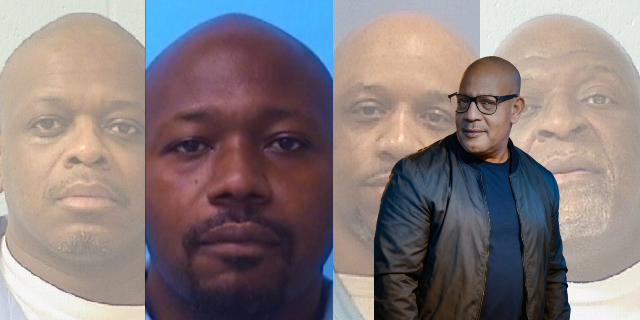
When my phone rang the other night, a recording played, alerting me that the incoming call was from the Illinois State Division of Corrections. Because state corrections officials have a history of moving inmates from facility to facility, I wasn’t sure which of the four Illinois inmates was calling. I hadn’t heard anything from any of these men in nearly a year—not because I had lost interest in writing about their plight, but because their cases were all at critical stages and would be best served by being handled by their respective attorneys.
This call, however, was one I had been anticipating: a call from Mr. Valdez Jordan, a man convicted of murder and armed robbery. The record in Mr. Jordan’s case is extremely troubling—so much so that even the Innocence Project contacted me regarding information I had obtained through my own personal investigation into his case. This is not a story about a convict crying wolf about his purported innocence, nor is it some subjective posture of a journalist waving the flag of injustice without merit.
You see, a federal judge has already recognized that there has been an extraordinary delay in his case. An Illinois appellate court exposed the troubling history of the jailhouse informant used against him. Now the question confronting Madison County is whether the constitutional claims of a man imprisoned for more than a quarter-century will finally receive a meaningful resolution. There comes a point when the passage of time stops looking like a reasonable judicial process and starts looking like an injustice of its own.
For Valdez Lamont Jordan, that point passed many years ago. Jordan has been imprisoned since 1999, convicted in Madison County, Illinois, of the murder of Kenneth Spann and armed robbery. He has consistently maintained that he did not commit those crimes.
In 2003, Jordan filed a petition for post-conviction relief challenging the constitutionality of his conviction. More than 23 years later, his fight continues. Twenty-three years!
Children born when Jordan first challenged his conviction are now adults who can legally sit at a bar and have a drink. Presidents have come and gone. Prosecutors, attorneys, and judges have changed. Yet Jordan continues to fight for a final resolution of constitutional claims arising from a trial held more than a quarter-century ago.
I have covered this case for over eight years as part of my investigative series, “Justice Delayed Is Justice Denied,” examining the convictions of four men from the Alton, Illinois, area whose cases raise disturbing questions about jailhouse informants, questionable prosecution practices, and the administration of justice in Madison County. Valdez Jordan’s case is particularly troubling because of the evidence that was used to convict him, the witnesses whose accounts deserve renewed scrutiny, and the extraordinary length of time his constitutional claims have remained unresolved.
And now, according to information provided to me regarding the ongoing proceedings, his post-conviction pleadings are before Madison County Associate Judge Neil T. Schroeder, who reportedly requested six months to review them. Six more months? I recognize that judges must thoroughly review complicated legal pleadings. No responsible journalist should demand that a judge abandon the law or prejudge a case. But after more than two decades, the public has every right to question why Jordan’s claims have taken this long to be resolved, especially when a federal judge has already recognized the seriousness of that delay.
A Federal Judge Has Already Sounded the Alarm
On June 29, 2023, United States District Judge Staci M. Yandle issued a significant ruling in Jordan’s federal habeas corpus proceeding. The State of Illinois had sought dismissal of his petition because his state-court remedies had not been exhausted. Ordinarily, prisoners must complete available state proceedings before seeking federal habeas relief.
But Jordan argued that the extraordinary delay in his post-conviction case had rendered the state process ineffective. Judge Yandle agreed that the circumstances warranted an exception to the usual exhaustion requirement. Her ruling acknowledged that the delays arose from multiple participants, including defense counsel, the prosecution, and the state court.
She found that Illinois’s post-conviction remedies had proved ineffective for Jordan and denied the state’s motion to dismiss his plea. Understand what that means. Jordan’s claim of extraordinary delay was no longer merely an allegation made by a prisoner desperately seeking relief from incarceration. A federal judge had examined the procedural history and determined that the state’s process had failed to provide him with an effective remedy.
That ruling did not establish Jordan’s innocence or grant his habeas petition. But it established something undeniably important: the delay itself had become a serious problem under federal law. Three more years have passed since that decision, and Madison County still has not resolved Mr. Jordan’s constitutional plea for relief.
The Jailhouse Informant Who Apparently Heard Confessions Everywhere He Went
At the center of Jordan’s conviction stands a name that readers of my investigative reporting should already recognize: Demond Spruill! Mr. Spruill was a recurring prosecution witness in Madison County murder cases, frequently claiming that defendants had confessed their crimes to him while incarcerated. Jordan has always denied confessing to Spruill. Perhaps the most alarming information about this informant does not come from my reporting, Jordan’s attorneys, or another prisoner. It comes from the Illinois Appellate Court itself.
In the 2005 case People v. Brown, the Fifth District Appellate Court examined Spruill’s extraordinary history as a prosecution witness. The court noted that Spruill had repeatedly found himself sharing jail cells with men charged with murder and had repeatedly emerged claiming to possess confessions.
Six separate murder prosecutions over approximately eight years involved Spruill as a witness, according to that opinion. Six! The appellate court also examined the favorable treatment Spruill received while facing serious criminal charges of his own. The judges described a disturbing relationship of mutual benefit between Spruill and Madison County prosecutors.
They questioned the credibility of his claimed lack of interest in receiving favorable treatment. Most importantly, the court found constitutional defects arising from the government’s use of evidence developed through Spruill in Brown’s case. This was no ordinary criticism of an unreliable witness. It was a judicial examination of a recurring practice that should have prompted serious scrutiny of every other prosecution in which Spruill played a significant role.
Valdez Jordan’s case was among those prosecutions, and that should trouble anyone who believes that a murder conviction must rest on reliable evidence rather than a jailhouse informant’s ability to conveniently tell prosecutors what they want to hear.
Where Is the Evidence That Identifies Valdez Jordan as the Killer?
In my earlier investigations, I examined witness accounts and trial-related records that raise substantial questions about how Jordan came to be identified as the perpetrator. The prosecution’s theory was that Jordan had been gambling at the Alton residence where Kenneth Spann was killed, lost his money, and subsequently returned armed to commit a robbery.
Jordan acknowledges having been at the location earlier but maintains that he had left before the killing. Witnesses described a masked assailant, creating obvious difficulties with positive identification. In fact, no state witness has ever identified the killer as Valdez Jordan beyond a shadow of a doubt.
The prosecution relied on circumstantial testimony, including disputed accounts concerning the clothing the shooter was wearing, voice recognition, and a reported sighting of Jordan holding a weapon after the shooting. But no eyewitness account that I have examined conclusively establishes that Jordan was, in fact, the masked gunman.
My reporting also uncovered something else. A witness identified in my earlier articles as Monique Kimble said she informed an Alton detective that Jordan was not the shooter. She identified another man, Jarvis Brown, or possibly someone known as Chuckie, as resembling the perpetrator.
Kimble alleged that the detective pressured her concerning her account and that his written version did not accurately reflect what she had told him. Those are serious allegations that deserve examination against the actual police reports and testimony. Other witness information I reviewed also placed Jarvis Brown near the location of the shooting, giving credibility to Ms. Kimble’s account of what she witnessed.
These accounts do not establish that Brown committed the crime. Nor should anyone be declared guilty based solely on suspicion or an untested allegation. But they do raise an obvious question: Were potentially exculpatory witnesses and alternative-suspect leads adequately investigated, disclosed, and presented to Jordan’s jury?
That question matters because the constitutional burden never belonged to Jordan to prove his innocence. It belonged to the State of Illinois to prove his guilt beyond a reasonable doubt. And if materially false testimony was knowingly used to obtain his conviction, the constitutional consequences could be profound.
Napue: When False Testimony Becomes a Constitutional Violation
One of the critical issues in Jordan’s post-conviction litigation involves allegations associated with Napue v. Illinois, the landmark United States Supreme Court decision addressing the knowing use of false testimony by prosecutors. The constitutional principle is straightforward: the government cannot knowingly obtain a criminal conviction through materially false testimony or allow false testimony to go uncorrected when it has a duty to correct it.
That principle also applies to false testimony concerning a witness’s motives, expectations of leniency, or benefits for cooperating with prosecutors. This is why Demond Spruill’s history matters so much. If Spruill misrepresented the benefits he expected or received for cooperating, and prosecutors knew the testimony was false but failed to correct it, the implications could reach directly into the constitutional integrity of Jordan’s trial.
Whether Jordan has established those elements must be determined through the actual evidence and applicable law. But after what the Illinois Appellate Court revealed about Spruill in People v. Brown, dismissing these concerns as ordinary complaints from a convicted prisoner would be unacceptable.
The public deserves to know whether Jordan’s jury heard the truth about this informant. Not part of the truth. Not a carefully packaged version of the truth. The truth.
The Innocence Project’s Involvement Brings Renewed Attention
There is another significant development in Jordan’s struggle for relief. I have been interviewed by representatives of the Innocence Project concerning witnesses I personally interviewed during my years investigating Jordan’s conviction. For me, this case has never been merely about reading court documents or repeating allegations from a prisoner.
I have spoken with people connected to the events. I have examined testimony, investigated inconsistencies, and published accounts that deserve serious consideration in any meaningful review of Jordan’s conviction. The Innocence Project’s involvement, as reported to me through those contacts, represents an important opportunity for independent examination of the evidence.
It does not, by itself, establish that Jordan is innocent or that a court will grant relief. But the fact that witnesses and investigative material are receiving renewed attention is meaningful. After decades of delay, every credible avenue toward determining what actually happened should be welcomed.

Judge Schroeder, Twenty-Three Years Is Long Enough
This brings us to the Madison County courthouse and the officials charged with seeking justice. Judge Neil T. Schroeder reportedly has Jordan’s post-conviction pleadings under review and requested six months to evaluate them. According to Mr. Jordan, October 20, 2026, will mark exactly six months since the judge began his review.
The judge deserves the opportunity to examine the record thoroughly, consider the parties’ arguments, and apply the governing law. But Jordan also deserves something that has been missing from this proceeding for far too long: a timely resolution. Not another indefinite continuance. Not another unexplained period of inactivity. And certainly not another generation of waiting.
I am not asking Judge Schroeder to decide this case based on public pressure, sympathy, or the opinions expressed in this article. I am asking that the record be evaluated with the seriousness and urgency demanded by its history. The allegations involving Spruill, potential false testimony, disputed witness identification, and the extraordinary post-conviction delay deserve reasoned judicial findings.
Where evidence establishes a constitutional violation requiring relief, that relief should follow unequivocally, without exception. Where allegations are rejected, the court should explain why. What should not be acceptable is allowing Jordan’s claims to remain unresolved year after year without adequate justification.
The Madison County judiciary has an opportunity to demonstrate that constitutional protections are more than promises written on paper. They are obligations that must be enforced.
Kenneth Spann Deserves Justice, Too
We must never forget that a man named Kenneth Spann lost his life. His death was a tragedy, and his loved ones deserve the truth about what happened. Any suggestion that the wrong person was convicted necessarily raises another disturbing possibility: that the person responsible may never have been properly held accountable.
That possibility should concern everyone. A wrongful conviction, if one occurred, would not honor Kenneth Spann. It would compound the tragedy. Justice for a murder victim and justice for a potentially wrongfully convicted man are not competing interests. They are inseparable parts of the same obligation to pursue the truth while meting out actual justice.
A Public Appeal to Madison County and the People of Illinois
I am asking everyone who believes in due process, constitutional accountability, and the fair administration of justice to pay attention to Valdez Jordan’s case. Read the court opinions. Examine the appellate court’s findings about Demond Spruill.
Review the federal habeas ruling recognizing the extraordinary delay. Ask why a post-conviction petition filed in April 2003 has consumed more than 23 years of a man’s life when the state has long established that post-conviction pleadings should take no more than a year to resolve.
And ask what meaningful accountability exists when a prisoner cannot obtain a timely determination of substantial constitutional claims. Members of the public can respectfully contact the appropriate Madison County court administration to express concern about the age of this case and request information about publicly available proceedings and scheduling.
Any communication should respect judicial independence. The merits of Jordan’s pending claims belong in properly filed court proceedings, not private correspondence with the judge.
I also encourage journalists, legal scholars, wrongful-conviction organizations, civil-rights advocates, and concerned citizens to examine the publicly available record. Jordan’s case deserves informed public scrutiny. Not because a journalist has demanded his freedom. Not because a prisoner insists he is innocent. But because the judiciary’s own records reveal extraordinary delay, and an appellate court has already documented deeply troubling practices involving a central prosecution witness used to convict this man.
If those circumstances do not justify careful public attention, what does? Twenty-three years is more than enough time to determine whether a conviction was obtained in accordance with the Constitution. Valdez Jordan should not have to spend the remainder of his life waiting for that question to be answered.
There must be room in our justice system to acknowledge mistakes, correct constitutional violations, and confront uncomfortable truths about how convictions were obtained. And there must be the courage to act when the evidence and the law require it.
To the Madison County judiciary: I pray that you give Valdez Jordan’s constitutional claims the full, fair, and timely resolution they deserve. To the public: Do not allow this case to disappear into another decade of silence. A justice system that takes decades to decide whether it violated a man’s rights has already left an extraordinary question unanswered.
How long must a person wait before the promise of due process becomes something real? Send this man home to his family.
I’m David B. Adams, Independent Investigative Journalist | Crime & Justice Writer | Founder and Editor
The People’s Champion Blog