The Sound Racist Are Trying to Erase: Jeanetta Brantley’s Past On Trial

The moment Jeanetta Brantley made the noise clearer around a call recording, the noise around her character and her past became deafening. Brantley, an audio professional, took a publicly released marine-distress recording connected to the final hours of 18-year-old Nolan Wells and performed what she described as dialogue cleanup. Beneath the panic, wind, machinery and overlapping voices, listeners believed they could hear fragments of conversation that raised disturbing new questions.

Was Nolan’s name spoken? Did someone say he was present? Did the background conversation contradict the account that he had remained behind on Horn Island? The recording does not answer those questions conclusively, and the enhanced audio is not a confession, a sworn statement or a forensic finding. Human ears can misinterpret faint sounds, especially after being shown suggested words. Even audio professionals discussing the recording have warned that some phrases cannot responsibly be declared certain.

But uncertainty is precisely why the recording deserves independent forensic examination, not burial. Instead of demanding that investigators authenticate the original file, preserve its metadata, identify every voice and establish a minute-by-minute timeline, some people reached for a weapon which could only achieve one objective. They put the Black woman on trial.

A mugshot said to be roughly a decade old began circulating across social media. Posts accused Brantley of lacking credibility because public court records reportedly showed a previous Class B misdemeanor conviction in Texas. My investigation of that case describes a personal or neighborhood confrontation involving an alleged threat, not anything connected to audio engineering, evidence alteration, nor any organized violence.

The old case had no demonstrated connection to Nolan Wells, Horn Island, marine communications, audio engineering or the work Brantley performed on the recording. However, claims are beibg circulated that her old conviction proves she manipulated the Wells audio, but that allegation is unsupported by the nature of her misdemeanor case. In fact, Brantley’s past and relation to the Wells case is none.

The mugshot doesn’t identify a voice, establish when the words were spoken, explain why Wells’ phone was reportedly left behind, nor does it reconcile disputed accounts of whether Nolan intended to leave the island with his friends. Additionally, it doesn’t determine how he entered the water, when he died or why an independent autopsy reportedly listed his cause of death as undetermined.

Yet the photograph of Brantley’s arrest 10 years ago was circulated as though it could erase every unanswered question that the teens’ family and a concerned public has been asking. That’s not an investigative finding. It’s character assassination dressed in KKK costume trying to create doubt or redirect a narrative.
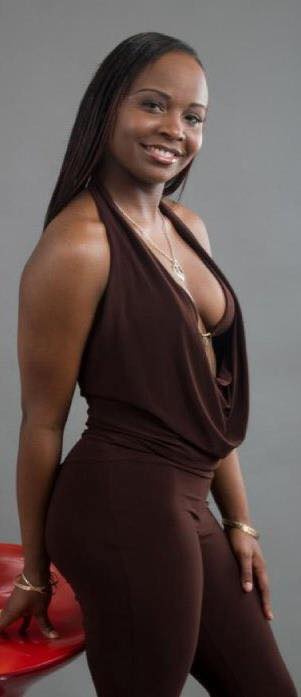
Jeanetta Brantley is the audio professional who cleared up a maritime-distress call to identify background conversation in the Nolan Wells case.

America has seen this ritual before. A Black person presents information that disturbs an accepted narrative. Almost immediately, the conversation shifts away from the information and begans to focus toward the person’s past, appearance, finances, family, mistakes or supposed motives. The goal is not always to disprove the evidence. Sometimes the goal is simply to make the public ashamed to believe the person who presented it.

Brantley did not arrest anyone. She didn’t pronounce a cause of death, nor did she issue a warrant or claim that cleaning a recording solved the case. She worked with sound equipment, and as a result it caused thousands of people to listen more closely to a call that had already become central to public discussion.

Reporting from major news outlets confirms that the emergency recording captured a frantic call concerning a boat taking on water hours before Wells was reported missing. Also, the noted background chatter has fueled debate over whether Nolan’s name or other significant language can be heard. The audio has intensified scrutiny because the caller reportedly stated that everyone was aboard and safe, while later accounts maintained that Wells had remained on the island.

Those apparent inconsistencies do not prove homicide or a conspiracy. Nor does the audio establish the identity of every speaker. The cleared verssion of the audio establish the need for additional questions. Asking questions surrounding the recording isn’t defamation, harassment, and is only what remain when a young man leaves home for a holiday gathering and never comes back alive.

Brantley has publicly acknowledged that she has never hidden or denied her past.

That should have ended the attempted scandal.

Instead, critics circulated the old image as a substitute for addressing the recording itself. They apparently hoped the sight of a Black woman in a booking photograph would trigger an automatic public verdict: criminal, dishonest, unworthy of belief.

But a misdemeanor from years ago does not make audio frequencies disappear.

A past arrest does not alter the waveform.

A booking photograph cannot reach backward through time and place words into a marine-distress call.

Anyone who believes Brantley’s work is flawed should demonstrate the flaw. Obtain the original recording. Examine the chain of custody. Review the file’s compression. Document the filters used. Compare the cleaned version with the untouched source. Submit both to multiple independent forensic-audio laboratories.

That is how evidence is challenged.

You do not challenge sound with a mugshot.

You challenge sound with science.

Listen Carefully—but Do Not Stop Listening

Responsible reporting requires an important distinction: cleaned audio can make existing sounds easier to perceive, but aggressive processing can also introduce artifacts, remove context or make ambiguous sounds appear more definite than they are. Listeners can also experience auditory suggestion—hearing words because captions or another person told them what to expect.

That is why no viral transcript should be accepted as the final truth.

But that caution cuts both ways.

The possibility of misinterpretation is not permission to ignore the recording. It is a reason for authorities to commission a transparent, independent forensic analysis using the highest-quality original file—not another social-media copy that has been compressed, reposted and processed repeatedly.

Brantley’s work should therefore be treated for what it is: a lead worthy of professional review, not a courtroom verdict and not an excuse for a digital lynching.

The people attempting to discredit her face a simple problem. The broader Nolan Wells case contained unanswered questions before Jeanetta Brantley ever touched the audio.

Wells disappeared after a July 4 gathering on Horn Island and was found dead two days later. His family has challenged early assumptions of accidental drowning, while an independent autopsy reportedly could not determine the cause of death or rule out foul play. The investigation remains open, and Wells’ family has sought the preservation of digital records and other evidence connected to his final hours.

What was or wasn’t discovered after she produced a clear version of that audio wasn’t created by Brantley. She literally walked into those uncertainties.

The racial element of this entire story can’t be dismissed merely because those circulating the mugshot deny racist intent. Racism is not limited to shouted slurs and burning crosses. It also lives in the unequal distribution of innocence and credibility. White subjects in controversial cases are often introduced through graduation photographs, family statements and descriptions of promising futures. While Black subjects and witnesses are reduced to the worst photograph ever taken of them.

One image humanizes but in contrast, the image of another prosecutes them. That pattern matters here because the old arrest photograph was not circulated to illuminate Brantley’s audio methods. It was circulated to contaminate public perception of her before people considered the questions her work raised.

The message behind circulating her mugshot coulldn’t have been anymore transparent. Don’t respond to the cleared version of the recording. Make people afraid of the woman who cleaned it. Don’t explain the disputed voices. Don’t examine Nolan’s final hours. Put Jeanetta Brantley’s worst hour on an endless digital loop across social media. That will help spread a narrative that xplains why she is supposedly unworthy of credit for hearing what we all heard on the recording.

But this time the deflective tactic failed. It failed because the public understands that imperfect people can still uncover important information. Reporters, histories, witnesses, scientists, and whistleblowers alike have criminal records, made past mistakes or are products of unfavorable past behaviors. But none of that relieves us of the obligation to test the evidence itself.

Jeanetta Brantley does not have to be flawless for the recording to deserve examination. She only has to be right that there is something there worth hearing., and by what thousands of people heard in her cleared version appears to be remarkable.

The tactic of digging up a person’s past may be the sound of an old American machine grinding back to life. The machine that protects comfortable narratives by criminalizing the Black people who disturb them. Jeanetta Brantley cleaned a recording and her critics responded by trying to dirty-up her name. But a decade-old mugshot cannot drown out the sound of questions now echoing across the country

What, exactly, was happening in the background of that call? Why are some people more determined to investigate Jeanetta Brantley’s past than Nolan Wells’ death?

I’m David B. Adams, Journalist and Blogger

The People’s Champion Blog
David Adams

David Adams

David B. Adams grew up in the Highlandtown section of Baltimore's southeast district and is his parent's youngest child. He experienced pervasive poverty, which taught him humility and compassion for the plight of others. His exposure to violence and gritty urban life were some of his early lessons of life's many hardships. Adams credits the upheavals he endured during his conformity with helping to shape the foundation of his outlook and perspectives on society. With a steadfast commitment to giving voice to the voiceless, Adams is a journalist, crime writer, and blogger renowned for tireless investigative journalism and advocacy on behalf of vulnerable populations. As founder and administrator of The People's Champion, Adams sheds light on critical social issues, championing the rights of: - Homeless individuals - Victims of violent crime and their families - Wrongfully convicted individuals - Missing and exploited children; Additionally, he is a seasoned investigative reporter, Adams has earned recognition for relentless pursuit of truth and justice. With a strong national and global focus, on inspiring meaningful change and crucial conversations impacting all of humanity.

More Posts - Website

Follow Me:Add me on XAdd me on FacebookAdd me on LinkedIn

The moment Jeanetta Brantley made the noise clearer around a call recording, the noise around her character and her past became deafening. Brantley, an audio professional, took a publicly released marine-distress recording connected to the final hours of 18-year-old Nolan Wells and performed what she described as dialogue cleanup. Beneath the panic, wind, machinery and overlapping voices, listeners believed they could hear fragments of conversation that raised disturbing new questions.

Was Nolan’s name spoken? Did someone say he was present? Did the background conversation contradict the account that he had remained behind on Horn Island? The recording does not answer those questions conclusively, and the enhanced audio is not a confession, a sworn statement or a forensic finding. Human ears can misinterpret faint sounds, especially after being shown suggested words. Even audio professionals discussing the recording have warned that some phrases cannot responsibly be declared certain.

But uncertainty is precisely why the recording deserves independent forensic examination, not burial. Instead of demanding that investigators authenticate the original file, preserve its metadata, identify every voice and establish a minute-by-minute timeline, some people reached for a weapon which could only achieve one objective. They put the Black woman on trial.

A mugshot said to be roughly a decade old began circulating across social media. Posts accused Brantley of lacking credibility because public court records reportedly showed a previous Class B misdemeanor conviction in Texas. My investigation of that case describes a personal or neighborhood confrontation involving an alleged threat, not anything connected to audio engineering, evidence alteration, nor any organized violence.

The old case had no demonstrated connection to Nolan Wells, Horn Island, marine communications, audio engineering or the work Brantley performed on the recording. However, claims are beibg circulated that her old conviction proves she manipulated the Wells audio, but that allegation is unsupported by the nature of her misdemeanor case. In fact, Brantley’s past and relation to the Wells case is none.

The mugshot doesn’t identify a voice, establish when the words were spoken, explain why Wells’ phone was reportedly left behind, nor does it reconcile disputed accounts of whether Nolan intended to leave the island with his friends. Additionally, it doesn’t determine how he entered the water, when he died or why an independent autopsy reportedly listed his cause of death as undetermined.

Yet the photograph of Brantley’s arrest 10 years ago was circulated as though it could erase every unanswered question that the teens’ family and a concerned public has been asking. That’s not an investigative finding. It’s character assassination dressed in KKK costume trying to create doubt or redirect a narrative.

Jeanetta Brantley is the audio professional who cleared up a maritime-distress call to identify background conversation in the Nolan Wells case.

America has seen this ritual before. A Black person presents information that disturbs an accepted narrative. Almost immediately, the conversation shifts away from the information and begans to focus toward the person’s past, appearance, finances, family, mistakes or supposed motives. The goal is not always to disprove the evidence. Sometimes the goal is simply to make the public ashamed to believe the person who presented it.

Brantley did not arrest anyone. She didn’t pronounce a cause of death, nor did she issue a warrant or claim that cleaning a recording solved the case. She worked with sound equipment, and as a result it caused thousands of people to listen more closely to a call that had already become central to public discussion.

Reporting from major news outlets confirms that the emergency recording captured a frantic call concerning a boat taking on water hours before Wells was reported missing. Also, the noted background chatter has fueled debate over whether Nolan’s name or other significant language can be heard. The audio has intensified scrutiny because the caller reportedly stated that everyone was aboard and safe, while later accounts maintained that Wells had remained on the island.

Those apparent inconsistencies do not prove homicide or a conspiracy. Nor does the audio establish the identity of every speaker. The cleared verssion of the audio establish the need for additional questions. Asking questions surrounding the recording isn’t defamation, harassment, and is only what remain when a young man leaves home for a holiday gathering and never comes back alive.

Brantley has publicly acknowledged that she has never hidden or denied her past.

That should have ended the attempted scandal.

Instead, critics circulated the old image as a substitute for addressing the recording itself. They apparently hoped the sight of a Black woman in a booking photograph would trigger an automatic public verdict: criminal, dishonest, unworthy of belief.

But a misdemeanor from years ago does not make audio frequencies disappear.

A past arrest does not alter the waveform.

A booking photograph cannot reach backward through time and place words into a marine-distress call.

Anyone who believes Brantley’s work is flawed should demonstrate the flaw. Obtain the original recording. Examine the chain of custody. Review the file’s compression. Document the filters used. Compare the cleaned version with the untouched source. Submit both to multiple independent forensic-audio laboratories.

That is how evidence is challenged.

You do not challenge sound with a mugshot.

You challenge sound with science.

Listen Carefully—but Do Not Stop Listening

Responsible reporting requires an important distinction: cleaned audio can make existing sounds easier to perceive, but aggressive processing can also introduce artifacts, remove context or make ambiguous sounds appear more definite than they are. Listeners can also experience auditory suggestion—hearing words because captions or another person told them what to expect.

That is why no viral transcript should be accepted as the final truth.

But that caution cuts both ways.

The possibility of misinterpretation is not permission to ignore the recording. It is a reason for authorities to commission a transparent, independent forensic analysis using the highest-quality original file—not another social-media copy that has been compressed, reposted and processed repeatedly.

Brantley’s work should therefore be treated for what it is: a lead worthy of professional review, not a courtroom verdict and not an excuse for a digital lynching.

The people attempting to discredit her face a simple problem. The broader Nolan Wells case contained unanswered questions before Jeanetta Brantley ever touched the audio.

Wells disappeared after a July 4 gathering on Horn Island and was found dead two days later. His family has challenged early assumptions of accidental drowning, while an independent autopsy reportedly could not determine the cause of death or rule out foul play. The investigation remains open, and Wells’ family has sought the preservation of digital records and other evidence connected to his final hours.

What was or wasn’t discovered after she produced a clear version of that audio wasn’t created by Brantley. She literally walked into those uncertainties.

The racial element of this entire story can’t be dismissed merely because those circulating the mugshot deny racist intent. Racism is not limited to shouted slurs and burning crosses. It also lives in the unequal distribution of innocence and credibility. White subjects in controversial cases are often introduced through graduation photographs, family statements and descriptions of promising futures. While Black subjects and witnesses are reduced to the worst photograph ever taken of them.

One image humanizes but in contrast, the image of another prosecutes them. That pattern matters here because the old arrest photograph was not circulated to illuminate Brantley’s audio methods. It was circulated to contaminate public perception of her before people considered the questions her work raised.

The message behind circulating her mugshot coulldn’t have been anymore transparent. Don’t respond to the cleared version of the recording. Make people afraid of the woman who cleaned it. Don’t explain the disputed voices. Don’t examine Nolan’s final hours. Put Jeanetta Brantley’s worst hour on an endless digital loop across social media. That will help spread a narrative that xplains why she is supposedly unworthy of credit for hearing what we all heard on the recording.

But this time the deflective tactic failed. It failed because the public understands that imperfect people can still uncover important information. Reporters, histories, witnesses, scientists, and whistleblowers alike have criminal records, made past mistakes or are products of unfavorable past behaviors. But none of that relieves us of the obligation to test the evidence itself.

Jeanetta Brantley does not have to be flawless for the recording to deserve examination. She only has to be right that there is something there worth hearing., and by what thousands of people heard in her cleared version appears to be remarkable.

The tactic of digging up a person’s past may be the sound of an old American machine grinding back to life. The machine that protects comfortable narratives by criminalizing the Black people who disturb them. Jeanetta Brantley cleaned a recording and her critics responded by trying to dirty-up her name. But a decade-old mugshot cannot drown out the sound of questions now echoing across the country

What, exactly, was happening in the background of that call? Why are some people more determined to investigate Jeanetta Brantley’s past than Nolan Wells’ death?

I’m David B. Adams, Journalist and Blogger

The People’s Champion Blog

David Adams

David Adams

David B. Adams grew up in the Highlandtown section of Baltimore's southeast district and is his parent's youngest child. He experienced pervasive poverty, which taught him humility and compassion for the plight of others. His exposure to violence and gritty urban life were some of his early lessons of life's many hardships. Adams credits the upheavals he endured during his conformity with helping to shape the foundation of his outlook and perspectives on society. With a steadfast commitment to giving voice to the voiceless, Adams is a journalist, crime writer, and blogger renowned for tireless investigative journalism and advocacy on behalf of vulnerable populations. As founder and administrator of The People's Champion, Adams sheds light on critical social issues, championing the rights of: - Homeless individuals - Victims of violent crime and their families - Wrongfully convicted individuals - Missing and exploited children; Additionally, he is a seasoned investigative reporter, Adams has earned recognition for relentless pursuit of truth and justice. With a strong national and global focus, on inspiring meaningful change and crucial conversations impacting all of humanity.

More Posts - Website

Follow Me:Add me on XAdd me on FacebookAdd me on LinkedIn

You can leave a response, or trackback from your own site.

Leave a Reply

- See more at: http://thepeopleschampion.me/wp-admin/options-general.php?page=side-tab#sthash.HEuco14y.dpuf