The Lingering Public Indictment of Al Sharpton: Tawana Brawley Never Admitted She Lied and That Distinction Should Matter to Seekers of Justice
Posted by David Adams on July 26th, 2026
A lie repeated for nearly forty years does not become a confession simply because the public wants to believe it and has memorized it.
Whenever the Reverend Al Sharpton enters a racially sensitive case, his critics reach reflexively for the same name. Tawana Brawley. They do not merely say that a grand jury rejected Brawley’s allegations. They frequently insist that Brawley admitted she lied, that Sharpton knowingly promoted a confessed hoax and that the case marked the beginning of a lifelong scheme to manufacture racial controversies for money and attention.
Believe what you will. But there is one major problem with that popular account: No credible public record establishes that Tawana Brawley ever admitted she lied. No authenticated interview has ever surfaced in which Brawley confesses to inventing the allegations. No sworn recantation has ever been produced. No recording captures her saying she staged the incident. Nor is there court transcript which contains such an admission. To the contrary, Brawley and members of her family continued to maintain to this day that something happened to her.
I’m not saying that means the official findings should be concealed or distorted. I’m merely stating the facts regarding a case that galvanised the entire country along racial lines.
In 1988, a New York grand jury concluded that Brawley had not been abducted or sexually assaulted as alleged and that the incident had been fabricated. They ruled that medical and forensic evidence didn’t support her account. Former prosecutor Steven Pagones, who had been publicly accused of participating in the alleged assault, later prevailed in defamation litigation against Brawley and her advisors. A jury also found that Al Sharpton and two of Brawley’s other advisers had defamed Pagones by accusing him.
Those are consequential facts. They belong in any honest examination of the en tire Tawana Brawley case. But they are not the same as a confession.
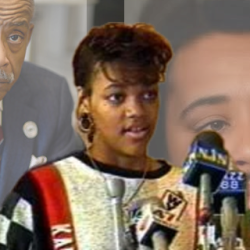
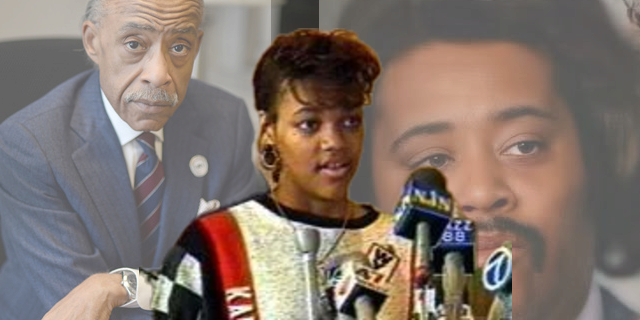
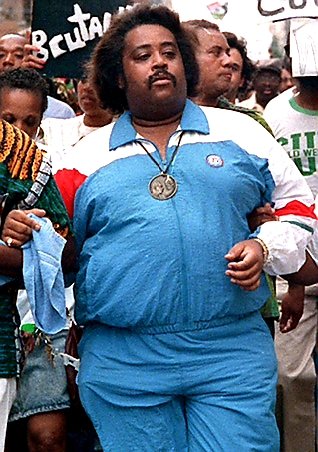
A1987 image Brawley along with Al Sharpton and an advisor (photo by CNN).
A grand jury’s conclusion is a finding by a government body. A civil judgment is a legal determination concerning the people and allegations before the court. Neither magically places the words “I lied” into Brawley’s mouth. That distinction is not semantic trickery. It’s the difference between reporting what was officially determined and inventing something a person supposedly said.
The Brawley controversy deserves serious scrutiny. Sharpton and the attorneys surrounding the family made extraordinary accusations, including accusations against identifiable people. When evidence does not substantiate such allegations, the damage to the falsely accused can be permanent. That what Civil Courts are for.
Sharpton’s role should therefore remain open to criticism. He was not merely a silent observer. He used his platform to amplify claims that were later rejected, and he was held civilly liable for defamatory statements concerning Pagones. But legitimate criticism is weakened, not strengthened, when critics embellish the historical record.
The honest argument is that Sharpton aggressively championed allegations that investigators found to be fabricated and that a jury later found some of his statements defamatory. The dishonest shortcut is that Brawley confessed, Sharpton knew it was a hoax and the two deliberately constructed a fraud together. The first statement is grounded in documented findings. The second requires evidence that has never been publicly established.
There has been reports that people close to Brawley claimed she privately acknowledged fabrication. Such secondhand accounts may be considered when examining the controversy, but an allegation that someone confessed to another person is not a publicly authenticated confession by Brawley herself. It cannot honestly be presented as though the public watched her recant under oath.
The same historical distortion has now resurfaced as Sharpton joins the Wells family in demanding answers about the death of 18-year-old Nolan Xavier Wells. Wells disappeared during a July 4 outing to Horn Island, Mississippi. His body was discovered two days later. Questions have persisted about the circumstances under which he became separated from his companions, why others reportedly had possession of his telephone and what happened during the final hours of his life. An independent autopsy listed the cause and manner of death as undetermined, pending further investigation. Mississippi officials have announced that the case will be presented to a grand jury.
Those developments alone prove why demands for transparency should not be dismissed as racial theater. An undetermined cause of death is not proof of murder. It is also not proof of an accident. It means the evidence has not yet produced a conclusive answer. Sharpton, Tyler Perry, and Terrel Owens have offered a combined $125,000 reward for information in the case. Sharpton has called for a thorough investigation, while Wells’ family and attorney Ben Crump continue to raise questions about the circumstances surrounding his disappearance and death.
Requesting answers is not the same as declaring people guilty. Insisting that witnesses speak is not the same as manufacturing a crime. Supporting a grieving family is not proof of profiteering. and allowing a grand jury to examine the evidence is precisely how a legal system is supposed to address unresolved questions.
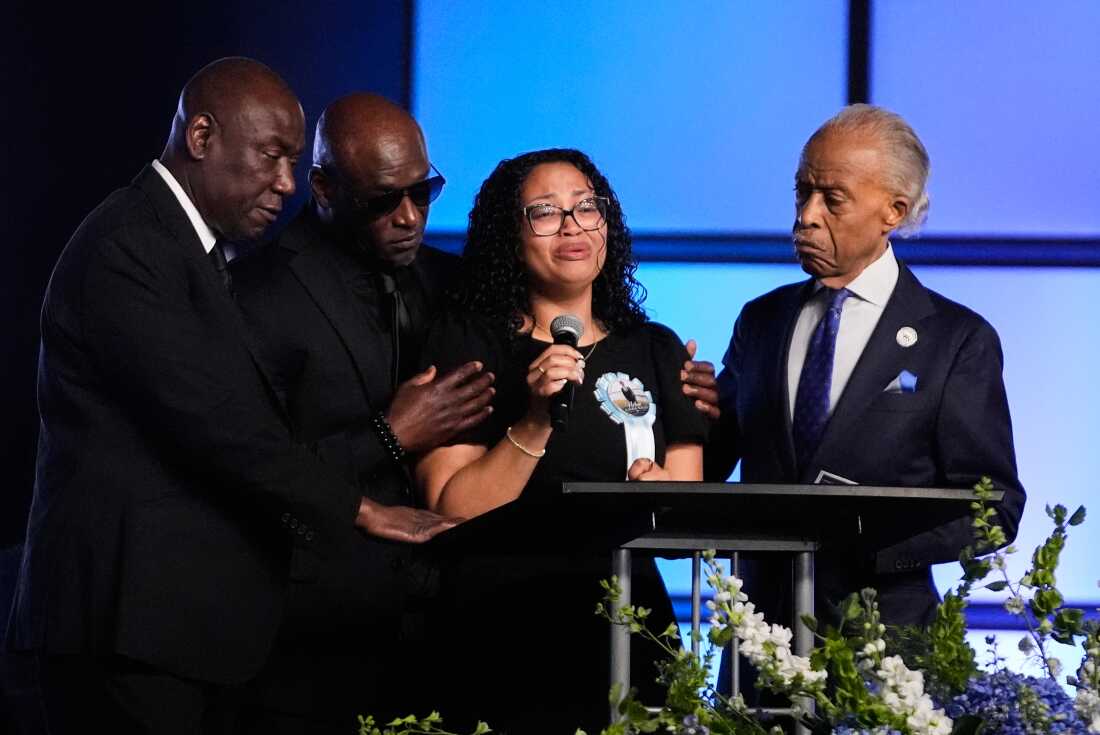
Ben Crump and Rev. Al Sharpton console the grieving parents of Nolan Wells in Mississippi funeral (photo by NPR).
Some attacks on Sharpton have little to do with evidence. Within certain corners of both Black and white social media, cooperation with federal investigators or calls for witnesses to come forward are treated as dishonorable “snitching.” That mentality protects no community. It protects silence.
The FBI has reportedly assisted authorities and investigated threats connected to the intense public reaction surrounding the Wells case. That federal activity should not be exaggerated into proof that Sharpton controls the investigation or possesses inside knowledge. It does, however, demonstrate that the controversy has moved beyond ordinary online debate and into conduct serious enough to attract federal attention.
No person should threaten Wells’ friends, his family, witnesses, law-enforcement officers or anyone else connected to the investigation. Seeking justice does not require a digital lynch mob. The demand must be for evidence, testimony and lawful accountability, not speculation dressed as certainty. But condemning threats does not require the public to stop asking questions.
Other critics abandon the facts entirely and attack Sharpton’s weight, hairstyle, voice, clothing or mannerisms from decades ago. Those insults may entertain people who already dislike him, but they establish nothing about the Wells investigation nor the absolute truth about the Tawana Brawley case of years ago.
A man’s old hairstyle cannot determine a cause of death or determine whether a 15-year-old girl lied. His body size cannot explain why a teenager disappeared. His voice cannot resolve conflicting accounts. More importantly, his public image cannot substitute for toxicology, forensic evidence, witness statements or a complete timeline.
Sharpton is a polarizing figure. People may reasonably question his rhetoric, his methods and decisions he made in earlier cases. But caricaturing his appearance is not investigative analysis. It’s an attempt to discredit the messenger without addressing the message.
A heavier Al Sharpton in the Brawley years.
Black Americans are constantly instructed to wait for the evidence whenever authorities initially describe a suspicious death as accidental. That principle should apply to everyone. Those who believe the Wells case has been sensationalized, suspect foul play, defending the young people who accompanied Wells, and accussing them should wait for the evidence. But waiting for evidence does not mean surrendering the right to demand that evidence be collected, preserved and independently examined.
Mississippi’s history does not prove what happened to Nolan Wells. It does, however, explain why some Black families distrust quick assurances when a young Black person dies under unresolved circumstances. Historical distrust cannot convict anyone, but neither should it be mocked as irrational paranoia.
The strongest defense of justice is accuracy. It would be inaccurate to claim that the Brawley allegations were officially vindicated. They were not. A grand jury rejected them, and the civil litigation arising from accusations against Pagones produced findings against Brawley and her advisers. But it’s equally inaccurate to claim that Brawley publicly admitted lying. No credible public confession has ever been established.
Sharpton can be criticized for his handling of the Brawley case without falsely manufacturing a confession. He can be challenged about his language without treating every case he supports as an extension of Brawley. And the Wells family can seek answers without being accused of participating in a racial hoax before the investigation has even determined how their son died.
The Nolan Wells case should rise or fall on the evidence in the Nolan Wells case. Not on Sharpton’s hairstyle, internet hostility toward “snitches,” assumptions about Mississippi, nor a confession from Tawana Brawley that the public record does not contain.
Critics who claim to oppose exaggeration should stop exaggerating history themselves. Justice is not served by replacing one unproven narrative with another. It is served by separating what has been established, what remains disputed and what has simply been repeated so often that people mistake it for fact.
Tawana Brawley did not publicly admit she lied. The official investigation concluded that her allegations were fabricated. Those are two different statements, and anyone claiming to care about truth and justice should be capable of telling the difference.
David B. Adams grew up in the Highlandtown section of Baltimore's southeast district and is his parent's youngest child. He experienced pervasive poverty, which taught him humility and compassion for the plight of others. His exposure to violence and gritty urban life were some of his early lessons of life's many hardships. Adams credits the upheavals he endured during his conformity with helping to shape the foundation of his outlook and perspectives on society.
With a steadfast commitment to giving voice to the voiceless, Adams is a journalist, crime writer, and blogger renowned for tireless investigative journalism and advocacy on behalf of vulnerable populations. As founder and administrator of The People's Champion, Adams sheds light on critical social issues, championing the rights of:
- Homeless individuals
- Victims of violent crime and their families
- Wrongfully convicted individuals
- Missing and exploited children; Additionally, he is
a seasoned investigative reporter, Adams has earned recognition for relentless pursuit of truth and justice. With a strong national and global focus, on inspiring meaningful change and crucial conversations impacting all of humanity.
A lie repeated for nearly forty years does not become a confession simply because the public wants to believe it and has memorized it.
Whenever the Reverend Al Sharpton enters a racially sensitive case, his critics reach reflexively for the same name. Tawana Brawley. They do not merely say that a grand jury rejected Brawley’s allegations. They frequently insist that Brawley admitted she lied, that Sharpton knowingly promoted a confessed hoax and that the case marked the beginning of a lifelong scheme to manufacture racial controversies for money and attention.
Believe what you will. But there is one major problem with that popular account: No credible public record establishes that Tawana Brawley ever admitted she lied. No authenticated interview has ever surfaced in which Brawley confesses to inventing the allegations. No sworn recantation has ever been produced. No recording captures her saying she staged the incident. Nor is there court transcript which contains such an admission. To the contrary, Brawley and members of her family continued to maintain to this day that something happened to her.
I’m not saying that means the official findings should be concealed or distorted. I’m merely stating the facts regarding a case that galvanised the entire country along racial lines.
In 1988, a New York grand jury concluded that Brawley had not been abducted or sexually assaulted as alleged and that the incident had been fabricated. They ruled that medical and forensic evidence didn’t support her account. Former prosecutor Steven Pagones, who had been publicly accused of participating in the alleged assault, later prevailed in defamation litigation against Brawley and her advisors. A jury also found that Al Sharpton and two of Brawley’s other advisers had defamed Pagones by accusing him.
Those are consequential facts. They belong in any honest examination of the en tire Tawana Brawley case. But they are not the same as a confession.
A1987 image Brawley along with Al Sharpton and an advisor (photo by CNN).
A grand jury’s conclusion is a finding by a government body. A civil judgment is a legal determination concerning the people and allegations before the court. Neither magically places the words “I lied” into Brawley’s mouth. That distinction is not semantic trickery. It’s the difference between reporting what was officially determined and inventing something a person supposedly said.
The Brawley controversy deserves serious scrutiny. Sharpton and the attorneys surrounding the family made extraordinary accusations, including accusations against identifiable people. When evidence does not substantiate such allegations, the damage to the falsely accused can be permanent. That what Civil Courts are for.
Sharpton’s role should therefore remain open to criticism. He was not merely a silent observer. He used his platform to amplify claims that were later rejected, and he was held civilly liable for defamatory statements concerning Pagones. But legitimate criticism is weakened, not strengthened, when critics embellish the historical record.
The honest argument is that Sharpton aggressively championed allegations that investigators found to be fabricated and that a jury later found some of his statements defamatory. The dishonest shortcut is that Brawley confessed, Sharpton knew it was a hoax and the two deliberately constructed a fraud together. The first statement is grounded in documented findings. The second requires evidence that has never been publicly established.
There has been reports that people close to Brawley claimed she privately acknowledged fabrication. Such secondhand accounts may be considered when examining the controversy, but an allegation that someone confessed to another person is not a publicly authenticated confession by Brawley herself. It cannot honestly be presented as though the public watched her recant under oath.
The same historical distortion has now resurfaced as Sharpton joins the Wells family in demanding answers about the death of 18-year-old Nolan Xavier Wells. Wells disappeared during a July 4 outing to Horn Island, Mississippi. His body was discovered two days later. Questions have persisted about the circumstances under which he became separated from his companions, why others reportedly had possession of his telephone and what happened during the final hours of his life. An independent autopsy listed the cause and manner of death as undetermined, pending further investigation. Mississippi officials have announced that the case will be presented to a grand jury.
Those developments alone prove why demands for transparency should not be dismissed as racial theater. An undetermined cause of death is not proof of murder. It is also not proof of an accident. It means the evidence has not yet produced a conclusive answer. Sharpton, Tyler Perry, and Terrel Owens have offered a combined $125,000 reward for information in the case. Sharpton has called for a thorough investigation, while Wells’ family and attorney Ben Crump continue to raise questions about the circumstances surrounding his disappearance and death.
Requesting answers is not the same as declaring people guilty. Insisting that witnesses speak is not the same as manufacturing a crime. Supporting a grieving family is not proof of profiteering. and allowing a grand jury to examine the evidence is precisely how a legal system is supposed to address unresolved questions.
Ben Crump and Rev. Al Sharpton console the grieving parents of Nolan Wells in Mississippi funeral (photo by NPR).
Some attacks on Sharpton have little to do with evidence. Within certain corners of both Black and white social media, cooperation with federal investigators or calls for witnesses to come forward are treated as dishonorable “snitching.” That mentality protects no community. It protects silence.
The FBI has reportedly assisted authorities and investigated threats connected to the intense public reaction surrounding the Wells case. That federal activity should not be exaggerated into proof that Sharpton controls the investigation or possesses inside knowledge. It does, however, demonstrate that the controversy has moved beyond ordinary online debate and into conduct serious enough to attract federal attention.
No person should threaten Wells’ friends, his family, witnesses, law-enforcement officers or anyone else connected to the investigation. Seeking justice does not require a digital lynch mob. The demand must be for evidence, testimony and lawful accountability, not speculation dressed as certainty. But condemning threats does not require the public to stop asking questions.
Other critics abandon the facts entirely and attack Sharpton’s weight, hairstyle, voice, clothing or mannerisms from decades ago. Those insults may entertain people who already dislike him, but they establish nothing about the Wells investigation nor the absolute truth about the Tawana Brawley case of years ago.
A man’s old hairstyle cannot determine a cause of death or determine whether a 15-year-old girl lied. His body size cannot explain why a teenager disappeared. His voice cannot resolve conflicting accounts. More importantly, his public image cannot substitute for toxicology, forensic evidence, witness statements or a complete timeline.
Sharpton is a polarizing figure. People may reasonably question his rhetoric, his methods and decisions he made in earlier cases. But caricaturing his appearance is not investigative analysis. It’s an attempt to discredit the messenger without addressing the message.
A heavier Al Sharpton in the Brawley years.
Black Americans are constantly instructed to wait for the evidence whenever authorities initially describe a suspicious death as accidental. That principle should apply to everyone. Those who believe the Wells case has been sensationalized, suspect foul play, defending the young people who accompanied Wells, and accussing them should wait for the evidence. But waiting for evidence does not mean surrendering the right to demand that evidence be collected, preserved and independently examined.
Mississippi’s history does not prove what happened to Nolan Wells. It does, however, explain why some Black families distrust quick assurances when a young Black person dies under unresolved circumstances. Historical distrust cannot convict anyone, but neither should it be mocked as irrational paranoia.
The strongest defense of justice is accuracy. It would be inaccurate to claim that the Brawley allegations were officially vindicated. They were not. A grand jury rejected them, and the civil litigation arising from accusations against Pagones produced findings against Brawley and her advisers. But it’s equally inaccurate to claim that Brawley publicly admitted lying. No credible public confession has ever been established.
Sharpton can be criticized for his handling of the Brawley case without falsely manufacturing a confession. He can be challenged about his language without treating every case he supports as an extension of Brawley. And the Wells family can seek answers without being accused of participating in a racial hoax before the investigation has even determined how their son died.
The Nolan Wells case should rise or fall on the evidence in the Nolan Wells case. Not on Sharpton’s hairstyle, internet hostility toward “snitches,” assumptions about Mississippi, nor a confession from Tawana Brawley that the public record does not contain.
Critics who claim to oppose exaggeration should stop exaggerating history themselves. Justice is not served by replacing one unproven narrative with another. It is served by separating what has been established, what remains disputed and what has simply been repeated so often that people mistake it for fact.
Tawana Brawley did not publicly admit she lied. The official investigation concluded that her allegations were fabricated. Those are two different statements, and anyone claiming to care about truth and justice should be capable of telling the difference.
David B. Adams grew up in the Highlandtown section of Baltimore's southeast district and is his parent's youngest child. He experienced pervasive poverty, which taught him humility and compassion for the plight of others. His exposure to violence and gritty urban life were some of his early lessons of life's many hardships. Adams credits the upheavals he endured during his conformity with helping to shape the foundation of his outlook and perspectives on society.
With a steadfast commitment to giving voice to the voiceless, Adams is a journalist, crime writer, and blogger renowned for tireless investigative journalism and advocacy on behalf of vulnerable populations. As founder and administrator of The People's Champion, Adams sheds light on critical social issues, championing the rights of:
- Homeless individuals
- Victims of violent crime and their families
- Wrongfully convicted individuals
- Missing and exploited children; Additionally, he is
a seasoned investigative reporter, Adams has earned recognition for relentless pursuit of truth and justice. With a strong national and global focus, on inspiring meaningful change and crucial conversations impacting all of humanity.
Missing Since Oct 19, 2013 Missing From Newark, NJ Age Now 14 Anyone with information regarding the whereabouts of Victoria Williams may contact Newark Police at (973) 733-6000
(CBS/AP) WATERVILLE, Maine - For the first time in the ongoing investigation of missing toddler Ayla Reynolds, police have said they believe she has been kidnapped. Investigators said Monday the 20-month-old was taken away and did not walk out on on her own.Police Chief Joseph Massey said at a news conference, "At this point in […]
DETROIT (WJBK) -- Detroit Police has announced it has joined forces with Michigan State Police and the FBI to find two missing children after their mother was found dead Monday. The Michigan State Police earlier denied a Detroit police request for an Amber Alert to be issued. "What I'm told is [The Amber Alert] didn't […]
 RSS Feed
 Twitter





 Posted in