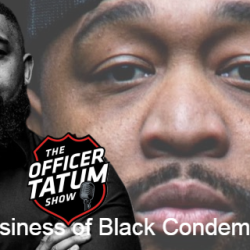
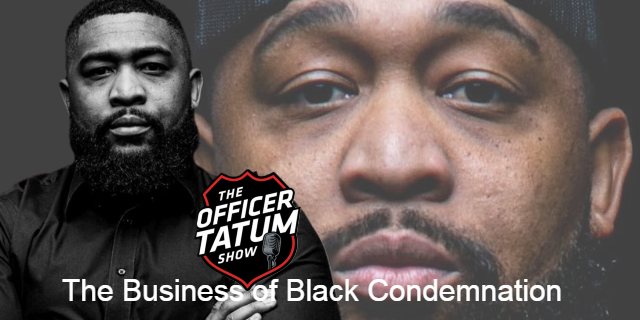
The Officer Tatum Show: Brandon Tatum and the Business of Black Condemnation
Posted by David Adams on July 25th, 2026
There is a lucrative market in America for a Black man willing to tell white audiences that racism is exaggerated, Black distrust is irrational, and the real problem is always Black people themselves. Brandon Tatum has learned how to work that market.
The former police officer turned conservative podcaster has built a large platform by repeatedly presenting himself as the man courageous enough to say what supposedly no one else will say about Black America. But courage is not measured by how viciously a person criticizes his own community before an audience already eager to hear it condemned. Sometimes that is not bravery at all. In fact, when skillfully crafted, it’s simply branding.
Tatum recently attacked comedian D.L. Hughley and acussed him of race baiting after he posted an image online of Tatum along side his wife. Tatum’s interracial marriage is not a problem for many in the Black community. Black people have no legitimate claim over whom another Black person chooses to love or marry. But marriage to a white spouse does not grant anyone a special license to ridicule Black concerns, dismiss Black historical memory or declare himself the final authority on what is and is not racism.
His personal relationships do not make his racial commentary more credible. His arguments must stand on their own. That distinction became especially important when Tatum recently used his platform to defend the friends who accompanied 18-year-old Nolan Xavier Wells to Horn Island, Mississippi, before Wells disappeared and was later found dead over the 4th of July holiday. Tatum promoted an interview with one of Wells’ so called friends and advanced the position that the young men had been unfairly blamed and were innocent. He reportedly went so far as to suggest that the public owed them an apology.
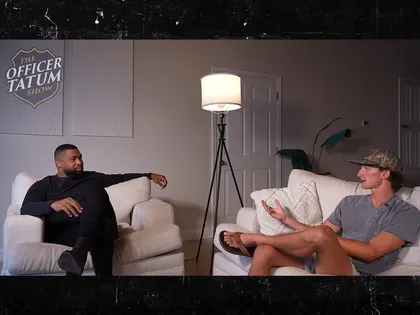
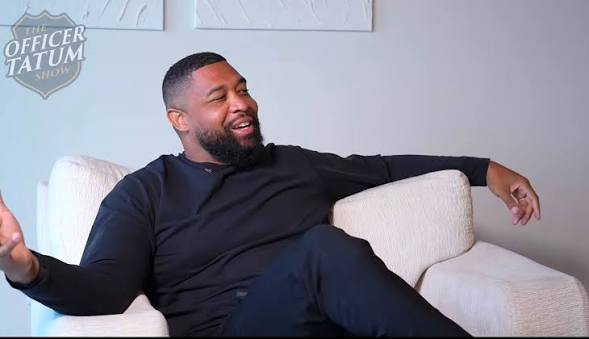
Brandon Tatum interviewing Warren Hudson regarding the Nolan wells case.
But innocent of what and based upon whose completed investigation?
As of July 25, 2026, the circumstances of Nolan Wells’ death remain under investigation. The case is expected to be presented to a Mississippi grand jury. An independent autopsy listed the cause and manner of death as undetermined and could not rule out foul play. Questions remain about why Wells did not return with the people who brought him to the island, what happened during the missing hours, and why his phone returned without him.
Those facts do not prove that Wells’ friends committed a crime. They do, however, make Tatum’s rush to publicly absolve them appear premature. It’s one thing to caution people against declaring someone guilty without evidence. That is responsible. It’s something entirely different to substitute a podcast interview for a completed criminal investigation and then chastise a grieving family and suspicious public for asking questions. What gives Tatum that exclusive right?
Tatum wants the benefit of skepticism for the people who returned safely from Horn Island. Why does that same generosity seem so difficult for him to extend to Nolan’s parents, and the rest of the public who are seeking answers?
Wells’ family does not believe their son voluntarily remained behind. His parents have questioned the account that he chose to separate from his group, saying it was inconsistent with his character. Friends have offered explanations involving boat trouble, dangerous water and Wells allegedly deciding to stay with someone else. Yet significant gaps in the timeline remain, and prosecutors have said investigative details cannot be publicly released while their work continues.
In other words, the public does not yet know enough to declare anyone guilty. Neither does Brandon Tatum know enough to declare the matter settled.
Tatum and other conservative commentators like him often treat Black suspicion as if it were an embarrassing cultural defect. A form of collective paranoia created by irresponsible activists. That’s historically dishonest and would be hilarious if not for the fact it represents such sad, and shallow thinking
Black Americans did not invent Mississippi’s racial history. We didn’t imagine the bodies, the disappearances, the sham investigations, the coerced confessions, the all-white juries, the lynchings, or the generations of officials who looked the other way. We didn’t create a history in which Black families were routinely told to accept official explanations that later proved incomplete, misleading or false.
That history doesn’t mean every unexplained death involving white people is automatically a racial murder. But It does mean Black families have earned the right to demand evidence before being instructed to trust a system that has repeatedly betrayed them. Distrust is not proof of guilt. But neither is trust proof of innocence.
The responsible position is to investigate fully, preserve evidence, test every account and allow the facts to determine what happened. The irresponsible position is to use a massive media platform to announce moral certainty while the official investigation remains unfinished. Tatum’s show doesn’t finalize or determine a closed case based on the subjective podcast mic of someone many people feel is a self hating jerk, exploiting innate hatred of his own community to proppel himself as the only Black man brave enough to come to the rescue of white teen boys.
Brandon Tatum says that Nolan Wells’ family should stop interjecting race into the death of their son.
Tatum has also branded comedian and commentator D.L. Hughley a “racist,” a “liar” and a “coward,” accusing Hughley of promoting racial division. The irony is difficult to ignore.
Tatum regularly criticizes Black culture, Black political leadership, Black activists and Black communities in sweeping terms. He insists that this is merely honest commentary. Yet when a Black man such as Hughley challenges Tatum’s politics, motives or relationship with conservative white audiences, Tatum suddenly discovers the danger of racial insults. Oh, now we gwt it. Tatum doesn’t want this kid’s parents to talk about racism related to their child, but he is allowed to interject race when his podcast platform is challenged?
It seems that he demands unlimited freedom to generalize about Black America while portraying criticism directed at him as evidence of anti-Black racism. That’s not consistency. It’s rhetorical convenience.
D.L. Hughley has every right to challenge Tatum’s public record. Tatum has every right to answer him. But Tatum cannot spend years participating in some of the harshest racial commentary in American media and then act scandalized when someone examines how his platform functions within that marketplace.
Black communities should be criticized when criticism is warranted. I’ll give Tatum that much. Because no community improves by pretending its failures do not exist. Violence, corruption, educational inequality, family instability and destructive behavior must be confronted honestly within the Black community. But criticism rooted in love sounds different from condemnation performed for applause and self glorification or profit.
Love criticizes while preserving people’s humanity. It recognizes historical context without using history as an excuse. It should also demands accountability from Black citizens, police departments, prosecutors, politicians, corporations and government institutions alike.
What Tatum too often offers is something narrower. He offers a political formula in which Black dysfunction is magnified, Black suffering is interrogated, Black suspicion is mocked and institutional racism is minimized. The burden of proof is placed relentlessly on Black pain, while the institutions responsible for generations of racial injustice receive the benefit of the doubt.
That imbalance is why so many Black people reject tatum’s message. Not because Black people cannot tolerate independent thought or self crtique. Not because every Black person must vote the same way, or because interracial marriage is a betrayal. They reject him because his commentary frequently appears less interested in improving Black America than in prosecuting it before an audience already convinced of its guilt.
Every media personality should generally understands their audience. Tatum knows which stories generate views. He knows which phrases travel through conservative media. He knows there is money, influence and political access available to Black commentators willing to tell white conservatives that their racial innocence has been confirmed by a Black witness such as him.
That does not prove every opinion he expresses is insincere. But it makes scrutiny of his incentives entirely legitimate. When outrage becomes a business model, the audience must ask whether the commentator is following the evidence or feeding the machine.
There is nothing revolutionary about a Black broadcaster becoming wealthy by condemning Black people. America has always rewarded selected Black voices who reassure the majority that racism is over, racial grievances are fraudulent and Black suffering is primarily self-inflicted. The packaging changes. The transaction does not.
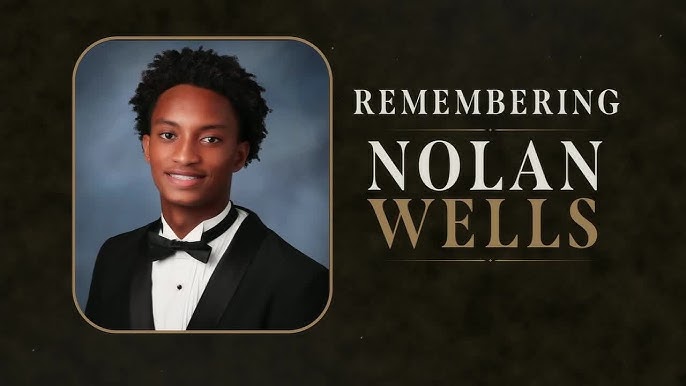
Remebering the late Nolan Xavier Wells (18), gone far too soon.
The Nolan Wells case should not become another battlefield where political personalities race to declare victory before investigators establish the truth. Wells was an 18-year-old son, student and athlete who went to an island with friends and did not come home. His body was found two days later. His family deserves a complete account of what happened, not lectures about why their questions make conservative commentators uncomfortable.
His friends deserve protection from unsupported accusations, his family deserves protection from premature dismissal, and both principles can exist at the same time.
Brandon Tatum is entitled to his opinion. But he is not entitled to present opinion as adjudication. He is not the sheriff, the medical examiner, the district attorney or the grand jury. A friendly podcast interview does not close an investigation. Political confidence does not become forensic evidence simply because it is delivered loudly.
Black America doesn’t need Brandon Tatum’s permission to remember history. We don’t need his approval to question conflicting accounts. Nor do we need his blessing to demand transparency from Mississippi authorities. Most importantly, we don’t have to accept condemnation from a man whose platform appears to grow more profitable each time he turns his microphone against the very community he claims to be correcting.
The Black community’s backlash is not evidence that Tatum has told an uncomfortable truth. Sometimes backlash is simply the sound of people recognizing that they have been made into someone else’s product.
David B. Adams grew up in the Highlandtown section of Baltimore's southeast district and is his parent's youngest child. He experienced pervasive poverty, which taught him humility and compassion for the plight of others. His exposure to violence and gritty urban life were some of his early lessons of life's many hardships. Adams credits the upheavals he endured during his conformity with helping to shape the foundation of his outlook and perspectives on society.
With a steadfast commitment to giving voice to the voiceless, Adams is a journalist, crime writer, and blogger renowned for tireless investigative journalism and advocacy on behalf of vulnerable populations. As founder and administrator of The People's Champion, Adams sheds light on critical social issues, championing the rights of:
- Homeless individuals
- Victims of violent crime and their families
- Wrongfully convicted individuals
- Missing and exploited children; Additionally, he is
a seasoned investigative reporter, Adams has earned recognition for relentless pursuit of truth and justice. With a strong national and global focus, on inspiring meaningful change and crucial conversations impacting all of humanity.
There is a lucrative market in America for a Black man willing to tell white audiences that racism is exaggerated, Black distrust is irrational, and the real problem is always Black people themselves. Brandon Tatum has learned how to work that market.
The former police officer turned conservative podcaster has built a large platform by repeatedly presenting himself as the man courageous enough to say what supposedly no one else will say about Black America. But courage is not measured by how viciously a person criticizes his own community before an audience already eager to hear it condemned. Sometimes that is not bravery at all. In fact, when skillfully crafted, it’s simply branding.
Tatum recently attacked comedian D.L. Hughley and acussed him of race baiting after he posted an image online of Tatum along side his wife. Tatum’s interracial marriage is not a problem for many in the Black community. Black people have no legitimate claim over whom another Black person chooses to love or marry. But marriage to a white spouse does not grant anyone a special license to ridicule Black concerns, dismiss Black historical memory or declare himself the final authority on what is and is not racism.
His personal relationships do not make his racial commentary more credible. His arguments must stand on their own. That distinction became especially important when Tatum recently used his platform to defend the friends who accompanied 18-year-old Nolan Xavier Wells to Horn Island, Mississippi, before Wells disappeared and was later found dead over the 4th of July holiday. Tatum promoted an interview with one of Wells’ so called friends and advanced the position that the young men had been unfairly blamed and were innocent. He reportedly went so far as to suggest that the public owed them an apology.
Brandon Tatum interviewing Warren Hudson regarding the Nolan wells case.
But innocent of what and based upon whose completed investigation?
As of July 25, 2026, the circumstances of Nolan Wells’ death remain under investigation. The case is expected to be presented to a Mississippi grand jury. An independent autopsy listed the cause and manner of death as undetermined and could not rule out foul play. Questions remain about why Wells did not return with the people who brought him to the island, what happened during the missing hours, and why his phone returned without him.
Those facts do not prove that Wells’ friends committed a crime. They do, however, make Tatum’s rush to publicly absolve them appear premature. It’s one thing to caution people against declaring someone guilty without evidence. That is responsible. It’s something entirely different to substitute a podcast interview for a completed criminal investigation and then chastise a grieving family and suspicious public for asking questions. What gives Tatum that exclusive right?
Tatum wants the benefit of skepticism for the people who returned safely from Horn Island. Why does that same generosity seem so difficult for him to extend to Nolan’s parents, and the rest of the public who are seeking answers?
Wells’ family does not believe their son voluntarily remained behind. His parents have questioned the account that he chose to separate from his group, saying it was inconsistent with his character. Friends have offered explanations involving boat trouble, dangerous water and Wells allegedly deciding to stay with someone else. Yet significant gaps in the timeline remain, and prosecutors have said investigative details cannot be publicly released while their work continues.
In other words, the public does not yet know enough to declare anyone guilty. Neither does Brandon Tatum know enough to declare the matter settled.
Tatum and other conservative commentators like him often treat Black suspicion as if it were an embarrassing cultural defect. A form of collective paranoia created by irresponsible activists. That’s historically dishonest and would be hilarious if not for the fact it represents such sad, and shallow thinking
Black Americans did not invent Mississippi’s racial history. We didn’t imagine the bodies, the disappearances, the sham investigations, the coerced confessions, the all-white juries, the lynchings, or the generations of officials who looked the other way. We didn’t create a history in which Black families were routinely told to accept official explanations that later proved incomplete, misleading or false.
That history doesn’t mean every unexplained death involving white people is automatically a racial murder. But It does mean Black families have earned the right to demand evidence before being instructed to trust a system that has repeatedly betrayed them. Distrust is not proof of guilt. But neither is trust proof of innocence.
The responsible position is to investigate fully, preserve evidence, test every account and allow the facts to determine what happened. The irresponsible position is to use a massive media platform to announce moral certainty while the official investigation remains unfinished. Tatum’s show doesn’t finalize or determine a closed case based on the subjective podcast mic of someone many people feel is a self hating jerk, exploiting innate hatred of his own community to proppel himself as the only Black man brave enough to come to the rescue of white teen boys.
Brandon Tatum says that Nolan Wells’ family should stop interjecting race into the death of their son.
Tatum has also branded comedian and commentator D.L. Hughley a “racist,” a “liar” and a “coward,” accusing Hughley of promoting racial division. The irony is difficult to ignore.
Tatum regularly criticizes Black culture, Black political leadership, Black activists and Black communities in sweeping terms. He insists that this is merely honest commentary. Yet when a Black man such as Hughley challenges Tatum’s politics, motives or relationship with conservative white audiences, Tatum suddenly discovers the danger of racial insults. Oh, now we gwt it. Tatum doesn’t want this kid’s parents to talk about racism related to their child, but he is allowed to interject race when his podcast platform is challenged?
It seems that he demands unlimited freedom to generalize about Black America while portraying criticism directed at him as evidence of anti-Black racism. That’s not consistency. It’s rhetorical convenience.
D.L. Hughley has every right to challenge Tatum’s public record. Tatum has every right to answer him. But Tatum cannot spend years participating in some of the harshest racial commentary in American media and then act scandalized when someone examines how his platform functions within that marketplace.
Black communities should be criticized when criticism is warranted. I’ll give Tatum that much. Because no community improves by pretending its failures do not exist. Violence, corruption, educational inequality, family instability and destructive behavior must be confronted honestly within the Black community. But criticism rooted in love sounds different from condemnation performed for applause and self glorification or profit.
Love criticizes while preserving people’s humanity. It recognizes historical context without using history as an excuse. It should also demands accountability from Black citizens, police departments, prosecutors, politicians, corporations and government institutions alike.
What Tatum too often offers is something narrower. He offers a political formula in which Black dysfunction is magnified, Black suffering is interrogated, Black suspicion is mocked and institutional racism is minimized. The burden of proof is placed relentlessly on Black pain, while the institutions responsible for generations of racial injustice receive the benefit of the doubt.
That imbalance is why so many Black people reject tatum’s message. Not because Black people cannot tolerate independent thought or self crtique. Not because every Black person must vote the same way, or because interracial marriage is a betrayal. They reject him because his commentary frequently appears less interested in improving Black America than in prosecuting it before an audience already convinced of its guilt.
Every media personality should generally understands their audience. Tatum knows which stories generate views. He knows which phrases travel through conservative media. He knows there is money, influence and political access available to Black commentators willing to tell white conservatives that their racial innocence has been confirmed by a Black witness such as him.
That does not prove every opinion he expresses is insincere. But it makes scrutiny of his incentives entirely legitimate. When outrage becomes a business model, the audience must ask whether the commentator is following the evidence or feeding the machine.
There is nothing revolutionary about a Black broadcaster becoming wealthy by condemning Black people. America has always rewarded selected Black voices who reassure the majority that racism is over, racial grievances are fraudulent and Black suffering is primarily self-inflicted. The packaging changes. The transaction does not.
Remebering the late Nolan Xavier Wells (18), gone far too soon.
The Nolan Wells case should not become another battlefield where political personalities race to declare victory before investigators establish the truth. Wells was an 18-year-old son, student and athlete who went to an island with friends and did not come home. His body was found two days later. His family deserves a complete account of what happened, not lectures about why their questions make conservative commentators uncomfortable.
His friends deserve protection from unsupported accusations, his family deserves protection from premature dismissal, and both principles can exist at the same time.
Brandon Tatum is entitled to his opinion. But he is not entitled to present opinion as adjudication. He is not the sheriff, the medical examiner, the district attorney or the grand jury. A friendly podcast interview does not close an investigation. Political confidence does not become forensic evidence simply because it is delivered loudly.
Black America doesn’t need Brandon Tatum’s permission to remember history. We don’t need his approval to question conflicting accounts. Nor do we need his blessing to demand transparency from Mississippi authorities. Most importantly, we don’t have to accept condemnation from a man whose platform appears to grow more profitable each time he turns his microphone against the very community he claims to be correcting.
The Black community’s backlash is not evidence that Tatum has told an uncomfortable truth. Sometimes backlash is simply the sound of people recognizing that they have been made into someone else’s product.
David B. Adams grew up in the Highlandtown section of Baltimore's southeast district and is his parent's youngest child. He experienced pervasive poverty, which taught him humility and compassion for the plight of others. His exposure to violence and gritty urban life were some of his early lessons of life's many hardships. Adams credits the upheavals he endured during his conformity with helping to shape the foundation of his outlook and perspectives on society.
With a steadfast commitment to giving voice to the voiceless, Adams is a journalist, crime writer, and blogger renowned for tireless investigative journalism and advocacy on behalf of vulnerable populations. As founder and administrator of The People's Champion, Adams sheds light on critical social issues, championing the rights of:
- Homeless individuals
- Victims of violent crime and their families
- Wrongfully convicted individuals
- Missing and exploited children; Additionally, he is
a seasoned investigative reporter, Adams has earned recognition for relentless pursuit of truth and justice. With a strong national and global focus, on inspiring meaningful change and crucial conversations impacting all of humanity.
Missing Since Oct 19, 2013 Missing From Newark, NJ Age Now 14 Anyone with information regarding the whereabouts of Victoria Williams may contact Newark Police at (973) 733-6000
(CBS/AP) WATERVILLE, Maine - For the first time in the ongoing investigation of missing toddler Ayla Reynolds, police have said they believe she has been kidnapped. Investigators said Monday the 20-month-old was taken away and did not walk out on on her own.Police Chief Joseph Massey said at a news conference, "At this point in […]
DETROIT (WJBK) -- Detroit Police has announced it has joined forces with Michigan State Police and the FBI to find two missing children after their mother was found dead Monday. The Michigan State Police earlier denied a Detroit police request for an Amber Alert to be issued. "What I'm told is [The Amber Alert] didn't […]
 RSS Feed
 Twitter




 Posted in