A Flower In The River: Justice For Phylicia Barnes Cannot End With Michael Johnson’s Conviction In New Case

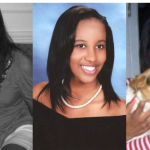
When Michael Maurice Johnson was convicted a few months ago of rape and first-degree assault in a Baltimore County case, it reopened an old wound that never truly closed. For many people, Johnson’s new conviction did not create new grief. It confirmed an old fear. It reminded people of 16-year-old Phylicia Simone Barnes, the beautiful honor student from Monroe, North Carolina, who came to Baltimore for what should have been a family visit and never made it back home.

Johnson was once convicted of second-degree murder in Phylicia’s death, but that conviction was later overturned, and prosecutors dropped the charges in 2015. This past April in 2026, a Baltimore County jury found him guilty of two counts of rape and one count of first-degree assault in a separate 2024 case, while acquitting him of attempted murder. That conviction does not legally prove he killed Phylicia Barnes. But it does force many in Baltimore and everyone who remembers this case to ask the question that has haunted Phylicia’s family for more than a decade. “Was justice ever truly done for Phylicia Barnes?”

That answer, painfully, is no. If the full truth remains buried, if others had knowledge, helped cover up what happened and people who were present, silent, deceptive, or involved in any way were allowed to walk away untouched, and all while Phylicia’s family was left carrying a lifetime sentence of grief. We must honestly acknowledge that justice wasn’t truly done for Phylicia nor her family.

Phylicia was not a runaway, or some troubled child who disappeared into the streets of Baltimore by choice. She was a 16-year-old honor student, visiting relatives, with dreams and promise. Her body was later found floating near the Conowingo Dam, miles away in Northern Maryland after she disappeared from the Northwest Baltimore apartment where she had been staying. Her death was subsequently ruled a homicide.

These basic facts surrounding her case should have demanded a full accounting from everyone who was around that apartment. Everyone. The young men, young women, and every adult who knew more than they said. That includes those people who may have saw behavior that did not sit right. More importantly, the people who sent messages, deleted things, stayed quiet, changed stories, protected friendships, protected themselves, or treated the disappearance of a child like street gossip instead of a murder investigation. Those people. Every single one of them owe accountability in the pursuit of justice for Phylicia Barnes’ tragic ending.

One of the unidentified males who allegedly was known to hang out around the apartment where young Phylicia Barnes was staying in West Baltimore (ijmage provided to TPC anynomously during investigation and search for the mossing teen).

For years, Phylicia’s oldest sister, Shauntel Sallis-Hook, has made it clear that she did not only want one person held accountable. She wanted everyone involved in the cover-up held accountable. That’s not revenge. That’s what any family would want after a young child vanished from a place where other people knew her last movements, knew who was around her, and knew more than they were willing to say.

One of the most disturbing pieces long discussed by those who followed this case was the reported social media message that said, “It’s trapped at the dam, don’t pull the lever.” That line has lived in the memory of this case because Phylicia’s body was eventually found near the Conowingo Dam. When This blog first reported this social media post, it connected that post to questions raised by Shauntel and the rest of the family about what people knew and when they knew it.

Whether prosecutors could prove that message in court is one question, but whether it should have been aggressively investigated is another. Common sense tells us something very simple here. When a missing child is later found near a dam, and someone connected to the circle around that child allegedly references a dam before her body actually being discovered at a dam, that’s not something to casually dismiss. That’s something that should shake the walls of every detective bureau, every prosecutor’s office, and every court assigned to the case.

Phylicia’s case has always carried the smell of more than one person’s direct involvement and silence. In a previous blog article, I mentioned aspects of the case during the search for Phylicia, where Michael Johnson reportedly told authorities that he had last saw Phylicia Barnes around 1:30 p.m. on the day she went missing. Web slueth and online investigators forwarded information to TPC that showed one of Johnson’s younger relatives text “don’t tell her twice, whoop her ass.” That was a criptic comment that has always been highly suspicious. and may have given early insight into exactly what happened just moments before the Barnes teen vanished.

That does not mean that Johnson’s relatgive or every other person around that apartment committed murder. But it does mean the public has every right to question whether people who knew pieces of the truth were allowed to hide behind technicalities, fear, loyalty, youth, street codes, or prosecutorial failure. There is a tremendous difference between being unable to prove a murder case and proving that nobody else was involved.

Our legal system often wants families to accept silence as closure, accept a failed prosecution as the end of the story, and to move on because the court file got cold, headlines faded, and the public’s attention shifted elsewhere. But families and the loved ones of victims do not get to move on. Phylicia’s family still wakes up with the same truth. She left home alive, came to Baltimore, disappeared from an apartment, and was found dead in water miles away.

The Conowingo Dam where the nude body of Honors Teen Phylicia Barnes was discovered in Northern Maryland o April 20, 2011.

Someone knows how she got there. They know what happened inside that apartment, who moved her body, who lied. and who panicked. Someone knows who helped clean all of this up and hid the truth. It’s those people who have never been charged, never been confronted, never been made to answer under the full weight of the law. Until this is accomplished, justice for Phylicia Barnes remains unfinished.

However, Michael Johnson’s new conviction matters because it destroys the old illusion that people tried to build around him. For years, some acted as though being cleared in Phylicia’s case meant the public owed him the benefit of forgetting. But now another woman has survived violence, rape, and assault connected to the same man whose name has been tied to Phylicia’s story for more than a decade.

It should be clear, that it doesn’t legally convict him of Phylicia’s murder, ut it does make the old questions louder. Now, a new conviction in another violent case, and still, Phylicia’s loved ones are left asking whether the people who knew the truth about her final hours will ever face accountability. Until that happens, justice has not been completed. It has only been delayed. For Phylicia’s family, especially those like Shauntel Sallis-Hook who have continued demanding accountability, delay is its own form of cruelty.

The deeper question is whether Maryland ever had the courage to fully expose what happened to Phylicia Barnes. Who are the people who watched a 16-year-old girl vanish from this earth and chose self-preservation, and street loyalty over truth. Until that question is answered, the case of Phylicia Barnes remains unfinished business, and her name should keep echoing through Baltimore until everyone who had a hand in hiding the truth is made to answer for it.

I;m Journalist and Blogger David B. Adams

The People’s Champion Blog

David Adams

David Adams

David B. Adams grew up in the Highlandtown section of Baltimore's southeast district and is his parent's youngest child. He experienced pervasive poverty, which taught him humility and compassion for the plight of others. His exposure to violence and gritty urban life were some of his early lessons of life's many hardships. Adams credits the upheavals he endured during his conformity with helping to shape the foundation of his outlook and perspectives on society. With a steadfast commitment to giving voice to the voiceless, Adams is a journalist, crime writer, and blogger renowned for tireless investigative journalism and advocacy on behalf of vulnerable populations. As founder and administrator of The People's Champion, Adams sheds light on critical social issues, championing the rights of: - Homeless individuals - Victims of violent crime and their families - Wrongfully convicted individuals - Missing and exploited children; Additionally, he is a seasoned investigative reporter, Adams has earned recognition for relentless pursuit of truth and justice. With a strong national and global focus, on inspiring meaningful change and crucial conversations impacting all of humanity.

More Posts - Website

Follow Me:Add me on XAdd me on FacebookAdd me on LinkedIn

When Michael Maurice Johnson was convicted a few months ago of rape and first-degree assault in a Baltimore County case, it reopened an old wound that never truly closed. For many people, Johnson’s new conviction did not create new grief. It confirmed an old fear. It reminded people of 16-year-old Phylicia Simone Barnes, the beautiful honor student from Monroe, North Carolina, who came to Baltimore for what should have been a family visit and never made it back home.

Johnson was once convicted of second-degree murder in Phylicia’s death, but that conviction was later overturned, and prosecutors dropped the charges in 2015. This past April in 2026, a Baltimore County jury found him guilty of two counts of rape and one count of first-degree assault in a separate 2024 case, while acquitting him of attempted murder. That conviction does not legally prove he killed Phylicia Barnes. But it does force many in Baltimore and everyone who remembers this case to ask the question that has haunted Phylicia’s family for more than a decade. “Was justice ever truly done for Phylicia Barnes?”

That answer, painfully, is no. If the full truth remains buried, if others had knowledge, helped cover up what happened and people who were present, silent, deceptive, or involved in any way were allowed to walk away untouched, and all while Phylicia’s family was left carrying a lifetime sentence of grief. We must honestly acknowledge that justice wasn’t truly done for Phylicia nor her family.

Phylicia was not a runaway, or some troubled child who disappeared into the streets of Baltimore by choice. She was a 16-year-old honor student, visiting relatives, with dreams and promise. Her body was later found floating near the Conowingo Dam, miles away in Northern Maryland after she disappeared from the Northwest Baltimore apartment where she had been staying. Her death was subsequently ruled a homicide.

These basic facts surrounding her case should have demanded a full accounting from everyone who was around that apartment. Everyone. The young men, young women, and every adult who knew more than they said. That includes those people who may have saw behavior that did not sit right. More importantly, the people who sent messages, deleted things, stayed quiet, changed stories, protected friendships, protected themselves, or treated the disappearance of a child like street gossip instead of a murder investigation. Those people. Every single one of them owe accountability in the pursuit of justice for Phylicia Barnes’ tragic ending.

One of the unidentified males who allegedly was known to hang out around the apartment where young Phylicia Barnes was staying in West Baltimore (ijmage provided to TPC anynomously during investigation and search for the mossing teen).

For years, Phylicia’s oldest sister, Shauntel Sallis-Hook, has made it clear that she did not only want one person held accountable. She wanted everyone involved in the cover-up held accountable. That’s not revenge. That’s what any family would want after a young child vanished from a place where other people knew her last movements, knew who was around her, and knew more than they were willing to say.

One of the most disturbing pieces long discussed by those who followed this case was the reported social media message that said, “It’s trapped at the dam, don’t pull the lever.” That line has lived in the memory of this case because Phylicia’s body was eventually found near the Conowingo Dam. When This blog first reported this social media post, it connected that post to questions raised by Shauntel and the rest of the family about what people knew and when they knew it.

Whether prosecutors could prove that message in court is one question, but whether it should have been aggressively investigated is another. Common sense tells us something very simple here. When a missing child is later found near a dam, and someone connected to the circle around that child allegedly references a dam before her body actually being discovered at a dam, that’s not something to casually dismiss. That’s something that should shake the walls of every detective bureau, every prosecutor’s office, and every court assigned to the case.

Phylicia’s case has always carried the smell of more than one person’s direct involvement and silence. In a previous blog article, I mentioned aspects of the case during the search for Phylicia, where Michael Johnson reportedly told authorities that he had last saw Phylicia Barnes around 1:30 p.m. on the day she went missing. Web slueth and online investigators forwarded information to TPC that showed one of Johnson’s younger relatives text “don’t tell her twice, whoop her ass.” That was a criptic comment that has always been highly suspicious. and may have given early insight into exactly what happened just moments before the Barnes teen vanished.

That does not mean that Johnson’s relatgive or every other person around that apartment committed murder. But it does mean the public has every right to question whether people who knew pieces of the truth were allowed to hide behind technicalities, fear, loyalty, youth, street codes, or prosecutorial failure. There is a tremendous difference between being unable to prove a murder case and proving that nobody else was involved.

Our legal system often wants families to accept silence as closure, accept a failed prosecution as the end of the story, and to move on because the court file got cold, headlines faded, and the public’s attention shifted elsewhere. But families and the loved ones of victims do not get to move on. Phylicia’s family still wakes up with the same truth. She left home alive, came to Baltimore, disappeared from an apartment, and was found dead in water miles away.

The Conowingo Dam where the nude body of Honors Teen Phylicia Barnes was discovered in Northern Maryland o April 20, 2011.

Someone knows how she got there. They know what happened inside that apartment, who moved her body, who lied. and who panicked. Someone knows who helped clean all of this up and hid the truth. It’s those people who have never been charged, never been confronted, never been made to answer under the full weight of the law. Until this is accomplished, justice for Phylicia Barnes remains unfinished.

However, Michael Johnson’s new conviction matters because it destroys the old illusion that people tried to build around him. For years, some acted as though being cleared in Phylicia’s case meant the public owed him the benefit of forgetting. But now another woman has survived violence, rape, and assault connected to the same man whose name has been tied to Phylicia’s story for more than a decade.

It should be clear, that it doesn’t legally convict him of Phylicia’s murder, ut it does make the old questions louder. Now, a new conviction in another violent case, and still, Phylicia’s loved ones are left asking whether the people who knew the truth about her final hours will ever face accountability. Until that happens, justice has not been completed. It has only been delayed. For Phylicia’s family, especially those like Shauntel Sallis-Hook who have continued demanding accountability, delay is its own form of cruelty.

The deeper question is whether Maryland ever had the courage to fully expose what happened to Phylicia Barnes. Who are the people who watched a 16-year-old girl vanish from this earth and chose self-preservation, and street loyalty over truth. Until that question is answered, the case of Phylicia Barnes remains unfinished business, and her name should keep echoing through Baltimore until everyone who had a hand in hiding the truth is made to answer for it.

I;m Journalist and Blogger David B. Adams

The People’s Champion Blog

David Adams

David Adams

David B. Adams grew up in the Highlandtown section of Baltimore's southeast district and is his parent's youngest child. He experienced pervasive poverty, which taught him humility and compassion for the plight of others. His exposure to violence and gritty urban life were some of his early lessons of life's many hardships. Adams credits the upheavals he endured during his conformity with helping to shape the foundation of his outlook and perspectives on society. With a steadfast commitment to giving voice to the voiceless, Adams is a journalist, crime writer, and blogger renowned for tireless investigative journalism and advocacy on behalf of vulnerable populations. As founder and administrator of The People's Champion, Adams sheds light on critical social issues, championing the rights of: - Homeless individuals - Victims of violent crime and their families - Wrongfully convicted individuals - Missing and exploited children; Additionally, he is a seasoned investigative reporter, Adams has earned recognition for relentless pursuit of truth and justice. With a strong national and global focus, on inspiring meaningful change and crucial conversations impacting all of humanity.

More Posts - Website

Follow Me:Add me on XAdd me on FacebookAdd me on LinkedIn

You can leave a response, or trackback from your own site.

Leave a Reply

- See more at: http://thepeopleschampion.me/wp-admin/options-general.php?page=side-tab#sthash.HEuco14y.dpuf