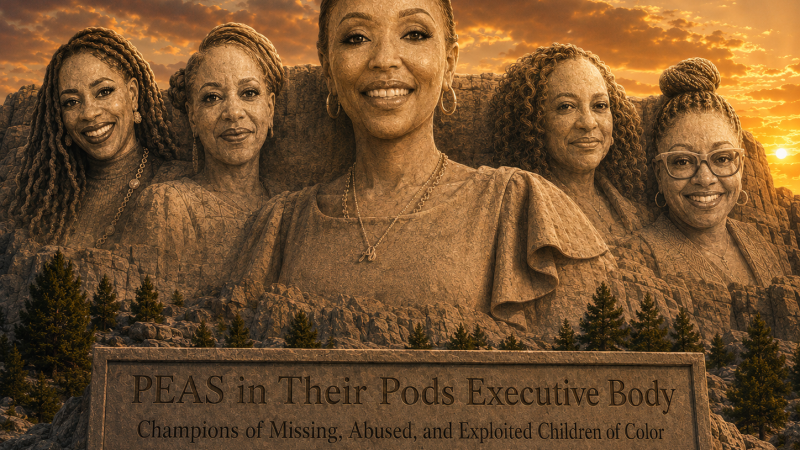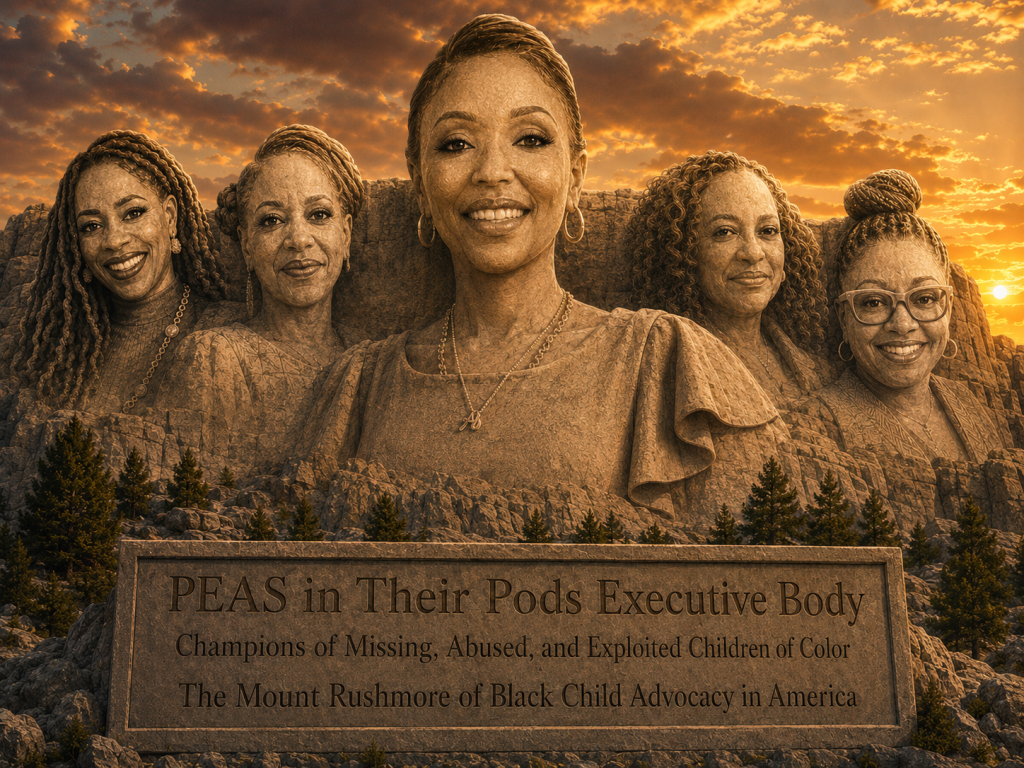
Most people don’t even know who they are, and that’s probably a good thing, in a sense. They’re a group of educated Black women on a mission that no one else is willing to give countless hours of charitable time to. It’s all about numbers, and there’s one number that ought to stop people in their tracks: a child goes missing in this country roughly every 40 seconds. Of those children, a disproportionate share, close to half, are Black or Brown kids. Yet turn on the news and it’s rare to see their faces. Rarer still to see a search effort mobilized on their behalf with the urgency it deserves.
Two women decided they were done waiting for that to change. Back in 2007, Janice Lowery and Gaétane Borders looked at a system that was quietly failing families of color and built something to fill the gap. What they created became Peas In Their Pods, Inc. PEAS for short, is a nonprofit built around one goal: give missing children of color, and the families searching for them, the voice they weren’t getting anywhere else.
The problem they identified wasn’t abstract. Too many missing-child cases involving Black and Brown kids never triggered an Amber Alert in the first place, either because they didn’t meet the system’s strict criteria, or because police reports quietly labeled the child a “runaway.”It’s a label that changes everything about how a case gets handled and how much attention it receives. That single word can mean the difference between a statewide search and a case that goes cold within days.
So Lowery and Borders built their own alert system to pick up where Amber Alert leaves off. They called it the Rilya Alert, named for Rilya Wilson, a Florida foster child whose disappearance went unnoticed by the system meant to protect her for over a year. The Rilya Alert exists for exactly the cases that fall through those cracks.
More Than an Alarm System
What’s easy to miss about PEAS is how much ground they actually cover. This isn’t a single tool — it’s a full support network for families in the worst moment of their lives.They help families navigate the earliest, most disorienting hours after a child disappears: what to tell police, how a case gets classified, who else needs to be contacted immediately. They run media campaigns to get a missing child’s face and story in front of more eyes than local coverage alone would ever reach. They’ve published P.E.A.S. Magazine, a recurring publication built entirely around missing children of color — their photos, their stories, and the community resources available to the families looking for them. For years, Lowery and Borders even hosted a weekly radio show to keep these cases in front of the public between headlines.

And here’s the part that rarely gets told: all of it is free. Every family that reaches out gets help at no cost, from a team that by now has more than a decade of experience doing this work. The volunteers combing through case files late at night. The advocates fielding calls from parents who don’t know where else to turn. The people quietly keeping a missing child’s case alive on social media long after the initial burst of attention fades. None of it comes with recognition. Most of it happens far from any camera.
That’s the nature of unsung work. It isn’t done for credit. It’s done because somebody has to do it, and too often, nobody else will.
PEAS also pushes upstream of tragedy, running community trainings and safety seminars aimed at prevention — teaching families and kids how to spot the warning signs before a child ever goes missing in the first place. Awareness after the fact matters, but awareness before it happens matters more, and that’s a harder, less visible kind of work to sustain.
These incredible, educated Black women have spent years in the trenches fighting, pushing, and advocating for missing children and supporting their grieving families — all of it on a national stage, without any fanfare at all. They are, in every sense, the Mount Rushmore of child advocacy for Black America. I pray that no more families ever have to use the services PEAS provides.
The People Behind the Mission
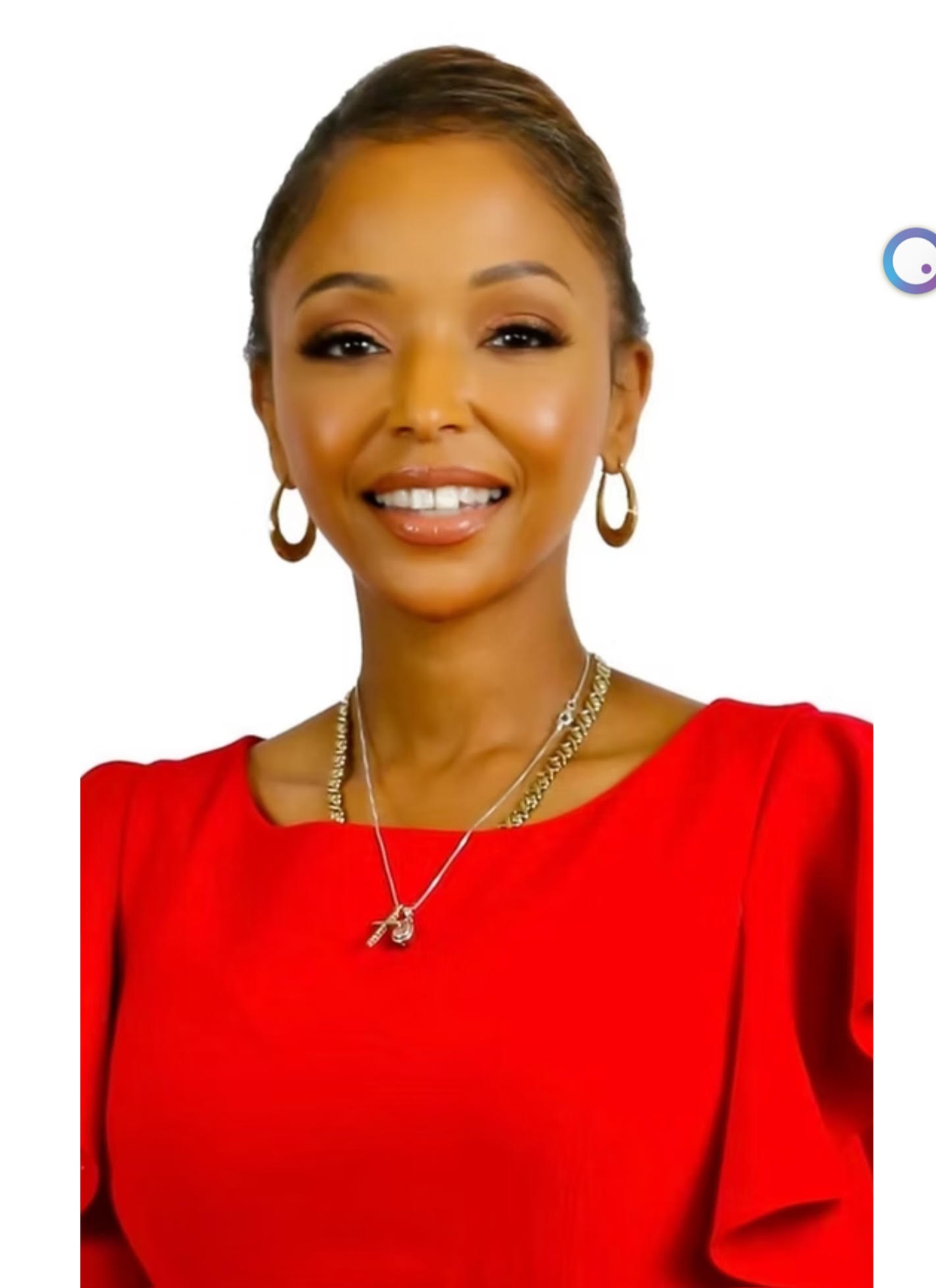
Gaétane Borders, Ed.S. — President & CEO
Borders co-founded PEAS back in 2007 and still leads it today. She holds an Education Specialist degree and works as a psychologist and advocate, a background that shapes how she approaches the organization’s mission. Her path into this work started 18 years ago, after a conversation with a parent whose three children had been abducted and killed — a moment that made clear to her how little attention families like that one were getting. She now runs PEAS’s seminars and community events, stays personally involved with the families the organization serves, and handles much of the media push that gets a missing child’s story in front of the public.

Anita Harris — Director of Parent Advocacy
Harris makes sure every parent working with PEAS gets the support they need, and she does it from a place of lived experience — a member of her own family was once reported missing. She went through the entire process herself, start to finish, and that loved one was eventually found safe. That firsthand knowledge of what a family goes through is what shapes how she advocates for every parent who comes to PEAS afterward.
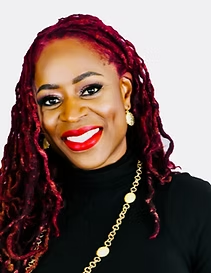
Dr. Vincentia Paul-Constantin, PhD, LPC, NCC — Director of Counseling
Dr. Paul-Constantin holds a PhD and is a Licensed Professional Counselor as well as a National Board-Certified Counselor. She leads all of PEAS’s therapeutic work, including crisis management for families in the middle of a search. Her broader focus is on working with schools and communities to give children better emotional and educational support, and that same philosophy carries into how she counsels the families PEAS serves.

Konteint Redmon, MA — Director of Partnerships and Training
Redmon holds a master’s degree along with additional training in counseling and special education. As an educator and program developer, she builds and runs the trainings PEAS brings to schools, community groups, and individual families — the prevention side of the organization’s work, aimed at stopping a case before it starts.

Nadine Watson — Director of Strategic Marketing and Engagement
Watson spent years as a marketing executive driving brand growth before bringing those skills to PEAS. She now runs the organization’s outreach and engagement efforts, and she’s especially focused on underserved youth — building workshops and empowerment seminars meant to build confidence and resilience, particularly for young women and girls.
The Work Matters for Every Family It Covers
Anyone who’s followed the cases on their site knows the pattern PEAS was built to fight. A child goes missing. If the case doesn’t fit certain boxes, the search stalls before it even starts. A family is left making calls, printing fliers, and doing the job an entire system should be doing for them.
Organizations like PEAS exist because that gap is real, and because somebody had to stop accepting it as normal. Fourteen-plus years in, they’re still doing it — one case, one family, one alert at a time.
To the Women of Peas In Their Pods
There is a particular kind of selflessness in choosing to fight for the children the rest of the world too often looks past. Because of all of you, we’ve learned an uncomfortable, documented truth: every forty seconds, a child goes missing in this country, and children of color receive only a fraction of the media attention, the search resources, and the public outcry that other missing children receive. You looked at that injustice and refused to accept it.
You did not wait for someone else to give these children a voice. You became that voice — through alert systems that share their faces when others wouldn’t, through media campaigns built by hand because the cameras didn’t come looking for you, through advocacy that sits with terrified parents in the worst hours of their lives and does not leave. You turned personal grief into public purpose, transforming heartbreak into safety seminars, prevention trainings, and counseling that protects the next child before tragedy ever reaches them.
This is selflessness that asks for nothing in return. It’s the counselor who shows up for a family in crisis at any hour. It’s the advocate who spends her evenings building a case for a child whose name most of the country will never learn. It’s every volunteer who understood that if the system wouldn’t prioritize Black children, then she would build something that did.
You did this work quietly, tirelessly, without needing the spotlight, because for you, the mission was never about recognition. It was about a child coming home. It was about a mother no longer having to fight alone. It was about making sure every missing child of color has someone, somewhere, refusing to let their story go untold.
Because of this, we honor you all and your commitment to Black children and Black families across this country. Thank you for being the ones who didn’t look away. I humbly tip my hat to you. May your blessings be abundant, in God’s name.
— David B. Adams, Administrator
Journalist and Blogger, The People’s Champion Blog
How to Help
Learn more or get help: peasintheirpods.org
Missing child hotline: 855-PEASPOD (855-732-7763)
Please donate and support these decicated ladies who are working for Black children in America.