Not Far removed: I Remember the Fires of 1968, and America Still Refuses to Learn
Posted by David Adams on April 8th, 2026
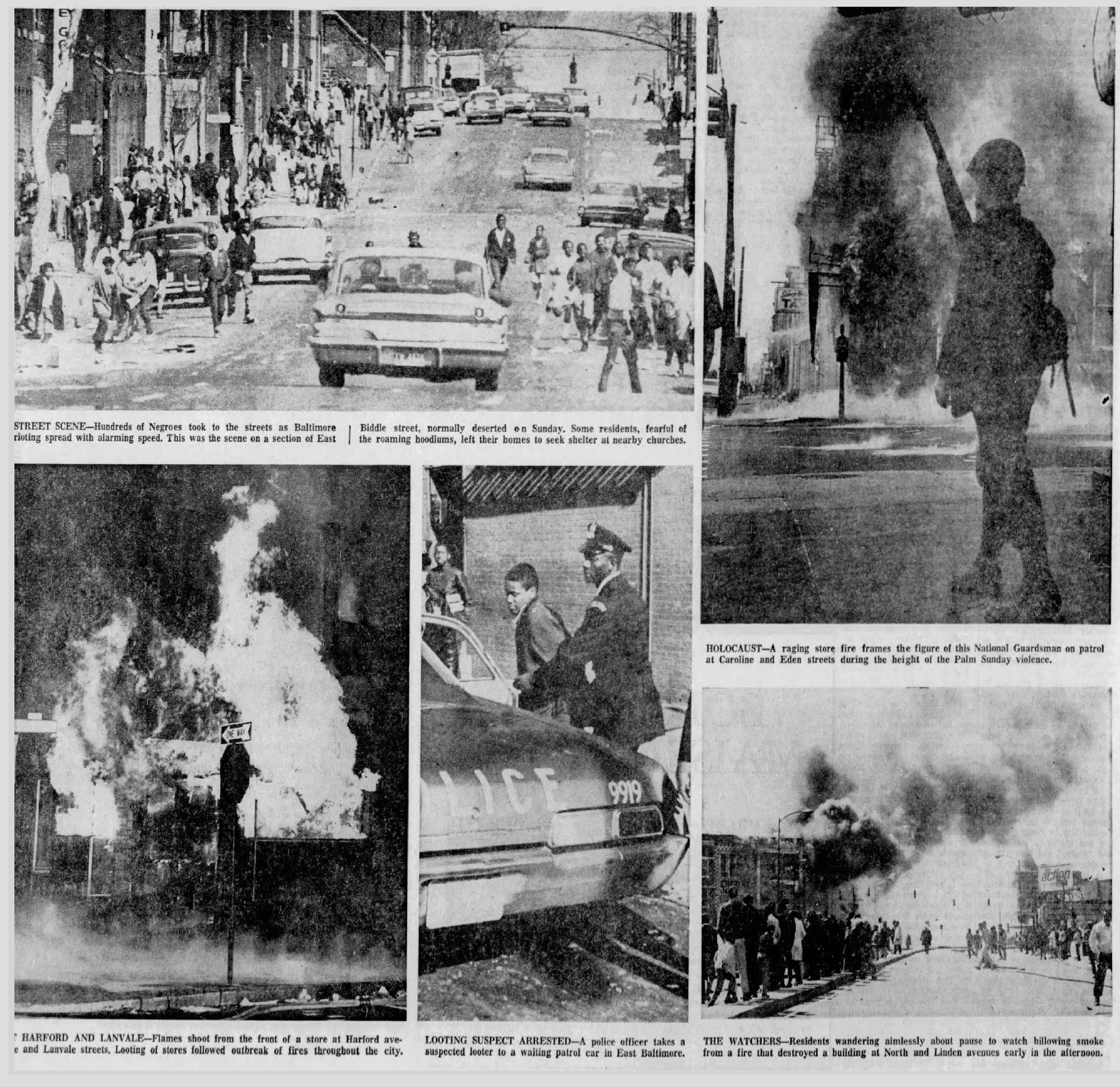
It was exactly 58 years ago today. I was only 2 years old, in my mother’s arms as she held me near the third-floor window of her apartment in the 2200 block of Brookfield Avenue in West Baltimore. Mom and Dad were only 22-years-old. Outside, the city was in chaos. I remember people coming down our block carrying items they had looted from the business district up on Whitelock Avenue at the top of our street. I remember National Guardsmen walking down the middle of the block with rifles pointed in the air while clearing the street. I remember fires burning across the city. I remember fear. I remember unrest. I remember a country coming apart in real time at just 2-years-old.
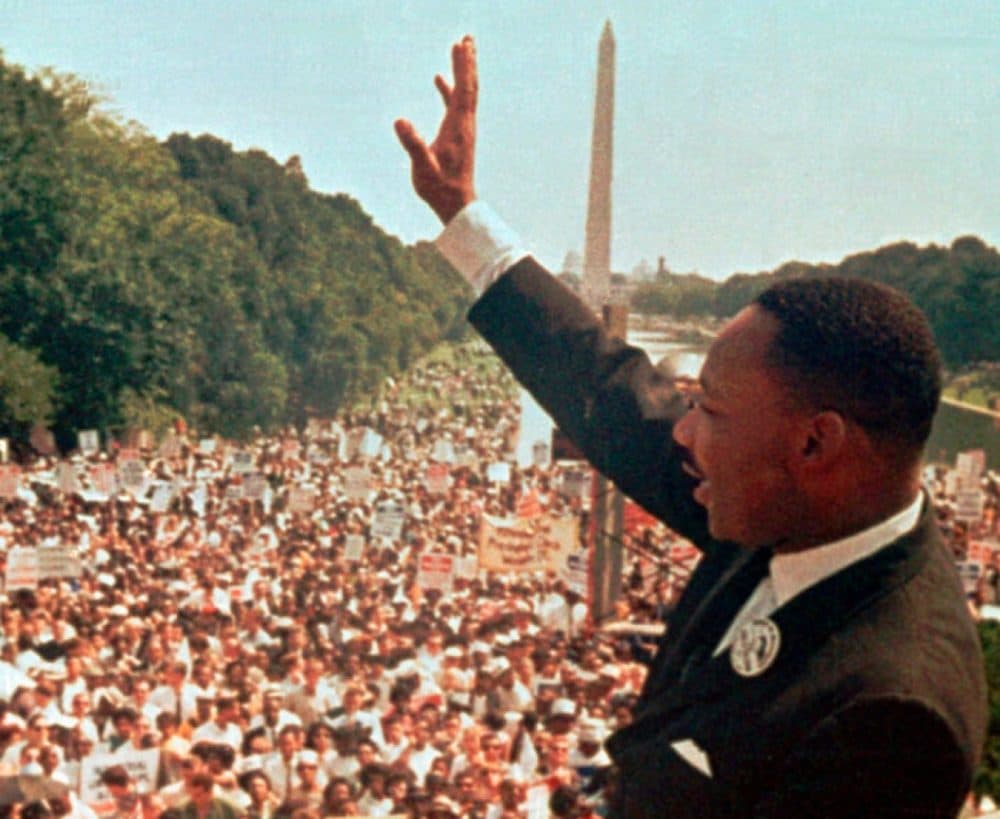
Dr. Martin Luther King Jr. had been assassinated on April 4, 1968, and by April 8, the pain, rage, and hopelessness in Black communities had spilled into the streets. That era was not ancient history. It was in my generation. Too many people speak about the Civil Rights era as if it belongs to some long-dead America, as if racism was buried with the past, as if the hatred, exclusion, police abuse, economic deprivation, and racial contempt that fueled those uprisings somehow disappeared. It has not. We are not far removed from that America at all. In truth, many of its foundations and social ideologies are still standing.
What some white Americans still refuse to understand is that riots and looting do not happen in a vacuum. They are not born simply from “bad behavior,” moral failure, or some manufactured idea that Black people are naturally disorderly. That kind of thinking is itself rooted in racism. What happened in cities like Baltimore after Dr. King’s murder was the explosion of generations of injustice, neglect, humiliation, and pain.
When people are locked out of power, denied dignity, brutalized by the systems sworn to protect them, and then told to remain peaceful while their lives are treated as disposable, eventually something breaks. Yet, even today, some still talk about the rioting and looting of 1968 with more outrage than they ever speak about the racism that gave birth to it. That’s the hypocrisy.
They condemn the response, but remain silent about the conditions. They criticize broken windows, but not broken humanity. They mourn property, but rarely mourn the decades of racial terror, segregation, disinvestment, and systemic abuse that made those streets a powder keg in the first place. That’s why America still struggles with race now. Too many people want the comfort of reconciliation without the truth of accountability. Too many want racial peace without racial justice. Too many want to lecture Black communities about behavior, while refusing to confront the historical and present-day forces that have poisoned relationships between the races for generations.
If we truly want to live better together, then honesty has to come first. We must tell the truth about what racism has done to this country. We must tell the truth about why cities burned. We must tell the truth about how white supremacy shaped housing, schools, policing, employment, and opportunity. We must tell the truth that racial wounds do not heal just because time has passed.
Living better together requires more than slogans. It requires empathy. It requires humility. It requires that people stop asking only, “Why were they rioting?” and start asking, “What kind of nation creates the conditions where despair and rage become that deep?” That is the real question we should be asking.
My memory of Baltimore in flames is not just a memory of destruction. It is a memory of unresolved pain in America. And 58 years later, this country still has not fully dealt with the sickness that put those flames in the streets.
We are not far removed from that racism. We are still wrestling with it. Still suffering from it. Still being divided by it. Until this nation develops the courage to understand the why behind the anger, not just condemn the anger itself, we will keep repeating the same cycles under different names.
Dr. King is gone. The smoke from 1968 has long cleared. But the moral failure that helped ignite it still lingers, and that should disturb every one of us.
David B. Adams is a journalist, crime writer, and founder of The People's Champion, a platform built on truth, justice, and advocacy for the overlooked. For over a decade, Adams has investigated wrongful convictions, missing and exploited children, homelessness, and the political forces that shape marginalized communities' lives.
What sets his work apart is a refusal to sensationalize. Adams treats crime reporting as human storytelling — pushing past headlines to examine the systemic failures in law enforcement, the courts, and government that so often go unexamined. He's built a reputation among activists and advocates for combining deep research, personal narrative, and unflinching commentary.
The People's Champion began as a personal outlet and has grown into a respected independent voice in crime and justice journalism, read by audiences nationwide who care about accountability and the people too often left out of the story.

It was exactly 58 years ago today. I was only 2 years old, in my mother’s arms as she held me near the third-floor window of her apartment in the 2200 block of Brookfield Avenue in West Baltimore. Mom and Dad were only 22-years-old. Outside, the city was in chaos. I remember people coming down our block carrying items they had looted from the business district up on Whitelock Avenue at the top of our street. I remember National Guardsmen walking down the middle of the block with rifles pointed in the air while clearing the street. I remember fires burning across the city. I remember fear. I remember unrest. I remember a country coming apart in real time at just 2-years-old.
Dr. Martin Luther King Jr. had been assassinated on April 4, 1968, and by April 8, the pain, rage, and hopelessness in Black communities had spilled into the streets. That era was not ancient history. It was in my generation. Too many people speak about the Civil Rights era as if it belongs to some long-dead America, as if racism was buried with the past, as if the hatred, exclusion, police abuse, economic deprivation, and racial contempt that fueled those uprisings somehow disappeared. It has not. We are not far removed from that America at all. In truth, many of its foundations and social ideologies are still standing.
What some white Americans still refuse to understand is that riots and looting do not happen in a vacuum. They are not born simply from “bad behavior,” moral failure, or some manufactured idea that Black people are naturally disorderly. That kind of thinking is itself rooted in racism. What happened in cities like Baltimore after Dr. King’s murder was the explosion of generations of injustice, neglect, humiliation, and pain.
When people are locked out of power, denied dignity, brutalized by the systems sworn to protect them, and then told to remain peaceful while their lives are treated as disposable, eventually something breaks. Yet, even today, some still talk about the rioting and looting of 1968 with more outrage than they ever speak about the racism that gave birth to it. That’s the hypocrisy.
They condemn the response, but remain silent about the conditions. They criticize broken windows, but not broken humanity. They mourn property, but rarely mourn the decades of racial terror, segregation, disinvestment, and systemic abuse that made those streets a powder keg in the first place. That’s why America still struggles with race now. Too many people want the comfort of reconciliation without the truth of accountability. Too many want racial peace without racial justice. Too many want to lecture Black communities about behavior, while refusing to confront the historical and present-day forces that have poisoned relationships between the races for generations.
If we truly want to live better together, then honesty has to come first. We must tell the truth about what racism has done to this country. We must tell the truth about why cities burned. We must tell the truth about how white supremacy shaped housing, schools, policing, employment, and opportunity. We must tell the truth that racial wounds do not heal just because time has passed.
Living better together requires more than slogans. It requires empathy. It requires humility. It requires that people stop asking only, “Why were they rioting?” and start asking, “What kind of nation creates the conditions where despair and rage become that deep?” That is the real question we should be asking.
My memory of Baltimore in flames is not just a memory of destruction. It is a memory of unresolved pain in America. And 58 years later, this country still has not fully dealt with the sickness that put those flames in the streets.
We are not far removed from that racism. We are still wrestling with it. Still suffering from it. Still being divided by it. Until this nation develops the courage to understand the why behind the anger, not just condemn the anger itself, we will keep repeating the same cycles under different names.
Dr. King is gone. The smoke from 1968 has long cleared. But the moral failure that helped ignite it still lingers, and that should disturb every one of us.
David B. Adams is a journalist, crime writer, and founder of The People's Champion, a platform built on truth, justice, and advocacy for the overlooked. For over a decade, Adams has investigated wrongful convictions, missing and exploited children, homelessness, and the political forces that shape marginalized communities' lives.
What sets his work apart is a refusal to sensationalize. Adams treats crime reporting as human storytelling — pushing past headlines to examine the systemic failures in law enforcement, the courts, and government that so often go unexamined. He's built a reputation among activists and advocates for combining deep research, personal narrative, and unflinching commentary.
The People's Champion began as a personal outlet and has grown into a respected independent voice in crime and justice journalism, read by audiences nationwide who care about accountability and the people too often left out of the story.
Missing Since Oct 19, 2013 Missing From Newark, NJ Age Now 14 Anyone with information regarding the whereabouts of Victoria Williams may contact Newark Police at (973) 733-6000
(CBS/AP) WATERVILLE, Maine - For the first time in the ongoing investigation of missing toddler Ayla Reynolds, police have said they believe she has been kidnapped. Investigators said Monday the 20-month-old was taken away and did not walk out on on her own.Police Chief Joseph Massey said at a news conference, "At this point in […]
DETROIT (WJBK) -- Detroit Police has announced it has joined forces with Michigan State Police and the FBI to find two missing children after their mother was found dead Monday. The Michigan State Police earlier denied a Detroit police request for an Amber Alert to be issued. "What I'm told is [The Amber Alert] didn't […]